

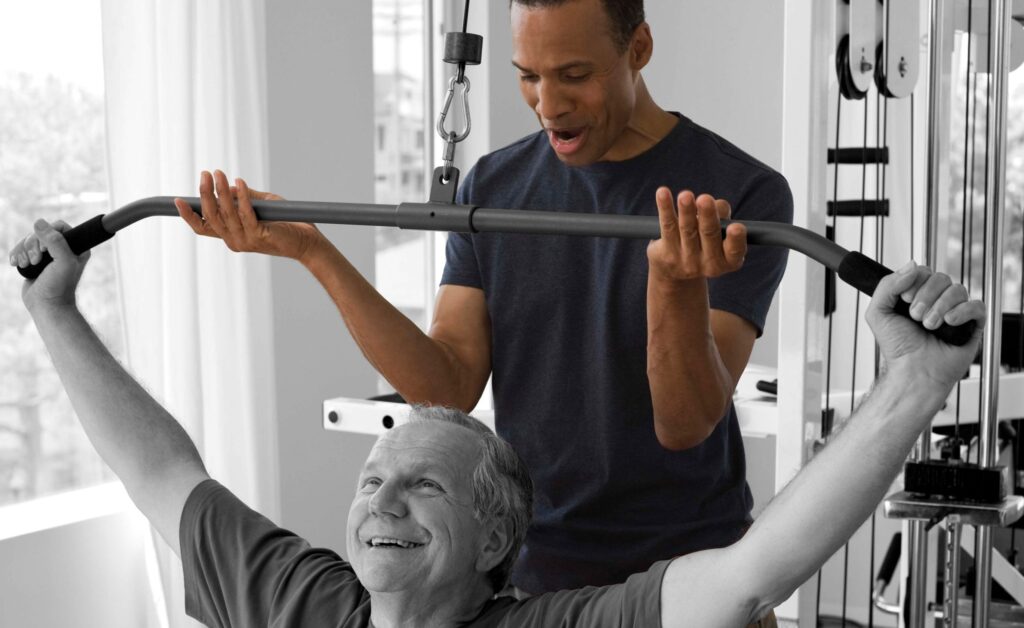

Exercise professionals who hold the Exercise is Medicine® (EIM) Credential showcase their ability to help individuals with common chronic medical conditions adopt and maintain an active lifestyle. The EIM Credential signifies that an exercise professional has met important educational requirements, is part of the EIM initiative and is prepared to collaborate with members of the health care community to improve referred patients’ health outcomes.
The credential helps exercise professionals build relationships with health care providers, highlighting how their services could extend a provider’s reach of care. Current EIM professionals report that the EIM Credential is a valuable conversation starter with providers who are curious about how an exercise professional could assist their patients within or outside the health care setting.
EIM Credential Requirements:
- Minimum B.S./B.A. in exercise science, exercise physiology or kinesiology
- ACSM certification or other National Commission for Certifying Agencies (NCCA) accredited or ISO/IEC 17024 fitness certification
- Completion of all modules of the EIM online course and pass every online exam with a score of 80% or higher
- After passing the online course and exams, an invitation will be sent via email to complete an EIM Credential application.
Upon obtaining the EIM credential, the exercise professional receives:
- A digital Exercise is Medicine® Credential certificate and have the option to purchase a plaque
- An invitation to receive EIM monthly updates and participate in EIM programs and events
Learning Objectives
- Demonstrate a basic understanding of how health systems operate
- Explain the Exercise is Medicine® clinical-to-community integration approach
- Effectively communicate with health care providers, provide appropriate documentation, respect privacy and stay within their professional scope of practice
- Understand and apply the ACSM and PAGA exercise guidelines — including the frequency, intensity, time, type and progression of physical activity (PA), including modifications and precautions — for those who are sedentary, older adults and those with hypertension, dyslipidemia, obesity, NAFLD, Metsyn, prediabetes, type 2 diabetes, osteoarthritis, low back pain and cancer
- Understand how commonly prescribed pharmaceutical agents may affect the exercise prescription and when to refer a client/patient back to their health care provider
- Use client/patient-centered approaches, motivational interviewing and cognitive-behavioral techniques to facilitate behavior change and adherence
- Design an effective PA intervention for a small group of clients/patients with a common disease or cluster of conditions that require a similar PA prescription
- Identify advantages and challenges of using technology solutions to increase PA in patients/clients and key considerations when providing virtual exercise/PA guidance and follow-up