Fit for All: The Autism Exercise Connection
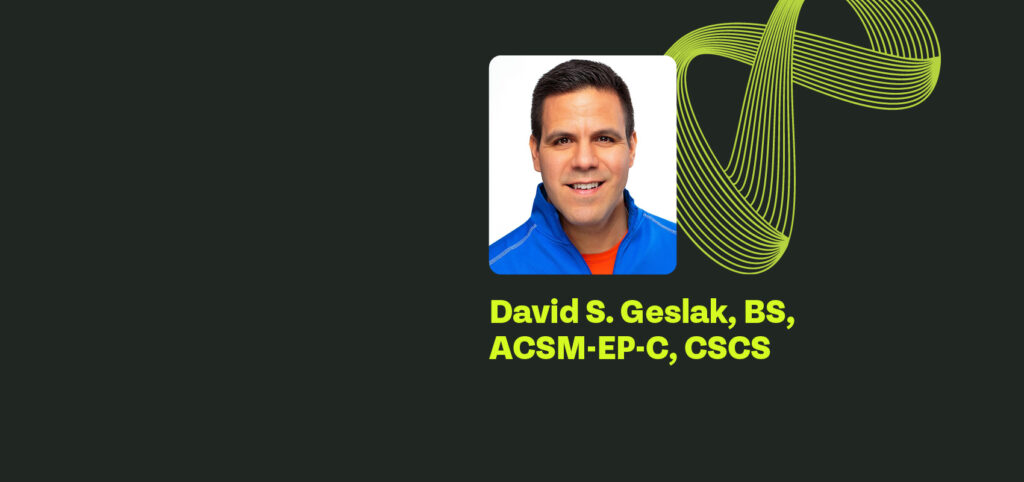
Hear valuable insights and strategies for helping children with autism thrive through physical activity and exercise.
ACSM Health Literacy Resources

As the largest sports medicine and exercise science organization in the world, the American College of Sports Medicine® (ACSM) seeks to educate and empower professionals to advance the science and practice of health and human performance. In recognition of Health Literacy Month this October, ACSM supports physicians, researchers and allied health professionals in their efforts to share […]
Professionalization & Advocacy in the Exercise Profession
There is a robust advocacy and professionalization effort underway in the exercise profession. Many groups, once siloed, have come together in an effort to advance the exercise profession, in order to make it an integral component of healthcare delivery. Much of this momentous effort has been undertaken with limited awareness from frontline exercise professionals and […]
Anaerobic Programming for Clients with Disabilities
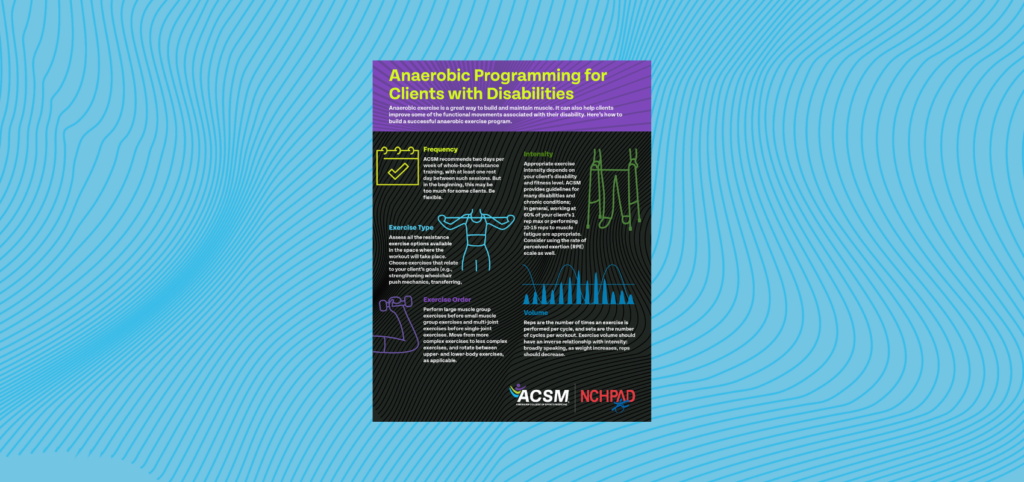
Anaerobic exercise is a great way to build and maintain muscle. It can also help clients improve some of the functional movements associated with their disability. Here’s how to build a successful anaerobic exercise program.
Training Clients with Cancer
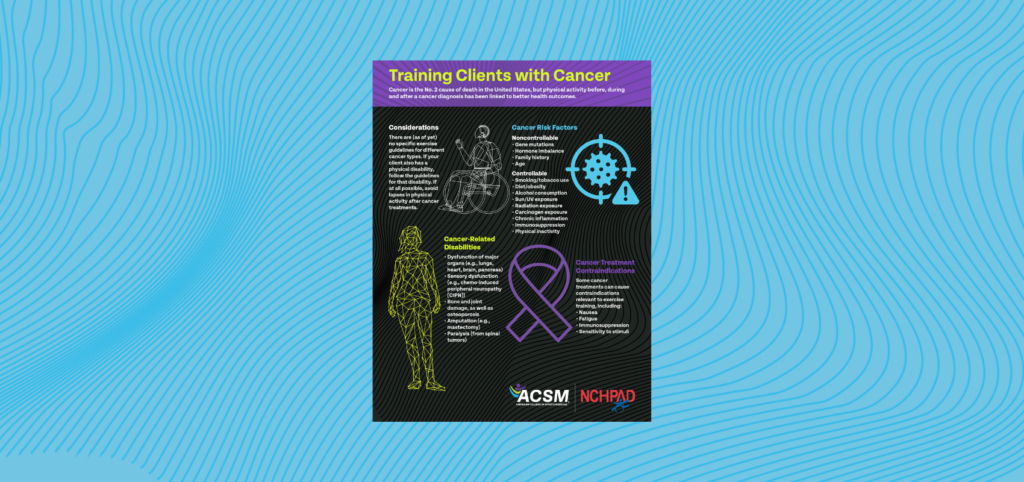
Cancer is the No. 2 cause of death in the United States, but physical activity before, during and after a cancer diagnosis has been linked to better health outcomes.
Training Clients with Nonprogressive Brain Injuries
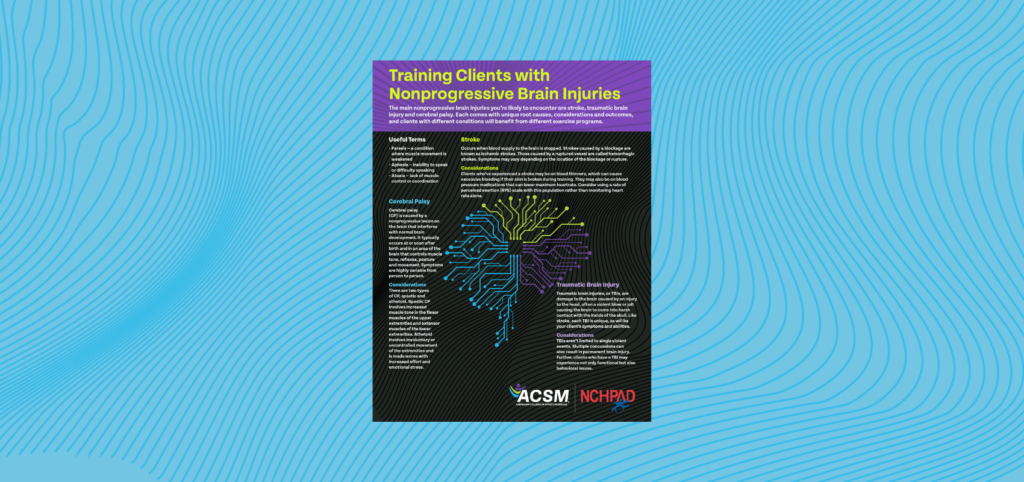
The main nonprogressive brain injuries you’re likely to encounter are stroke, traumatic brain injury and cerebral palsy. Each comes with unique root causes, considerations and outcomes, and clients with different conditions will benefit from different exercise programs.
Setting Client-Centered Goals
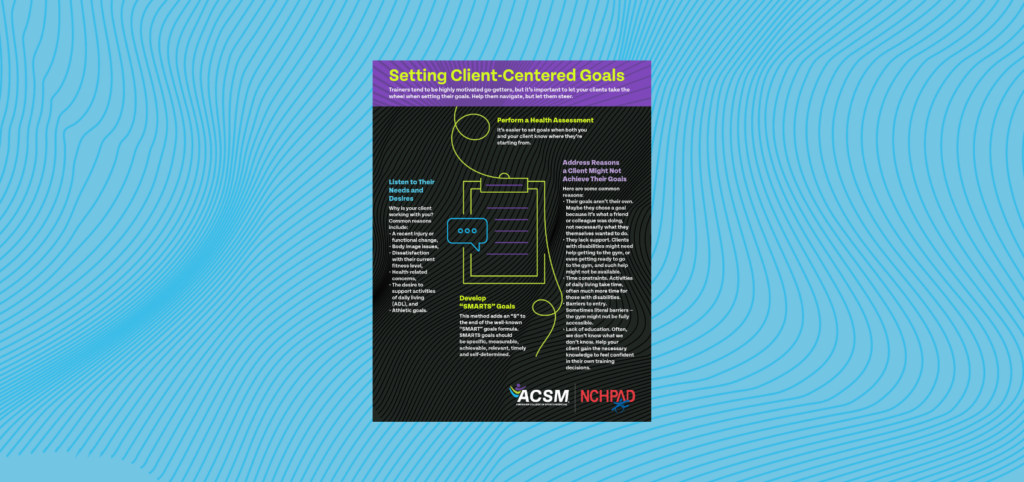
Trainers tend to be highly motivated go-getters, but it’s important to let your clients take the wheel when setting their goals. Help them navigate, but let them steer.
Your Inclusive Fitness Specialist Certificate & Where It Can Take You
The fitness industry is a growing field — earning an ACSM/NCHPAD Inclusive Fitness Specialist Certificate will separate you from the competition and give you the tools to assist critically underserved populations. Learn about the prerequisites for earning this certificate, how to earn it, and what career opportunities open up once its earned. Infographic and specialist course created […]
Training Disabled Clients: Anatomy & Biomechanics
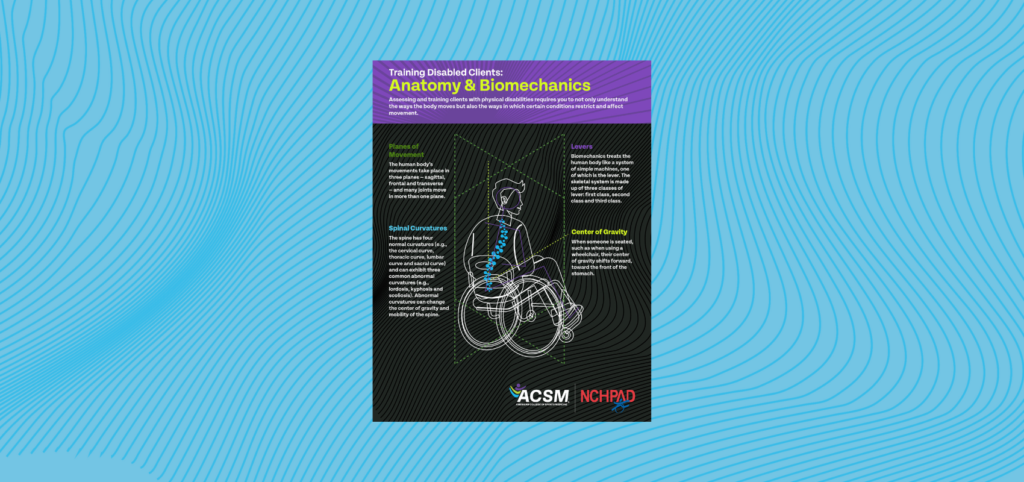
Assessing and training clients with physical disabilities requires you to not only understand the ways the body moves but also the ways in which certain conditions restrict and affect movement.
Training Clients with Communication Disorders
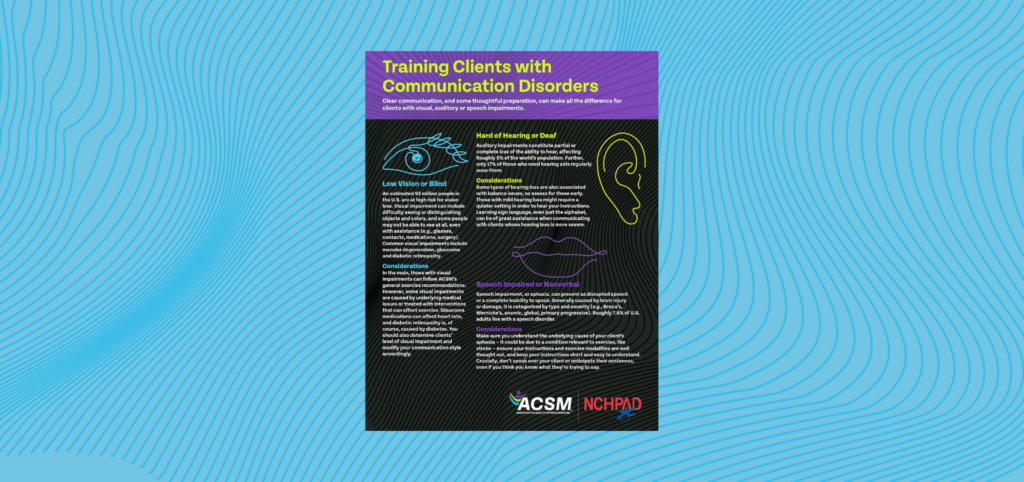
Clear communication, and some thoughtful preparation, can make all the difference for clients with visual, auditory or speech impairments.