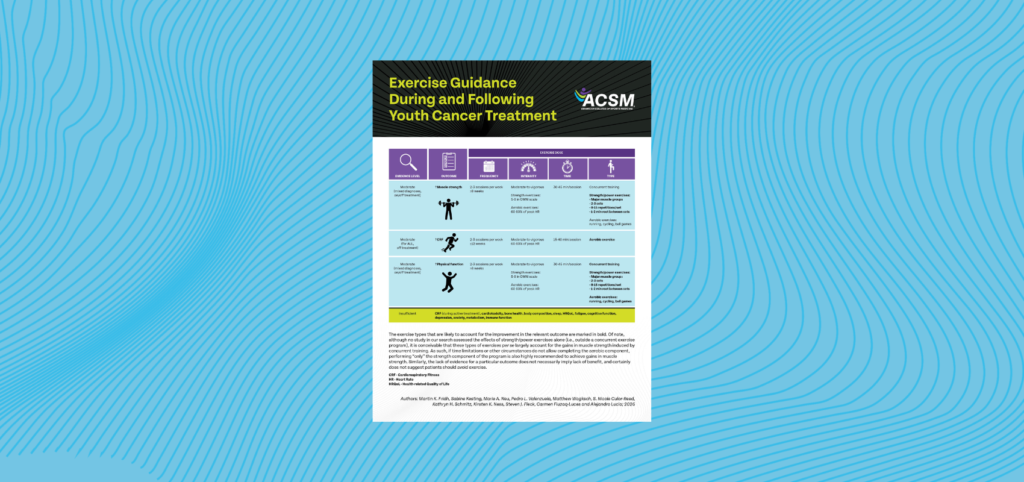
Exercise Guidance During and Following Youth Cancer Treatment | Infographic
FITT-based (Frequency, Intensity, Time and Type) recommendations to help clinicians and exercise professionals implement exercise programs in real-world pediatric oncology settings.
New ACSM Expert Consensus Statement: Exercise is a Supportive Care Measure for Children and Adolescents with Cancer
New ACSM Expert Consensus Statement provides the first evidence-based exercise guidance for children and adolescents with cancer, finding that appropriately prescribed exercise is safe and can improve strength, physical function and recovery during and after treatment.
Being Active When You Have Cancer | Rx for Health
Do you want to feel better, sleep better and move better? Being active during and after a cancer diagnosis is an important way to reduce fatigue, increase strength and help ease depression.
Active Voice | How Exercise May Suppress Cancer Growth

Over the last decades, the field of exercise medicine has advanced dramatically. It is now widely acknowledged that exercise provides a broad range of health-related benefits for individuals with any type of cancer and at any stage, including improved muscle strength, cardiorespiratory fitness, body composition, chronic inflammation, immune function, pain, fatigue, anxiety and depression. Exercise […]
ACSM Unveils Enhanced Cancer Exercise Program Directory
Leading resource provides accessible support for cancer survivors and clinicians Millions of individuals living with and beyond cancer can now find accessible, customized exercise programs to aid in their recovery and rehabilitation. ACSM’s Moving Through Cancer Program has announced an expanded Exercise Program Directory that is now available to cancer survivors, caregivers, oncology clinicians and […]
Bridging Exercise and Oncology: My Journey in Research and Community Impact
Discover how exercise oncology can improve outcomes for cancer patients by integrating fitness into their treatment plans.
ACSM’s Moving Through Cancer Recognized by White House

ACSM’s Moving Through Cancer Program, part of the Exercise is Medicine® initiative, has been recognized by the White House Cancer Moonshot initiative for its notable work mapping exercise oncology program availability in the U.S., identifying disparities and publishing clinical guidelines recommending exercise to improve symptoms and treatment outcomes for people living with cancer. With a vision to […]
ACSM’s Essentials of Exercise Oncology | Q&A With the Authors

Released in July 2024, ACSM’s Essentials of Exercise Oncology, was written by leading experts to provide an approachable introduction to exercise oncology and unparalleled preparation for those preparing for credentialing in exercise oncology. Drs. Schmitz, Schwartz, and Campbell shared more about some of the changes that readers can expect to see in this new book. A […]
Training Clients with Cancer
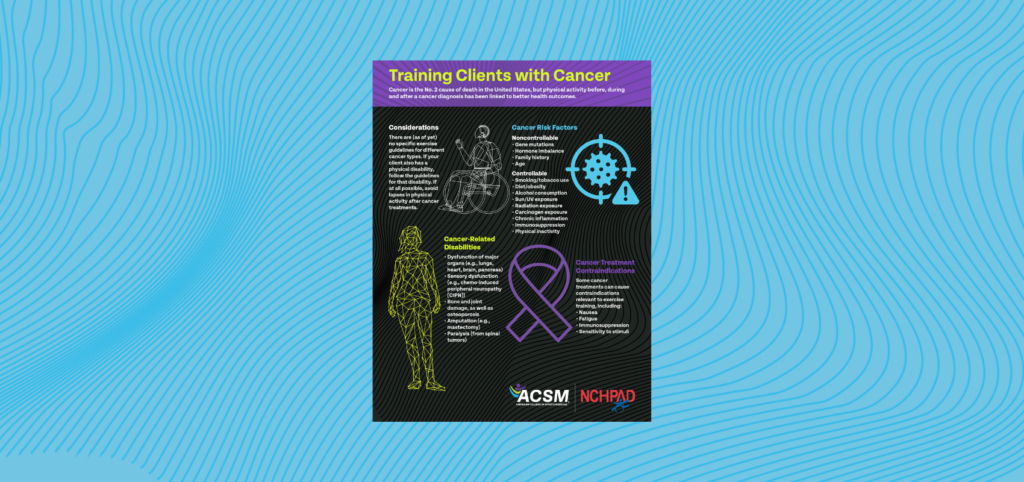
Cancer is the No. 2 cause of death in the United States, but physical activity before, during and after a cancer diagnosis has been linked to better health outcomes.
Moving Through Cancer: Survivors
Explore how cancer survivors can benefit from exercise to improve tolerance and reduce recurrence risks during treatment.