
Adolescents with Sport-Related Concussion Recover Faster When They Adhere to an Aerobic Exercise Prescription
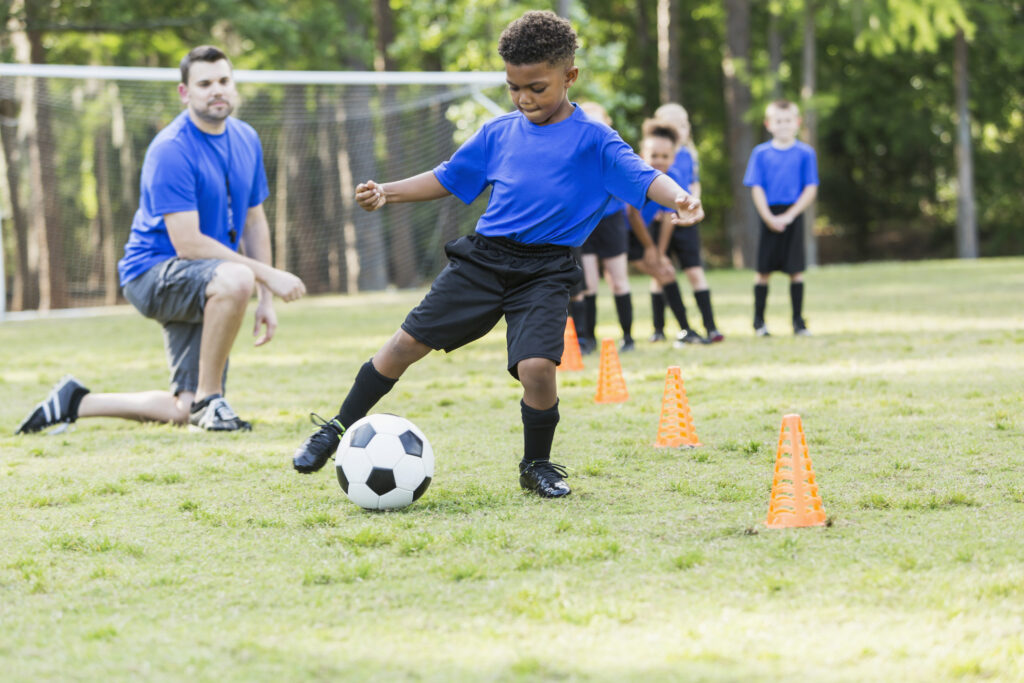
Patients with sport-related concussion have traditionally been advised to employ strict physical and cognitive rest until all of their symptoms resolve, i.e., until they become asymptomatic. This “cocoon therapy” was based largely upon animal research showing that early uncontrolled physical activity delayed recovery from simulated concussion. Emerging evidence over the past decade, however, demonstrates that there is […]
Physical Activity in School-Aged Children

School-aged children should get at least 60 minutes of moderate- or vigorous-intensity physical activity every day of the week. Only 26% of adolescents met these physical activity guidelines in 2018, and that percentage has remained stable since 2011. The COVID-19 pandemic made it even more difficult for children to meet these guidelines. Despite knowing the risk of sedentary behavior […]
Physical Activity Guidelines for School-Age Children
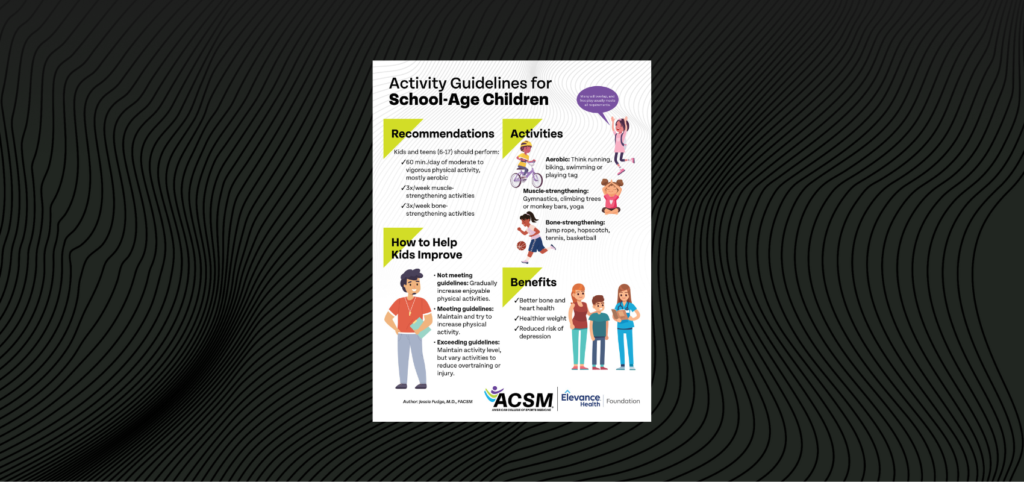
School-aged children should get at least 60 minutes of moderate- or vigorous-intensity physical activity every day of the week
ACSM and National Youth Sports Health & Safety Institute Named NYSS Champions

Both organizations recognized by the President’s Council on Sports, Fitness & Nutrition for promoting participation in youth sports The U.S. Department of Health and Human Services (HHS) is pleased to recognize the American College of Sports Medicine (ACSM) and the National Youth Sports Health & Safety Institute (NYSHSI) as two of the first organizations to […]
Mythbusting | Youth Resistance Training

Myth: Lifting weights is unsafe for children and will stunt their growth. One of the most common myths associated with youth fitness programs is that resistance training is unsafe and harmful to the developing skeleton of children. Unfortunately, these outdated views persist today and some parents and caregivers question if children should lift weights in […]
10 Tips for Building Fit Kids
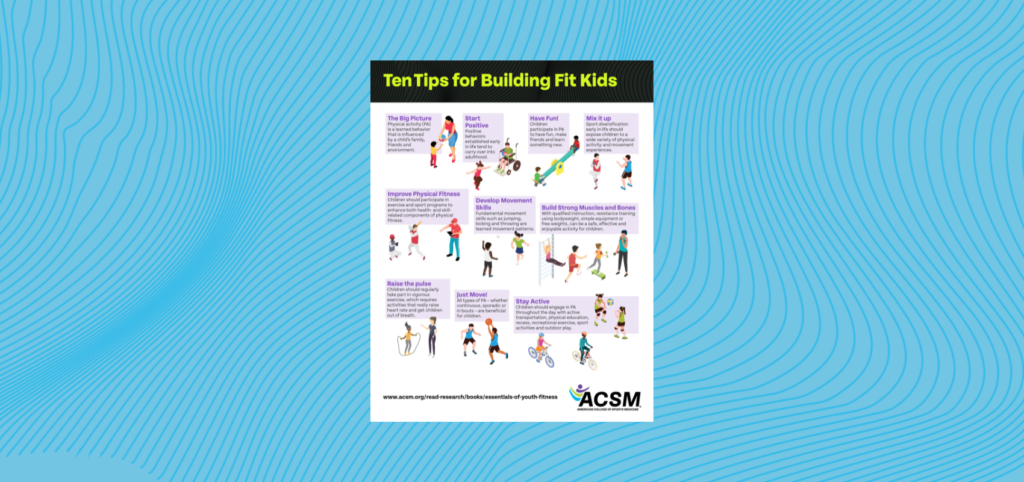
Presented in association with ACSM’s Essentials of Youth Fitness book, and the 10 Myths about Youth Physical Activity blog.
Back into Action: A Coach’s Guide to Putting a Player back in the Game
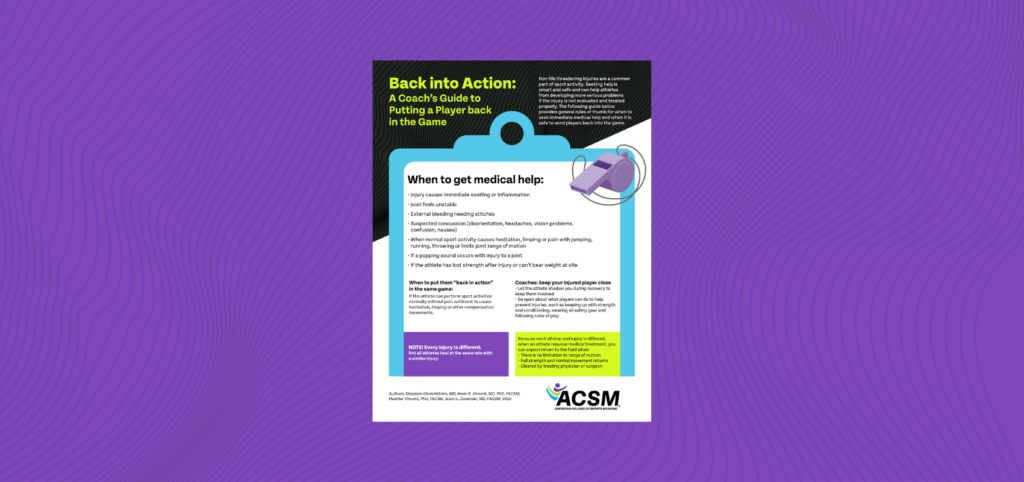
This guide provides general rules of thumb for when to seek immediate medical help and when it is safe to send players back into the game.