
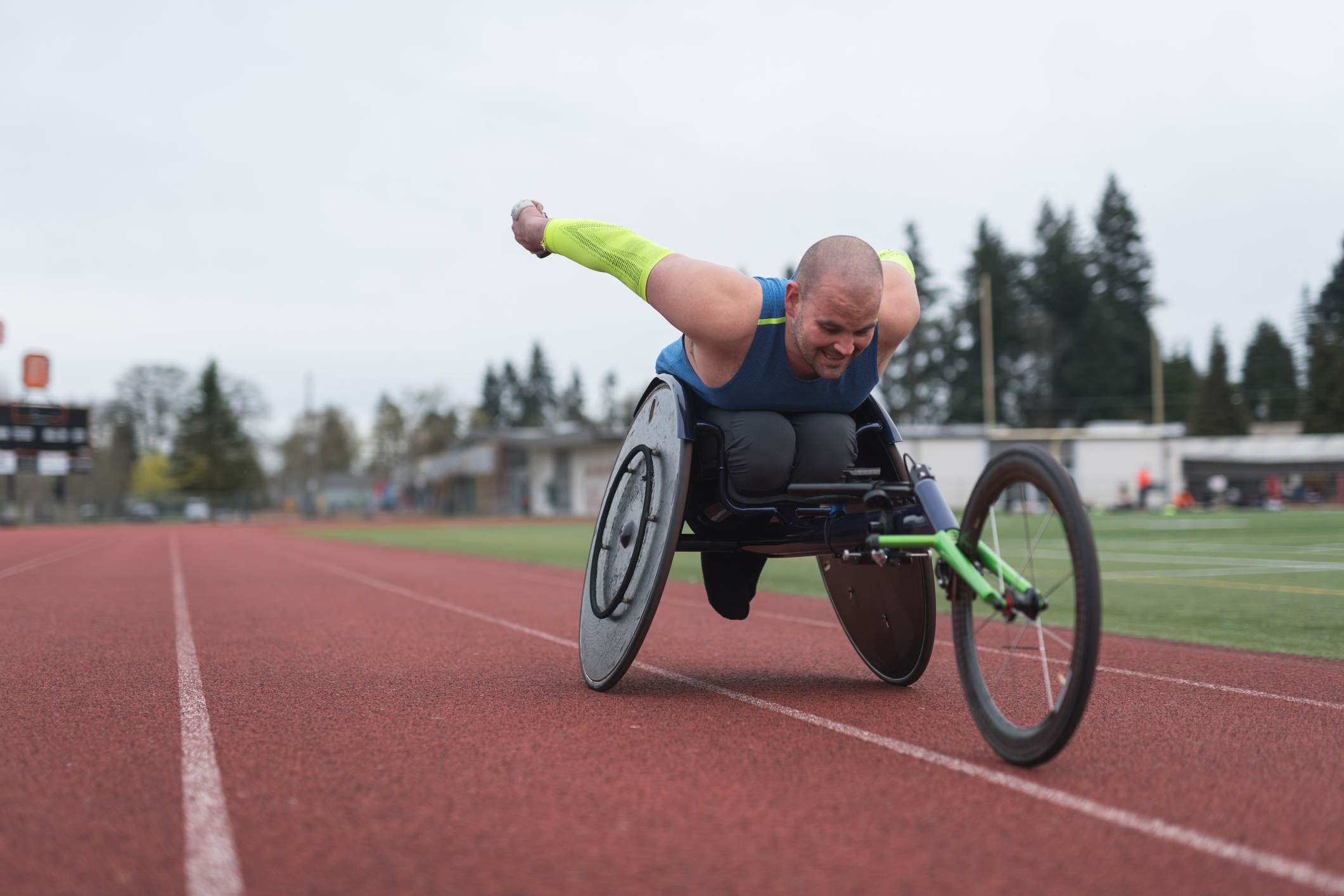
Many perceive paralysis as the most devastating consequence of spinal cord injury (SCI). Yet, among athletes with SCI, autonomic dysfunctions, including impaired blood pressure (BP) control, are also critical, invisible health concerns that can impair cognition, daily activities, and athletic performance. In able-bodied individuals, when moving from lying down to sitting or standing, the autonomic nervous system regulates the heart and blood vessels to keep blood pressure within normal limits, ensuring the brain receives sufficient blood flow and preventing fainting. In athletes with SCI, however, the signal between the brain and sympathetic nervous system is often impaired. When they sit up, their blood pressure drops, and less blood is delivered to the brain. This condition is called Orthostatic Hypotension (OH), and it causes dizziness, blurred vision, fatigue, “brain fog” and potentially leads to loss of consciousness.
The Diagnosis Gap: We Are Missing the Majority
Clinicians and researchers usually classify the observed blood pressure drop into three subtypes based on when the drop occurs during postural changes:
- Initial onset (IOH): Drops in less than 15 seconds
- Classic onset (COH): Drops within 3 minutes
- Delayed (DOH): Drops after 3 minutes
Empirically, the issue is that previous studies have focused solely on the “classic” subtype (COH) when diagnosing OH in athletes with SCI, which has likely resulted in some athletes being left without accurate diagnosis or appropriate management. Our study, published recently in Medicine & Science in Sports & Exercise, examined the prevalence of OH subtypes in 99 athletes with SCI. We found that the “Delayed” group (DOH, drops after 3 minutes) was actually the largest group (14%), larger than the classic group (9%) and the initial group (10%). Because standard testing ends too soon, athletes with delayed OH are often told they are fine, even though they have an underlying medical condition that affects their cognition, performance, and quality of life.
Why This Matters for Sports Fairness?
We analyzed additionally how OH was distributed across the International Wheelchair Rugby Federation (IWRF) classification in a subgroup of 49 rugby players with SCI. The IWRF system assigns point values from 0.5 to 3.5, with lower scores reflecting greater functional impairment. One might expect only the players with the most severe functional impairment to have OH, but we found it happens across all levels of IWRF classification. This raises an important fairness issue. If two players have the same functional performance rank, but one of them suffers from dizziness, fatigue, and cognitive impairment due to OH, an argument can be made that all are not actually playing on a level field. Specifically in this case, the athlete with OH is at a significant disadvantage.
What Needs to Change
Our research suggests two important changes. First, we emphasize that better testing is needed, and specifically that clinicians and researchers need to assess blood pressure for longer than three minutes to catch DOH individuals. And second, we propose that sport governing organizations, such as the International Paralympic Committee (IPC), consider including autonomic evaluations (including the presence of OH) when classifying Paralympians for competition.

Mohamed Gomaa Sobeeh, PT, PhD, received his PhD in musculoskeletal physical therapy from Cairo University, and now has a postdoctoral fellowship in the Autonomic Research Lab at the University of British Columbia. Under the supervision of Dr, Krassioukov, I study the autonomic dysfunctions after spinal cord injury and the possibility of using spinal cord stimulation to mitigate these dysfunctions.

Andrei Krassioukov, MD, PhD, is a clinician-scientist devoted to helping people with spinal cord injury maintain cardiovascular health and achieve their priorities in recovery and rehabilitation. It is his goal, through innovative approaches in education and research, to make spinal cord injury preventable, livable and curable. He is leading the international initiative on development of autonomic assessment, to be added to the presently established neurological evaluation of individuals with spinal cord injury.