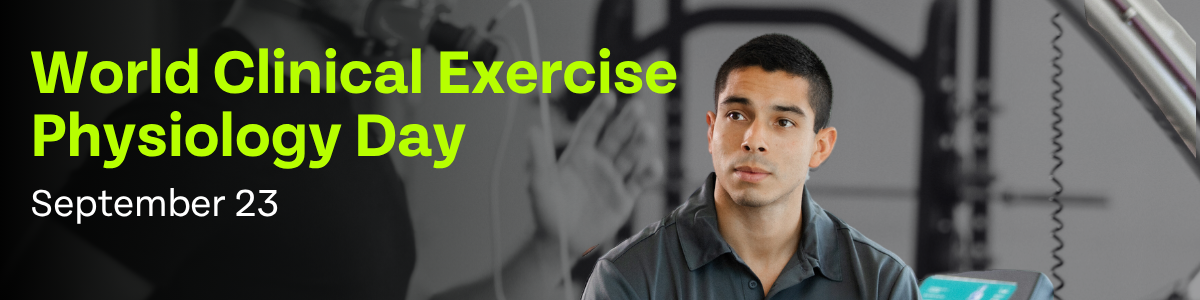
World Clinical Exercise Physiology Day
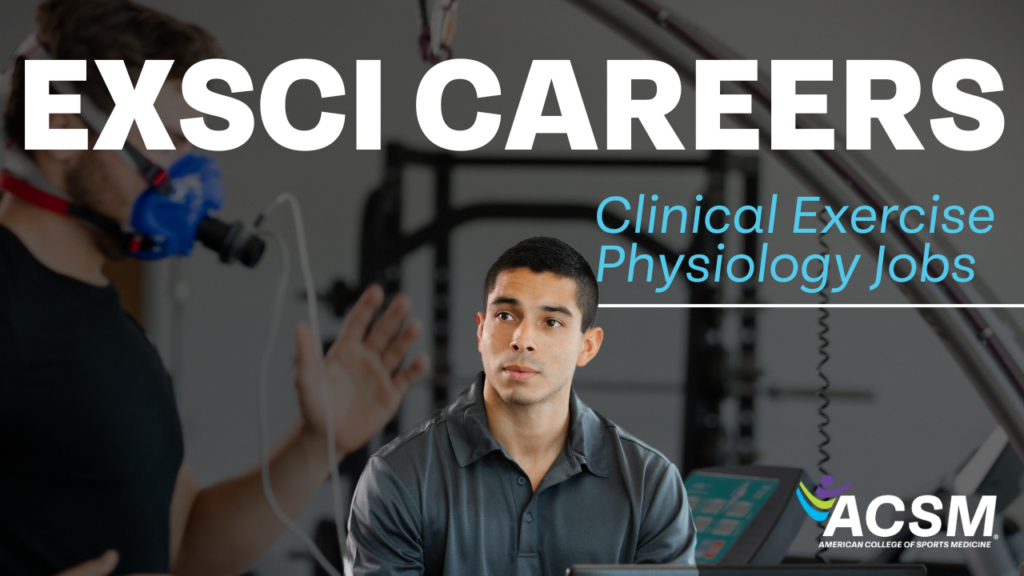
September 23, 2025 is the 2nd annual World Clinical Exercise Physiology Day! ACSM is proud to participate in this day that seeks to raise awareness of the clinical exercise physiologist profession and honor those who work in the field.
Divider line green, blue, black

What is a clinical exercise physiologist?

Clinical exercise physiologists are rising health care professionals who have a minimum of a bachelor’s degree in Exercise Science and 1,200 hours of practical experience OR a master’s degree in Clinical Exercise Physiology and 600 hours of practical experience. The ACSM Clinical Exercise Physiologist (ACSM-CEP®) certification enables these professionals to use evidence-based practice to design, implement and supervise exercise programming for those with chronic diseases, conditions or physical limitations.

ACSM-CEPs perform many critical tasks, including:

  • Conduct exercise assessments (including cardiac stress testing) and training.
  • Identify risk factors.
  • Use behavioral health strategies to help patients make lifestyle changes to improve their physical wellbeing.
  • Perform clinical assessments.
  • Perform tasks related to education and behavior change.
  • Administer exercise programming.

Clinical exercise physiologists work in a number of settings, including hospitals/clinics, rehabilitation facilities, physician’s offices, research-based clinics, universities or corporate settings.

Interested in becoming an ACSM Certified Clinical Exercise Physiologist®? Everything you need to know can be found here. All of the exam prep materials can be found here.

Meet a clinical exercise physiologist

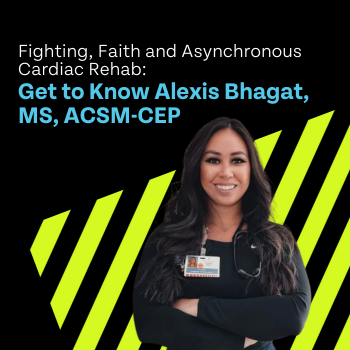
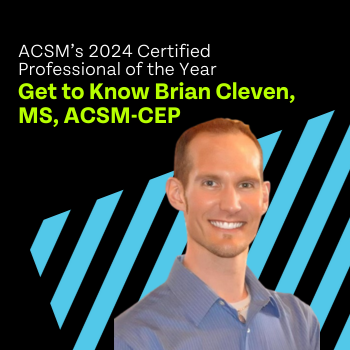
ACSM-CEPs are changing lives every day! We invite you to read the stories of two of these dedicated professionals: Alexis and Brian!
Divider line black, blue, green

Advocacy

ACSM has focused advocacy efforts into the pursuit of reimbursement for clinical exercise physiologists and exercise physiologists through a task force. Learn more about their efforts and movement toward that goal here.

You can also learn more about the professionalization of the exercise profession in the latest, special issue of ACSM’s Health & Fitness Journal®.

Divider line green, blue, black

Keep Learning

Learn more via ACSM’s Health & Fitness Journal®

GSSI Pre-Conference

The Physiology of Hydration: More Than Water Alone

This session explores the physiology of hydration through an integrated lens—examining how carbohydrate, sodium, flavor, and fluid interact to influence intake, absorption, retention, and performance. We’ll review current research on fluid balance, osmotic drivers, and palatability, highlighting mechanisms that underpin voluntary intake and thermoregulation. Attendees will gain insight into individualized strategies, including sweat profiling and timing approaches, to optimize euhydration and mitigate performance decrements associated with >2% body-mass loss. Practical applications will be linked to laboratory- and field-based research, ensuring translation from bench to field. This pre-conference equips you with evidence-based tools to support athlete hydration across diverse environments and sporting contexts. 

Divider line green, blue, black
  • Session 1: Sweating the detail: New insights on hydration considerations for athlete performance
    • Lewis James, PhD, Associate Professor in Human Nutrition in the School of Sport, Exercise and Health Sciences at Loughborough University
  • Session 2: Functional ingredients in fluid replacement beverages for athletes
    • Lindsay Baker, PhD, Director at the Gatorade Sports Science Institute
  • Session 3: The hydration toolkit: Practical approaches to athlete support
    • Floris Wardenaar, PhD, Associate Professor at the College of Health Solutions at Arizona State University