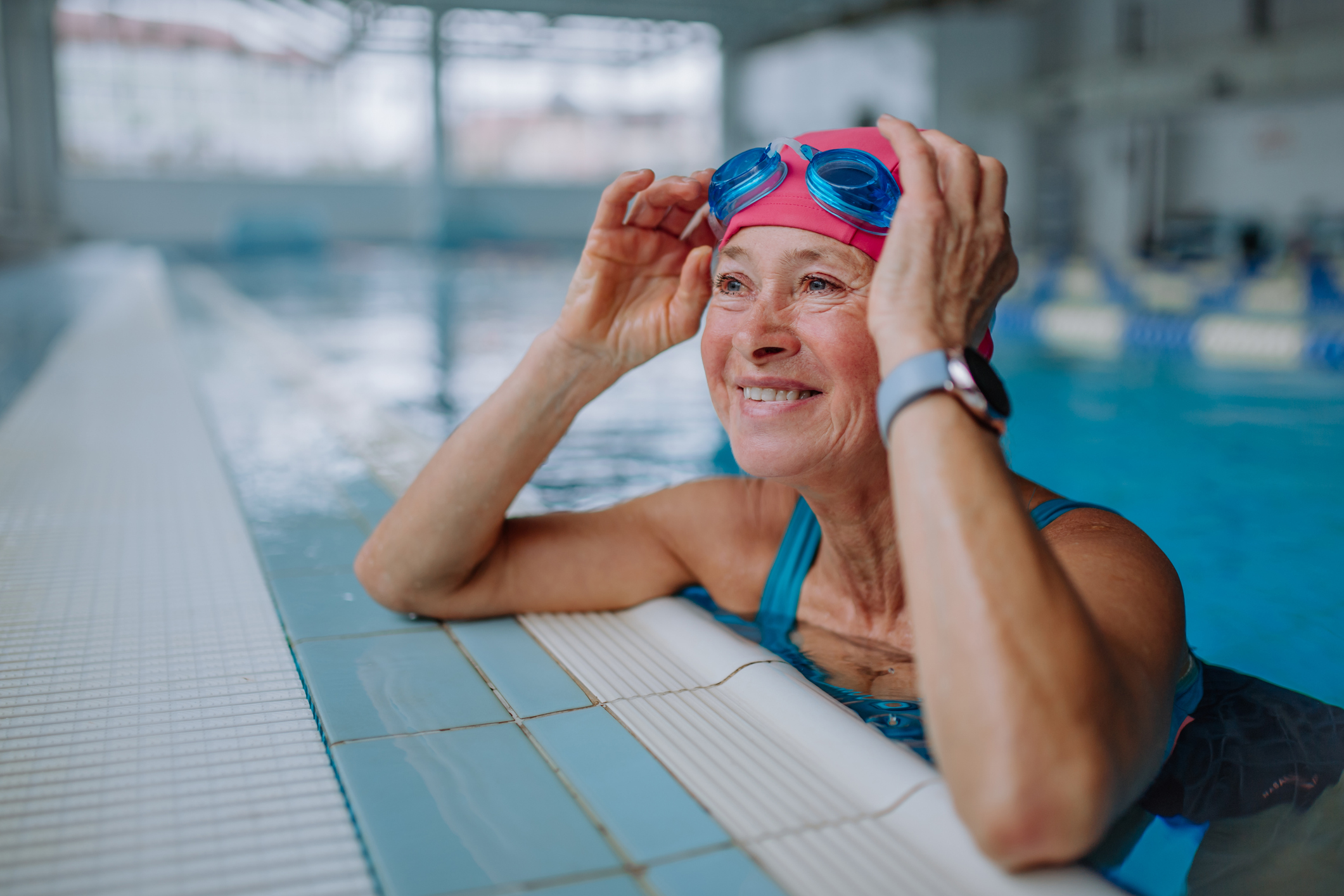
Recent public health guidelines emphasize the importance of high-intensity interval training (HIIT) as an effective strategy for improving cardiometabolic health, particularly among older adults. While land-based HIIT (L-HIIT) has gained popularity, it may not be the best fit for everyone, especially elderly individuals struggling with deconditioning and joint issues. This is where aquatic high-intensity interval training (AHIIT) comes into play, leveraging the unique properties of water to provide a safer and more effective exercise option.
One of the standout forms of AHIIT is deep-water running (AHIIT-DWR), which uses flotation devices to allow seniors to engage in high-intensity workouts without the stress of weight-bearing exercises. This can significantly enhance exercise compliance among older adults who might otherwise be hesitant to participate in more strenuous physical activities. The buoyancy of water reduces the impact on joints, making it easier for seniors to maintain a consistent exercise routine. As we age, maintaining aerobic capacity becomes crucial for overall health, especially for older women who often face heightened health risks, including cardiovascular disease and metabolic disorders. Engaging in higher-intensity training is essential for mitigating these risks, and incorporating AHIIT into exercise regimens can provide older adults with the necessary intensity to achieve these benefits.
Our study, published in the November 2024 issue of Medicine & Science in Sports & Exercise®, sought to address this. We asked 70 inactive elderly women to participate in a randomized controlled trial comparing AHIIT-DWR and LHIIT over eight weeks. Participants were carefully screened and assigned to one of the two groups (AHIIT-DWR and LHIIT, respectively), both engaging in 30-minute sessions twice a week that included warm-ups, HIIT intervals and cool-downs. The AHIIT-DWR group focused on two-minute running intervals at 80% of heart rate reserve (HRR), whereas the LHIIT group utilized treadmill running.
Both groups showed significant improvements in cardiorespiratory fitness, with AHIIT-DWR participants experiencing greater enhancements in relative VO2. Furthermore, our results indicate that both groups had reductions in triglyceride levels, underscoring the effectiveness of both training modalities in promoting cardiometabolic health. Interestingly, no significant differences in enjoyment or self-efficacy were reported between the two groups, indicating that both AHIIT-DWR and LHIIT resonate well with participants. It was surprising that equal participation rates were noted for both interventions, highlighting their potential for long-term engagement in physical activity. While preparing to go to a pool may seem more difficult than getting ready for a run, the high adherence could be attributed to the availability of reliable public transportation in the area, making access to the pool more convenient for participants.
AHIIT-DWR clearly stands out as a promising alternative to traditional HIIT for improving cardiometabolic health in inactive older individuals. Its unique benefits, combined with high levels of participant satisfaction, make it an invaluable option for health care professionals designing exercise programs. By incorporating AHIIT into fitness regimens, we can help older adults not only improve their physical health but also enhance their quality of life, proving that age need not be a barrier to staying active and healthy.

Billy C.L. So, PhD, is an assistant professor in the Department of Rehabilitation Sciences at the Hong Kong Polytechnic University. With a keen focus on aquatic exercises, his research explores their impact on health and biomechanics. He serves as secretary of the International Organisation of Aquatic Physiotherapists (IOAPT) and as chairperson of the Hong Kong Physiotherapy Association Aquatic Physiotherapy Specialty Group. He is committed to enhancing the well-being of individuals through evidence-based practices.