The Canadian Society for Exercise Physiology (CSEP) is the recognized authority in Canada for evidence-based exercise science and personal fitness. CSEP brings together researchers and certified professionals who are committed to advancing the science of exercise physiology and its practical application to improve health, fitness, and performance. CSEP plays a vital role in promoting physical activity and health across Canada through standards, research leadership, and professional certification. ACSM and CSEP share a long-standing commitment to collaboration, advancing the global impact of exercise science and professional practice.
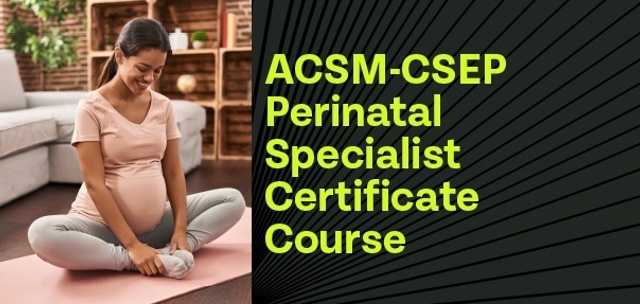
This ACSM-CSEP perinatal certificate—developed by Margie Davenport, PhD, FACSM, Michelle Mottola, PhD, FACSM, and Stephanie Ruchat, PhD—program provides evidence-informed guidance for professionals supporting women through pregnancy and postpartum recovery. The course includes four modules covering physiological changes, exercise guidelines, trimester-specific adaptations, and postpartum health. Topics include fetal development, myths and contraindications, resistance training, and the role of physical activity in reducing chronic disease risk.
ACSM endorses CSEP’s “Canadian 24-Hour Movement Guidelines for the Early Years (0–4 years): An Integration of Physical Activity, Sedentary Behaviour, and Sleep”, which includes postpartum-specific recommendations. These guidelines offer a comprehensive, evidence-informed framework to support postpartum individuals in returning to physical activity safely and effectively.
The Physiology of Hydration: More Than Water Alone
This session explores the physiology of hydration through an integrated lens—examining how carbohydrate, sodium, flavor, and fluid interact to influence intake, absorption, retention, and performance. We’ll review current research on fluid balance, osmotic drivers, and palatability, highlighting mechanisms that underpin voluntary intake and thermoregulation. Attendees will gain insight into individualized strategies, including sweat profiling and timing approaches, to optimize euhydration and mitigate performance decrements associated with >2% body-mass loss. Practical applications will be linked to laboratory- and field-based research, ensuring translation from bench to field. This pre-conference equips you with evidence-based tools to support athlete hydration across diverse environments and sporting contexts.
Session 1: Sweating the detail: New insights on hydration considerations for athlete performance
Lewis James, PhD, Associate Professor in Human Nutrition in the School of Sport, Exercise and Health Sciences at Loughborough University
Session 2: Functional ingredients in fluid replacement beverages for athletes
Lindsay Baker, PhD, Director at the Gatorade Sports Science Institute
Session 3: The hydration toolkit: Practical approaches to athlete support
Floris Wardenaar, PhD, Associate Professor at the College of Health Solutions at Arizona State University