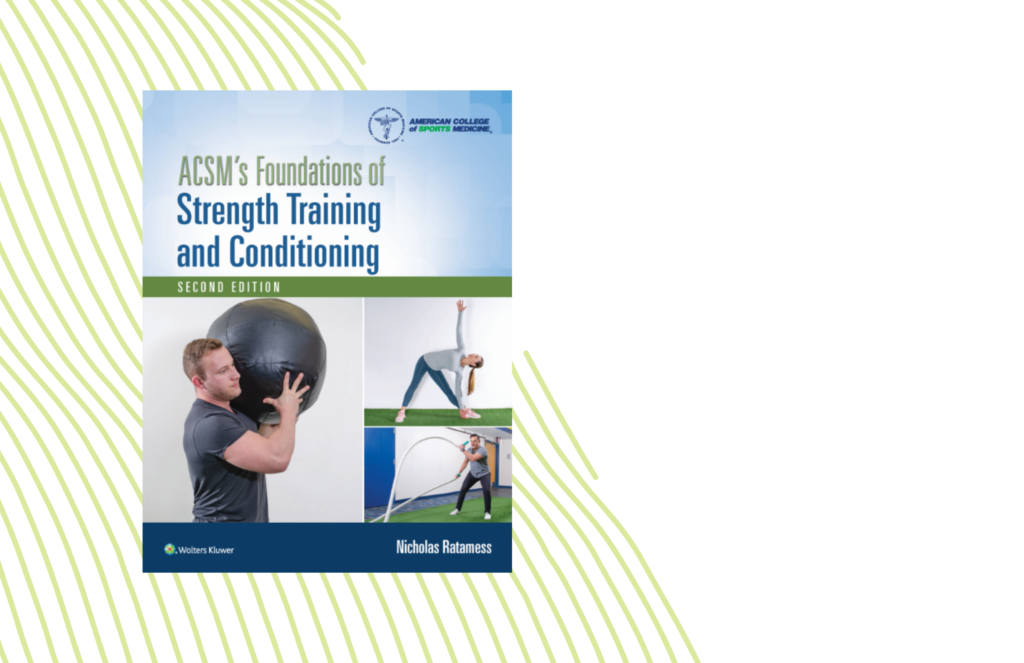
ACSM's Foundations of Strength Training and Conditioning
Developed by the American College of Sports Medicine with author Nicholas Ratamess, PhD, this text offers a comprehensive introduction to the scientific study and practical information regarding the training and testing of athletes and a foundation in basic physiology and kinesiology. The second edition features a new chapter on nutrition, aligns with the latest edition of ACSM’s Guidelines for Exercise Testing and Prescription, among other enhancements.
ACSM’s Foundations of Strength Training and Conditioning is divided into four parts:
Historical and strength and conditioning field-related foundations
Basic biomechanics, nutrition, and physiology
Flexibility, sprint, plyometric, balance, agility, aerobic, and resistance training program design and exercise prescription
Testing and evaluation
The new print edition of this title includes lifetime access to the digital version of the book, plus related materials such as videos and multiple-choice Q&A and self-assessments, allowing integrated online access to all content for the title.
This book comes with additional exercise technique video resources.
Student/individual online resources include: interactive question banks, videos, animations, and images of hundreds of additional exercise and exercise
Instructor resources include: PowerPoint presentations, answers, test questions, and image banks. Instructors interested in adopting the new edition of this title can request more information here.
Learn More
Related Resources
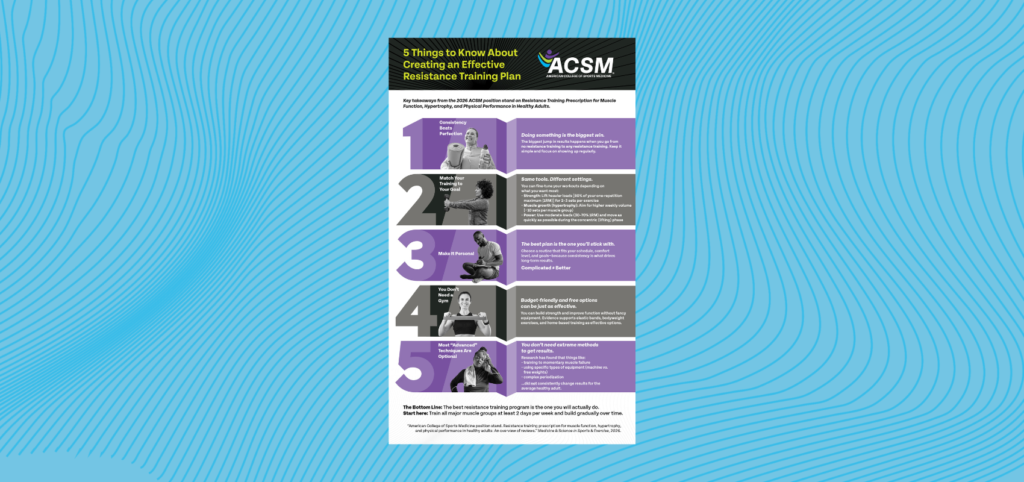
ACSM Unveils Landmark 2026 Resistance Training Guidelines — First Update in 17 Years
New evidence review of data from 30,000+ participants finds the biggest benefits come from consistency, not complicated programs The American
The Physiology of Hydration: More Than Water Alone
This session explores the physiology of hydration through an integrated lens—examining how carbohydrate, sodium, flavor, and fluid interact to influence intake, absorption, retention, and performance. We’ll review current research on fluid balance, osmotic drivers, and palatability, highlighting mechanisms that underpin voluntary intake and thermoregulation. Attendees will gain insight into individualized strategies, including sweat profiling and timing approaches, to optimize euhydration and mitigate performance decrements associated with >2% body-mass loss. Practical applications will be linked to laboratory- and field-based research, ensuring translation from bench to field. This pre-conference equips you with evidence-based tools to support athlete hydration across diverse environments and sporting contexts.
Session 1: Sweating the detail: New insights on hydration considerations for athlete performance
Lewis James, PhD, Associate Professor in Human Nutrition in the School of Sport, Exercise and Health Sciences at Loughborough University
Session 2: Functional ingredients in fluid replacement beverages for athletes
Lindsay Baker, PhD, Director at the Gatorade Sports Science Institute
Session 3: The hydration toolkit: Practical approaches to athlete support
Floris Wardenaar, PhD, Associate Professor at the College of Health Solutions at Arizona State University