
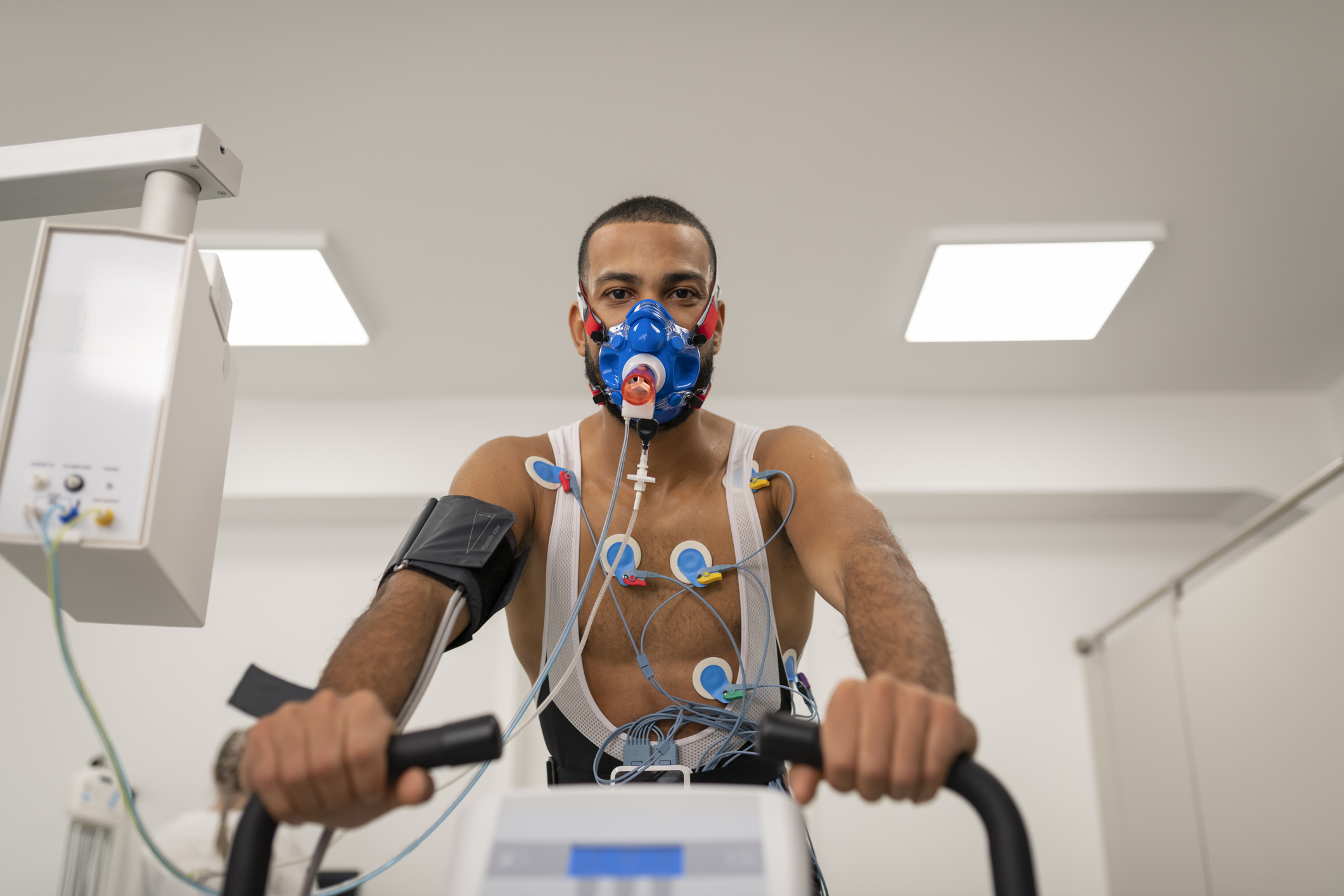
There is an abundance of evidence demonstrating that high levels of cardiorespiratory fitness (CRF) are associated with decreased risk for early mortality, chronic disease and some infectious diseases, as well as lower health care costs. The evidence is so strong that the American Heart Association suggested CRF be considered a clinical vital sign that is regularly measured alongside other established risk factors (e.g., blood pressure, cholesterol). Since CRF is most commonly estimated from an exercise test that does not incorporate cardiopulmonary measures, which provide objective indices of effort, it is important to be able to determine effort using subjective indicators.
Rating of perceived exertion (RPE) is typically monitored during exercise testing using the classic 6-20 Borg scale. Advantages of the Borg RPE scale are that it is cost free, requires no instrumentation and is easy to explain and interpret. Monitoring RPE is valuable as it relates to objective measures of exercise intensity (i.e., heart rate) independent of sex, age, exercise mode, and physical activity status and is commonly used when developing exercise prescriptions. Plus, peak RPE is often used as a subjective indicator to determine if maximal effort during the exercise test was achieved. However, since reference standards for peak RPE are not available, there is the potential for inconsistency in test interpretation among laboratories and clinics.
Our study, published in the January 2023 issue of Medicine & Science in Sports & Exercise®, aimed to improve peak RPE interpretations by developing reference standards for the 6-20 Borg scale. We utilized the Fitness Registry and the Importance of Exercise National Database (FRIEND), which collects resting and exercising test data from high-quality laboratories and clinics. FRIEND has previously been used to create reference standards for CRF (used in ACSM’s Guidelines for Exercise Testing and Prescription, 10th and 11th Eds.), ventilatory efficiency, peak oxygen pulse, ventilatory threshold, peak ventilation, peak circulatory power, and peak blood pressure, which aid in interpreting exercise test results. In creating the peak RPE reference standards, we determined percentiles of peak RPE for each decade of age for treadmill and cycle exercise modes for both men and women.
The key finding from this research was the general consistency of peak RPE responses during maximal exercise testing. The mean and median peak RPE across sex, age and test mode were between 18 and 19 (on the 6-20 scale), with 83% of participants reporting a rating ≥18, the traditional subjective definition of maximal effort. Overall, this report provides the first normative reference standards for peak RPE during maximal exercise testing on a treadmill or cycle ergometer, which can improve exercise test interpretations. This will be particularly useful in the large number of settings that do not incorporate the gold-standard cardiopulmonary exercise test and thus rely on subjective indicators to determine whether a participant performed a maximal effort.

James Peterman, PhD, is an ACSM member and data scientist at Adyptation. His research and current work focus on improving health and well-being through physical activity, physical fitness and other healthy lifestyle behaviors.

Matthew Harber, PhD, FACSM, is a professor and director of the Clinical Exercise Physiology Program at Ball State University and is currently the clinical exercise physiology topical representative for ACSM. His research examines the cardioprotective effects of high cardiorespiratory fitness (i.e., VO2max) and the prognostic use of cardiopulmonary exercise testing in determining disease risk.
Viewpoints presented in SMB commentaries reflect opinions of the authors and do not necessarily represent ACSM positions or policies. Active Voice authors who have received financial or other considerations from a commercial entity associated with their topic must disclose such relationships at the time they accept an invitation to write for SMB.