
A Fitness Professional’s Introductory Guide to Assessing Static Posture: Part I
Over the last decade or so, assessing static and dynamic posture has become increasingly common during health and fitness assessments performed by certified fitness professionals with clients, athletes, and patients. This has been a great addition to certified fitness professionals’ toolboxes to assist in determining possible postural deviations and movement compensations that may be caused […]
The Pros and Cons of Hiring a Financial Advisor for Sports Medicine Professionals

Are you tired of feeling overwhelmed and stressed when it comes to your finances? You’re not alone. As a sports medicine professional, you’re no stranger to the ups and downs of the industry. Frequent injuries and hectic schedules can make your job incredibly demanding. Even stressful. But there’s one thing that shouldn’t keep you up […]
First, You: Self-Care Strategies for Caregivers
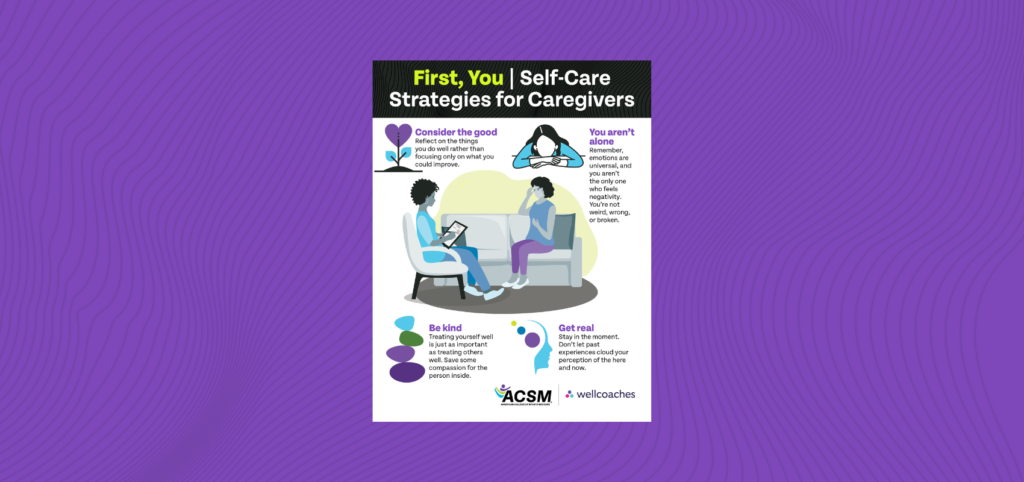
Fitness professionals and medical professionals provide care to clients and patients everyday, as do the thousands of others caring for family members, friends and their communities. When you’re so focused on providing care for others, you may lose sight of caring for yourself.
Stepping up Your Fitness Career: From Frontline to Management

When enthusiastic fitness professionals get certified as either a personal trainer, group exercise instructor and/or exercise physiologist, they are usually eager to get started helping others with their health and fitness goals. While many fitness professionals knew they wanted to be in this field from high school or college, others decided to change career paths […]
Supporting Your Clients’ Emotional Needs
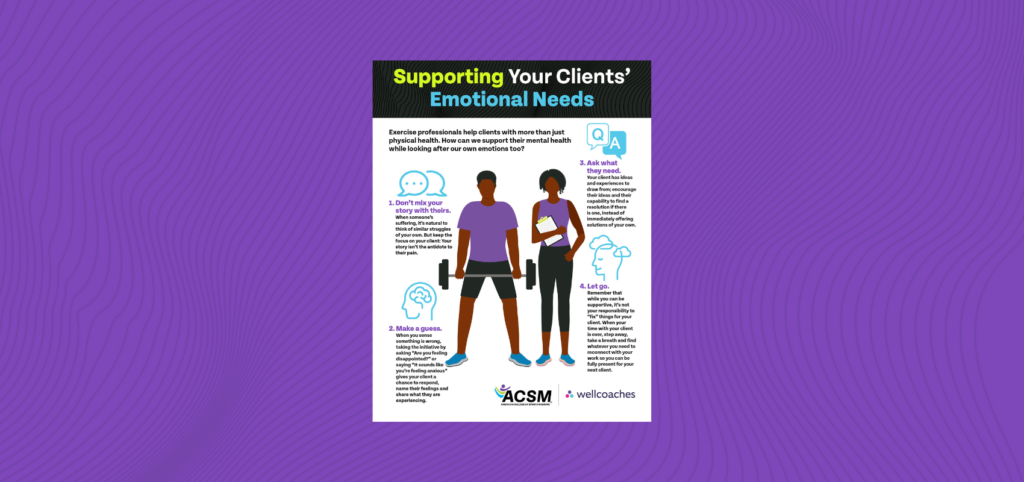
Exercise professionals help clients with more than just physical health. How can we support their mental health while looking after our own emotions too? Check out these tips.
The Benefits of High-Intensity Training for People with Parkinson’s Disease
What is Parkinson’s disease? Parkinson’s disease (PD) is a progressive neurodegenerative condition associated with low levels of the neurotransmitter dopamine, due to damage that occurs in a part of the midbrain known as the substantia nigra. People living with PD will have a combination of motor and nonmotor symptoms that can adversely affect activities of daily […]
A Not-So-Traditional Path to a Career as a Certified Wellness Professional

As a society, we are facing ballooning rates of obesity, Type 2 diabetes, heart disease and high blood pressure, conditions that drive up health costs, decrease productivity and erode quality of life. Exercise can have a positive impact on all of these conditions, yet many people don’t have access to informed, competent professionals who can […]
GSSI Presented Webinar Q&A | Follow Your Gut

Miss the webinar? Access it below View recording Q: Angiogenesis function? This is new to me. Are there are references you can point me/us to? Franks I. Gut microbes might promote intestinal angiogenesis. Nat Rev Gastroenterol Hepatol. 2013;10(3). doi: https://doi.org/10.1038/nrgastro.2012.227. Hassan M, Moghadamrad S, Sorribas M et al. Paneth cells promote angiogenesis and regulate portal […]
Social Determinants of Health
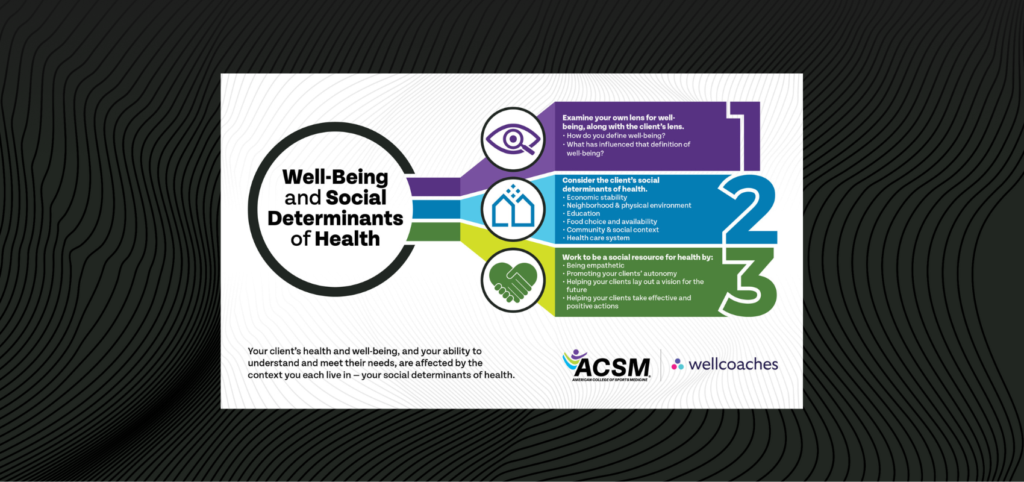
Your client’s health and well-being, and your ability to understand and meet their needs, are affected by the context you each live in — your social determinants of health.
Top 3 Evidence-Based Practices for Exercise Programming in Autism
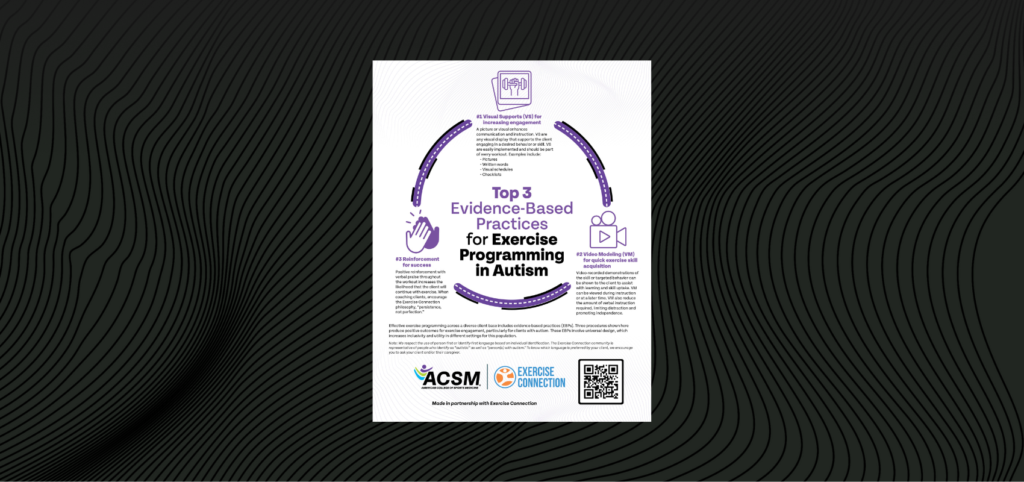
Effective exercise programming across a diverse client base includes evidence-based practices (EBPs). Three procedures shown here produce positive outcomes for exercise engagement, particularly for clients with autism. These EBPs involve universal design, which increases inclusivity and utility in different settings for this population.