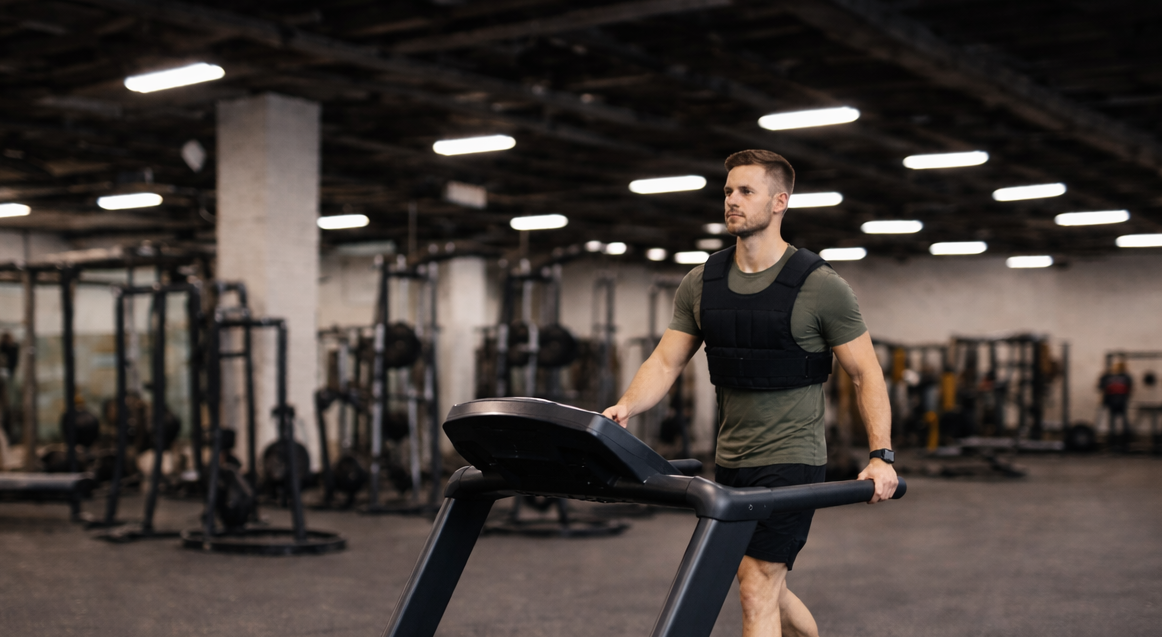
Weighted vest use has garnered wide-spread popularity, with many internet influencers and social media proponents promoting health and fitness claims. Given the gap between testimonials and systematic research, distinguishing facts from stories is essential. In this commentary, we address common questions regarding verifiable physiological outcomes from their use and provide advice fitness professionals can give to interested clients.
How much does wearing a weighted vest increase walking energy expenditure?
Weighted vests are an effective way to boost the calories burned while walking. Research from our laboratory with untrained persons (ages 18 to 55 yrs) shows that walking 2.5 mph while wearing a weighted vest of 15% of your body weight will increase energy expenditure approximately 12% compared to walking without one. Another research team had healthy young adults walk at 3.0 mph and found a 20% of body weight vest to be most effective with an energy expenditure increase of 13%.
For weight loss clients, how effective is adding a weighted vest to walking routines?
Weighted vest walking is a viable, low-impact strategy to increase caloric expenditure. However, optimal weight loss results are achieved by integrating dietary modifications, behavior changes, and structured exercise (both cardiorespiratory and strength training).
If a client is physically limited in walking speed, are there other options to increase energy expenditure with a weighted vest?
If a treadmill is available, try slow walking at an incline with a weighted vest. Based on our testing, a 5% to 10% treadmill grade combined with a vest weighing 10% of body weight provides the optimal caloric expenditure boost (13% more calories) and enjoyment for many individuals. Because acclimation to inclined walking varies, ease into incline treadmill walking by establishing a base at 5% incline for several workouts before progressing to a 10% incline.
What type of weighted vest is best for walking, jogging and exercise?
Fortunately, there are an abundance of purchasing options for weighted vests, both online and in-store. Select a weighted vest that has padding, a breathable fabric, and secure, adjustable straps. Choose an adjustable weighted vest to support progressive loading as you get stronger. Pick a vest that allows for the convenient swapping of the weight inserts. Also, vests that distribute the weight evenly across your front and back are more favorable for maintaining good posture and comfort when wearing.
How heavy should you start wearing a weighted vest for walking, jogging and exercise?
Begin with a lighter weighted vest and progress the weight slowly. To safely adapt to a weighted vest, start with roughly 5% of your body weight. Depending on the fitness level of the client, the goal for most users is to eventually walk, jog and exercise with a vest equaling 10% to 20% of body weight. Also, for sedentary or beginner clients, begin with 10 minutes of weighted vest walking during the introductory, lower-intensity phase of their walk. Then, steadily scale up wearing time as their body adapts to the workload.
Is there a range of exercises and lifestyle movements you can use a weighted vest for?
Weighted vests are incredibly versatile. They easily integrate into walking, stair climbing, squats, and other fitness routines. Just as you swap weights during strength training, a weight adjustable vest is highly practical for varying the weight between different exercises. Although some online trend setters encourage wearing weighted vests throughout the day, the continuous and varied twisting and turning movements during the day may create a possible risk of musculoskeletal strain or joint damage.
Does wearing a weighted vest while walking improve bone health?
It is a common misconception that walking with a weighted vest meaningfully boosts bone mineral density. Walking, even with added weight, does not deliver the high-magnitude compressive forces required to stimulate bone growth. To maximize bone health, incorporate impact, weight-bearing activities (e.g., jumping, running) and loaded resistance training, as these provide the necessary mechanical stress for optimizing bone maintenance. Additionally, contrary to popular social media claims, research indicates that daily, long-term use of a weighted vest does not effectively prevent hip bone density loss in older adults. Consequently, to slow bone loss include modified squats, lunges, wall push-ups, and heel raises, which target key areas like the hips, spine, and wrists.
Does weighted vest use while walking, jogging or running improve a person’s cardiorespiratory health?
Yes, weighted-vest training can significantly increases cardiovascular intensity and oxygen uptake, making it an effective way to boost long-term heart health and fitness.
Concluding Remarks
Weighted vests are a convenient, hands-free fitness tool that add resistance to any routine. Used safely, they increase calorie expenditure, amplify workout intensity, improve cardiovascular health, and may support weight management goals, making them a versatile addition to a person’s fitness program.

Len Kravitz, PhD, CSCS, is a professor and undergraduate program coordinator of exercise science at the University of New Mexico where he received the Presidential Award of Distinction, the Erna S. Fergusson Award for professional accomplishments, and the Outstanding Teacher of the Year Award. He proudly served on ACSM’s Health and Fitness Summit Planning Committee for many years.