
Exercise, Sport, and Movement Publishes First Article: Graphical Review

Here we are in early 2023, and Exercise, Sport, and Movement (ESM) is beginning to roll. ESM came into existence at the start of 2022—we put together an editorial team in the late spring and summer, and we began accepting submissions in the early fall. It has been a whirlwind, yet we met our initial goal of publishing at […]
Progressive Resistance Training: A Way to Combat Persistent Pain after Breast Cancer Treatment

Persistent pain is among the most common adverse effects to breast cancer and its treatments. It affects 25-60% of patients and can linger for several years as a source of considerable physical and psychological distress. Among other things, pain after breast cancer is a primary source of upper limb dysfunction and has been associated with […]
Cancer Survivors with Chronic Fatigue Display Rapid Impairments in Muscle Function During Exercise

Cancer-related fatigue (C-rF) is a debilitating symptom that affects around one-third of people for months or years after cancer treatment. While the etiology of C-rF remains uncertain, it has been demonstrated that cancer survivors with C-rF display impaired exercise tolerance compared with those without C-rF, with the degree of exercise intolerance associated with chronic fatigue […]
Low Fit Patients with Breast Cancer May Not Complete Chemotherapy
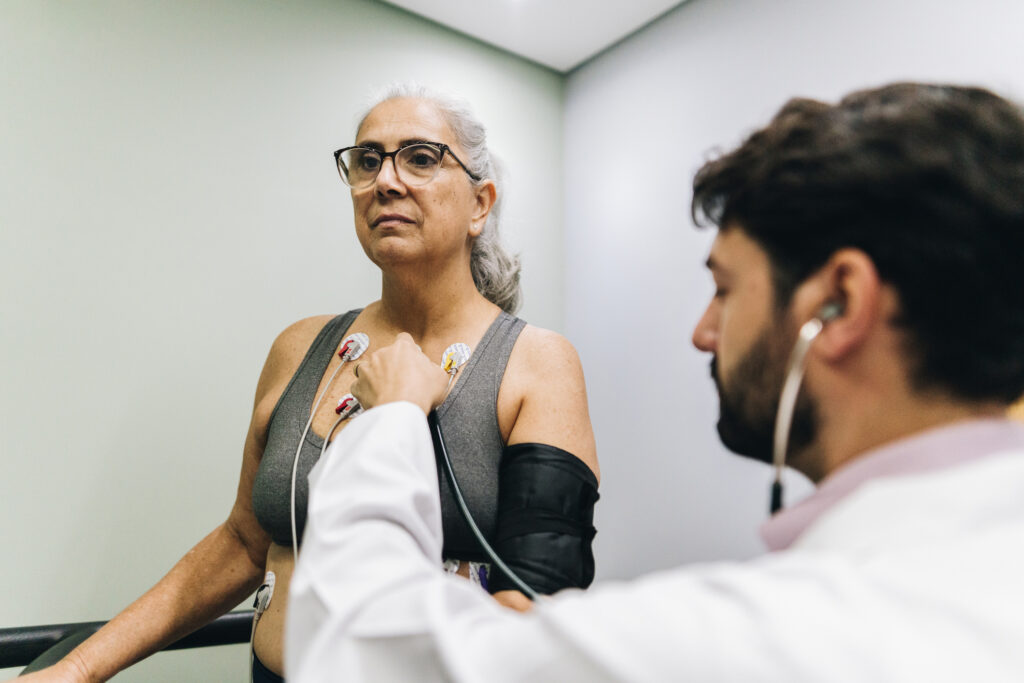
Several international guidelines and position statements have recommended that exercise should be embedded as standard practice in cancer care. The main argument for this has been symptom control, in particular for fatigue. Exercise during or after cancer treatment also improves quality of life, physical and role functioning, and reduces anxiety and depression. Following the 2018 […]
Muscle and Cancer: Outcomes and Expectations
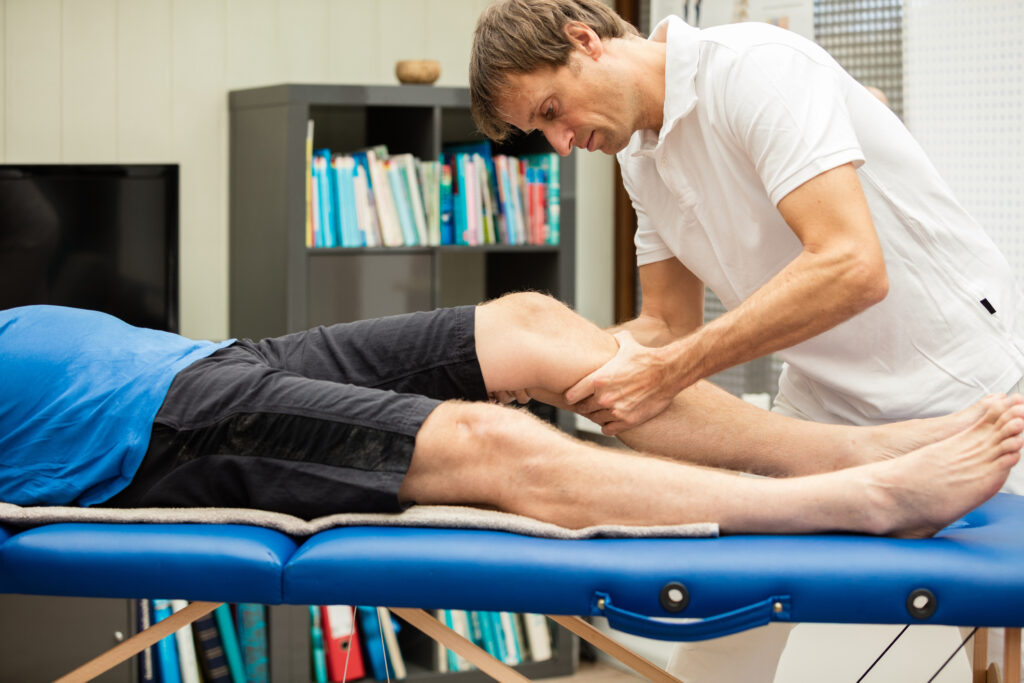
Low muscle and prognosis The question of muscle and cancer is one of the most fascinating and rapidly growing areas of exercise oncology. Dr. Carla Prado is considered one of the godmothers of this field: Her 2007 study identified low lean body mass as a predictor of chemotherapy toxicity in individuals with colon cancer. Since then, […]
From Bench-top to Bedside: Is Exercise Truly a Cancer Medicine?

In 2009 our team published the Australian guidelines on exercise and physical activity for people with cancer emphasizing the imperative that clinicians should reject the rest strategy. Rather, patients should be physically active most days using a combination of aerobic and resistance training aiming to accumulate 75 to 150 minutes of moderate to vigorous exercise […]
Physical Activity Guidelines for Cancer
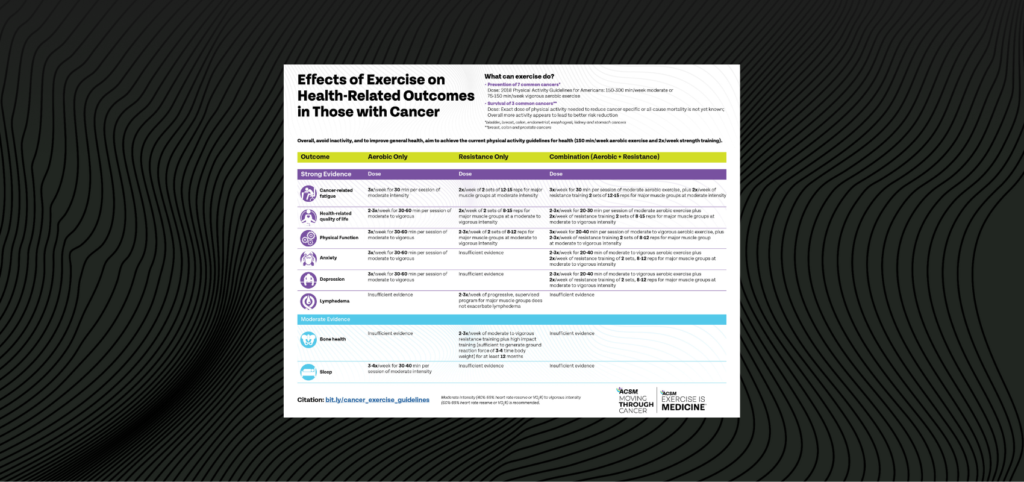
This chart outlines the effects of exercise on health-related outcomes in those with cancer. The guide features evidence-based physical activity recommendations and the associated benefits for specific symptoms and side effects of cancer and its treatments.
Exercise for Cancer Prevention and Treatment
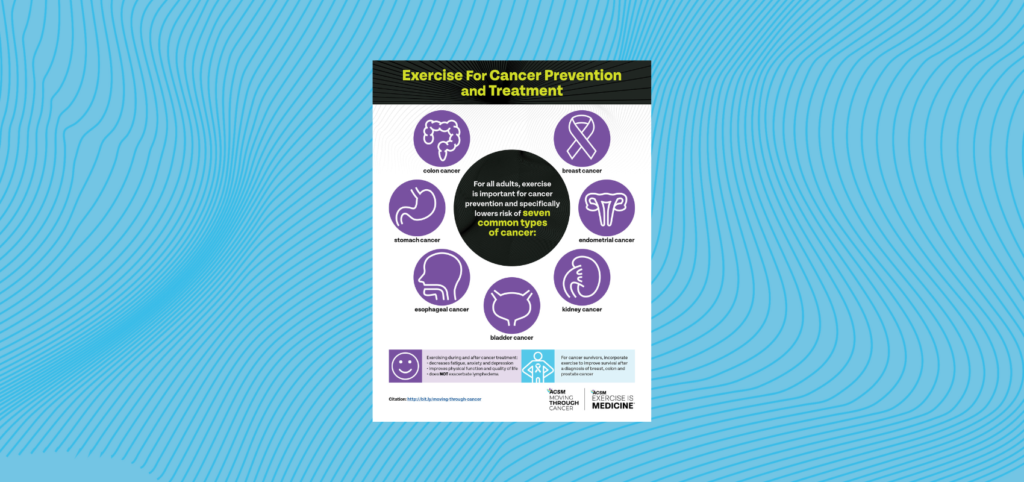
For all adults, exercise is important for cancer prevention and specifically lowers risk of seven common types of cancer: colon, breast, endometrial, kidney, bladder, esophagus and stomach.