Being Active When You Have a Bleeding Disorder | Rx for Health
Many people with bleeding disorders limit their physical activity. This increases their risk of developing heart problems, obesity and diabetes.
Being Active When You Have Atrial Fibrillation | Rx for Health
People with atrial fibrillation (AF) who are more fit have fewer of the bad consequences related to their AF. Being active also reduces risk factors that lead to heart attacks, strokes, or more serious heart rhythm problems.
Being Active When You Have Asthma | Rx for Health
Do you want to feel better, move better and sleep better? Being active reduces how bad and how often asthma attacks occur, resulting in fewer emergency room visits and less worry.
Being Active with Alzheimer’s Disease | Rx for Health
Being active can help people with Alzheimer’s disease and related dementia (ADRD) feel better, move better and sleep
better. Experts now say that any physical activity counts toward better health — even just a few minutes!
Being Active When You Have an Aneurysm | Rx for Health
Do you want to feel better, move better and sleep better? Experts now say that any physical activity counts toward better health – even just a few minutes!
Staying Active When Feeling Frail | Rx for Health
The more challenging life becomes, the more you can benefit from physical activity. You are never too old to start being physically active. While it may or may not change the number of years you live, it will help you feel better overall.
Being Active as a Teen | Rx for Health
Your teen years are a time to discover who you are and who you want to become. That includes learning to feel joy and energy and confidence in your body. Make friends and express YOU.
Sit Less, Move More | Rx for Health
Too much sitting saps your energy, makes joints stiff, and affects overall health. Learn how to sit less and move more to improve your health.
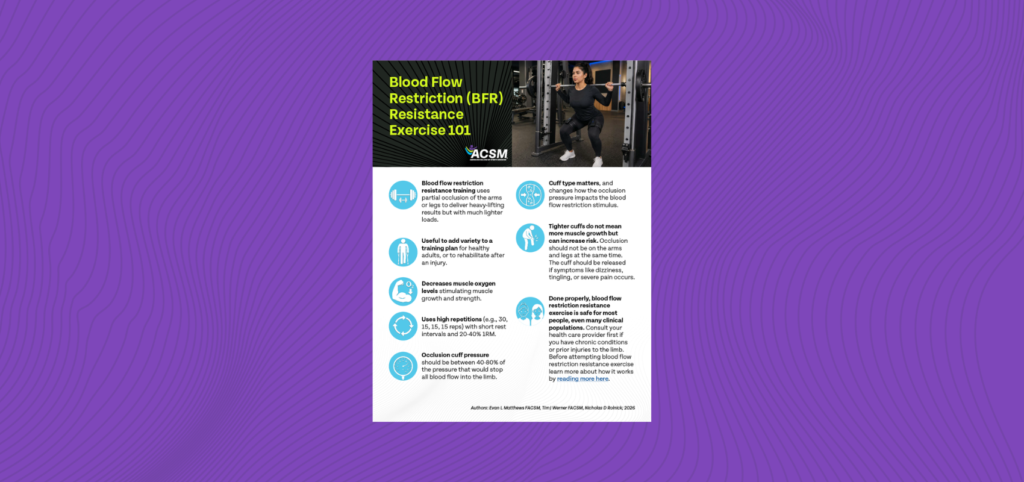
Blood Flow Restriction (BFR) Resistance Exercise 101 | Infographic
Explore the economic cost of physical inactivity and discover how regular activity reduces healthcare expenses and boosts productivity. Infographic developed by the ACSM American Fitness Index.
ACSM Unveils Landmark 2026 Resistance Training Guidelines — First Update in 17 Years
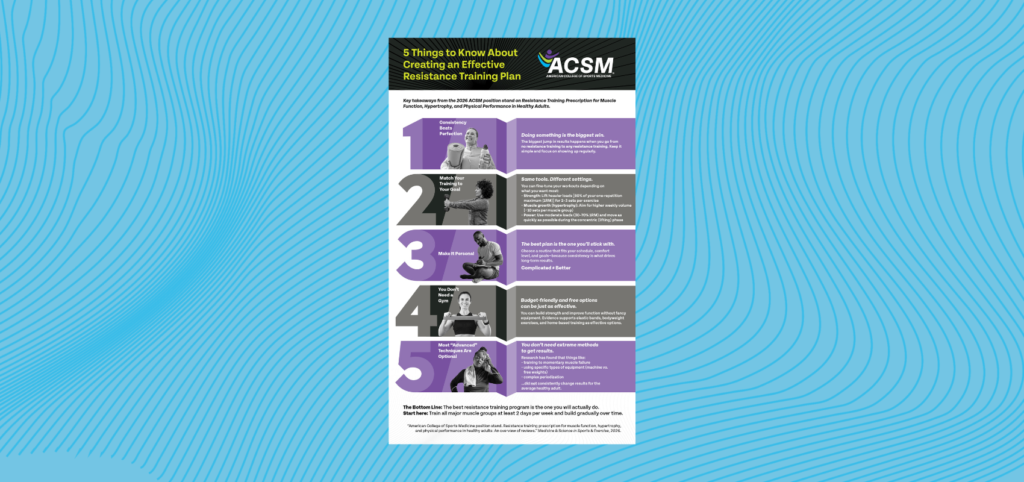
New evidence review of data from 30,000+ participants finds the biggest benefits come from consistency, not complicated programs The American College of Sports Medicine (ACSM) has published a new Position Stand summarizing resistance training recommendations for healthy adults — the first major update since 2009. The Position Stand synthesized findings from 137 systematic reviews representing more than 30,000 participants, offering the most comprehensive evidence-based guidance to date […]