Roane County, West Virginia ranks as one of the unhealthiest counties in the United States in relation to overall health behaviors and health outcomes. West Virginia, a rural state, experiences a high prevalence of type 2 diabetes, cardiac disease, hypertension, and chronic obstructive pulmonary disease, with much of the disease prevalence being generational and worsening over time. To address this growth in chronic disease, obesity, and underlying physical inactivity levels, Roane General Hospital (RGH), a mission-focused, community-founded independent critical access hospital, developed and began implementing the Prescription for Your Health (P4YH) program in July 2021. The foundation of the program is a paradigm shift from disease treatment to disease prevention utilizing exercise, education, and behavioral health coaching.
The idea of the P4YH program began in 2020 when cardiologists at RGH started writing ‘prescriptions’ for patients to go to the gym, emphasizing exercise as a key intervention to improve health outcomes for patients with cardiac disease. These prescriptions became a foundational concept of the P4YH program as it exists today. As the popularity of providing patients with exercise prescriptions grew, RGH was also planning an expansion of the physical activity programs and resources offered to patients. This included a wellness center with a pool, fitness space, a walking trail, and a Healthy Way Cafe to serve healthy food choices.
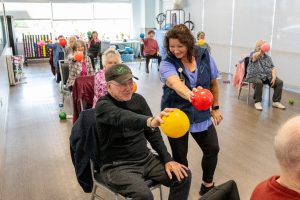
Today, the P4YH is a fully formed, medically directed, physician-ordered program that is free of charge to participants. The program is founded upon three pillars: a medically directed health plan, health education, and a medical fitness plan. The medical health plan is developed between the patient and care team at the time of referral by the provider with the patients creating health goals most important to them. The provider orders health screenings and outlines compliance with medical visits and medication regimens. The plan is tailored to the patient, the disease processes, and goals for medical treatment. Participants are required to take classes with a health educator, which include basic nutrition, diabetes management, and tobacco cessation, who assists them with identifying and overcoming health barriers.
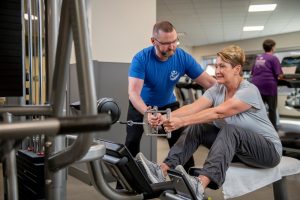
The P4YH referral process is now fully electronic, making it a smooth and efficient process. Referrals are accepted from both RGH in-house, as well as from outside providers. In-house providers submit referrals through our Meditech system, where updates and reports are seamlessly managed. For outside providers, the same detailed records are maintained to ensure they receive updates via fax, keeping everyone informed and connected. Lastly, participants receive a medical fitness assessment and specific Exercise is Medicine Rx for Health handouts based on their health condition and/or disease states. Our RGH exercise physiologist works closely with individuals to develop a tailored routine based on their fitness assessment, needs and preferences, and health condition.
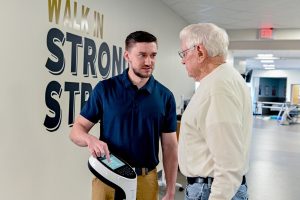
Throughout the P4YH program, evaluation metrics are closely tracked for participants. These metrics include Quality of Life and PHQ-2 scores, body composition, laboratory tests (lipid and blood panels), blood pressure, body mass index (BMI), waist circumference, a 6-minute walk test, and a sit-to-stand assessment. Metrics are reassessed every three months with referring providers receiving updates on participant results at each time point. To date, the P4YH program has served 2240 participant and currently has 431 active participants enrolled in the program. Patient and cohort outcome and payer data is being scientifically evaluated by West Virginia University Office of Health Services Research Team.