

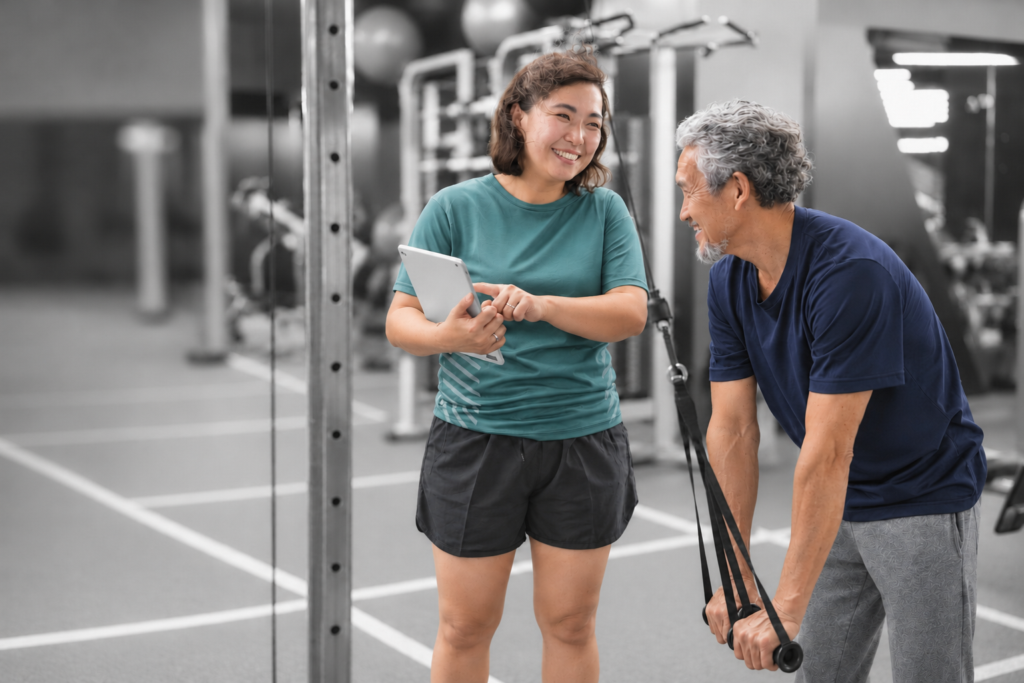

The Diabetes Exercise Specialist specialty certificate course equips exercise and health professionals with the knowledge and practical skills to safely and effectively support individuals with Type 1 diabetes, Type 2 diabetes and prediabetes. Through evidence-based instruction, participants will learn how exercise influences blood glucose regulation, insulin sensitivity and metabolic health while developing individualized exercise programs that support long-term health and fitness goals.
The course explores essential topics including blood glucose monitoring, exercise programming, diabetes technology, sports nutrition and women’s health. Participants will gain practical strategies to manage exercise-related risks, address barriers to physical activity and help individuals with diabetes exercise safely, improve performance and enhance their quality of life.
Help your staff develop the knowledge to adapt exercise programming to individual needs in one-on-one and group settings.
This course prepares exercise professionals to better understand the needs of people living with type 1 diabetes, type 2 diabetes and prediabetes.
This specialty certificate is designed for exercise and health professionals who support people living with diabetes, including:
![]()
Earn 10 ACSM CECs through this online specialty certificate course. Course content, handouts, evaluations and the certificate of completion are delivered electronically. You have one year of access and must complete the course within 365 days of purchase.
Already completed Diabetes for the Exercise Professional? You may be eligible for a bridge course to earn the specialty certificate and credential. Email onlinelearning@acsm.org for details.
ACSM members receive online learning discounts. Sign into your ACSM account to see your member price, or learn about ACSM membership.

The course combines Diabetes for the Exercise Professional with specialized instruction in women’s health, diabetes technologies, and carbohydrates, exercise and diabetes, plus new resources. Explore the four course components below.
Build a foundation in diabetes physiology and the effects of exercise on blood glucose regulation, insulin sensitivity and metabolic health. Learn to design individualized exercise programs for people with type 1 diabetes, type 2 diabetes and prediabetes, while addressing complications and barriers to physical activity.
Explore how hormonal changes associated with the menstrual cycle, pregnancy, postpartum and menopause influence glucose management and exercise responses. Apply these considerations when developing individualized exercise strategies for women living with diabetes.
Examine continuous glucose monitors, insulin pumps and automated insulin delivery systems. Learn how these technologies can support glucose monitoring, safer physical activity and improved exercise performance for individuals living with diabetes.
Explore low- and high-carbohydrate diets in relation to glucose management, energy availability and athletic performance. Consider how nutrition, exercise intensity, duration, timing and medications influence training outcomes and exercise-related risks.
By the end of this course, you’ll be able to design individualized exercise programs, apply glucose-monitoring and exercise-timing strategies, evaluate diabetes technologies, and recognize how carbohydrate intake and hormonal changes influence exercise responses. Build confidence to help people with diabetes move safely, train effectively and improve health, fitness and quality of life.
This session explores the physiology of hydration through an integrated lens—examining how carbohydrate, sodium, flavor, and fluid interact to influence intake, absorption, retention, and performance. We’ll review current research on fluid balance, osmotic drivers, and palatability, highlighting mechanisms that underpin voluntary intake and thermoregulation. Attendees will gain insight into individualized strategies, including sweat profiling and timing approaches, to optimize euhydration and mitigate performance decrements associated with >2% body-mass loss. Practical applications will be linked to laboratory- and field-based research, ensuring translation from bench to field. This pre-conference equips you with evidence-based tools to support athlete hydration across diverse environments and sporting contexts.
