
10 Tips for Building Fit Kids
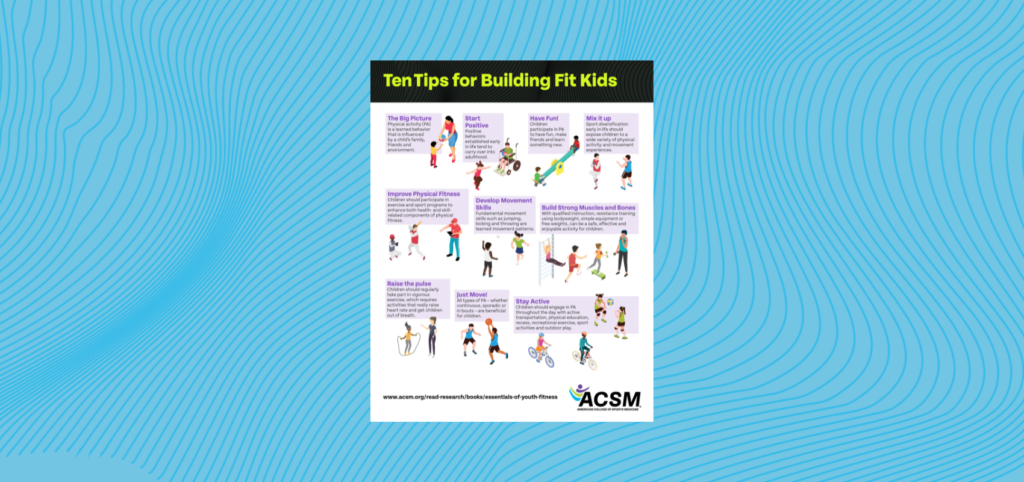
Presented in association with ACSM’s Essentials of Youth Fitness book, and the 10 Myths about Youth Physical Activity blog.
Disparities in the Quality of Physical Activity Environments

There are race, ethnic and socioeconomic status (SES) disparities in physical activity. The disparities differ by domain of physical activity (e.g., occupation, transportation), but there is consistent evidence that leisure time physical activity is lower among individuals with lower income and members of most race and ethnic minority groups. One possible explanation of these disparities […]
Back into Action: A Coach’s Guide to Putting a Player back in the Game
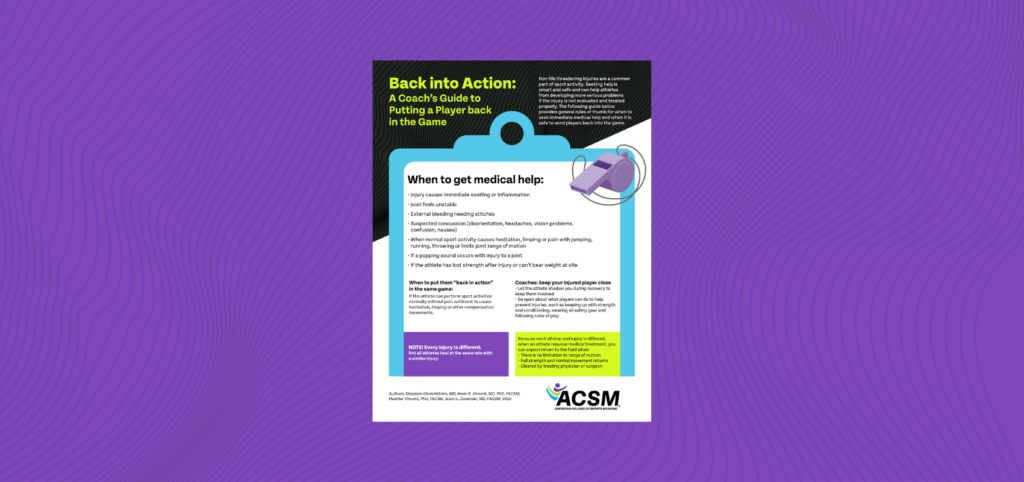
This guide provides general rules of thumb for when to seek immediate medical help and when it is safe to send players back into the game.
Physical Activity Guidelines for Cancer
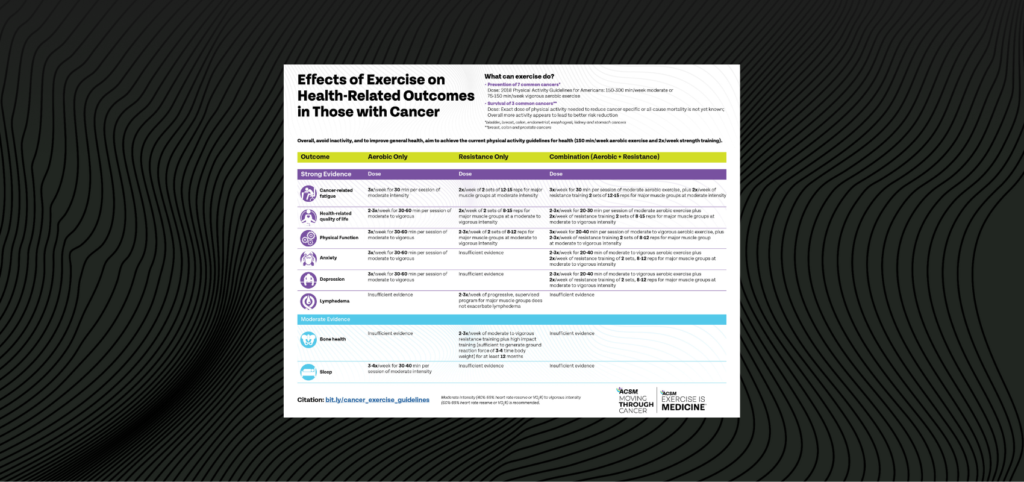
This chart outlines the effects of exercise on health-related outcomes in those with cancer. The guide features evidence-based physical activity recommendations and the associated benefits for specific symptoms and side effects of cancer and its treatments.
Exercise for Cancer Prevention and Treatment
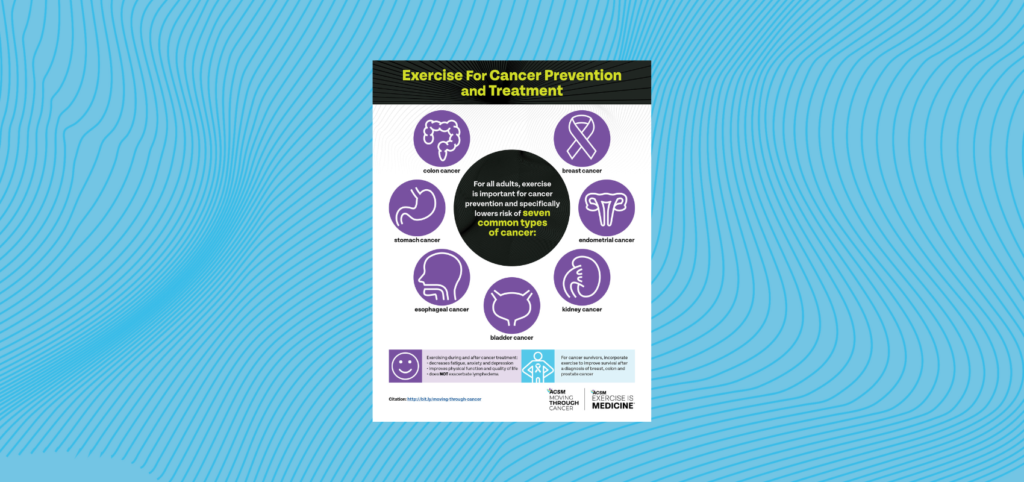
For all adults, exercise is important for cancer prevention and specifically lowers risk of seven common types of cancer: colon, breast, endometrial, kidney, bladder, esophagus and stomach.
Investing in a Personal Trainer
A qualified personal trainer can help you safely start and maintain an effective exercise program. Making the right choice in a fitness professional is an important investment to your health, wellness and life. Experienced ACSM professionals have created this resource to help guide you to selecting the right personal trainer to help you reach your personal […]
Selecting the Right Fitness Facility for You
Prior to joining a health/fitness facility, you are encouraged to identify your major fitness and exercise goals. With fitness objectives established, start visiting fitness facilities that are easy access for you and your family (if you are seeking a family fitness membership). The fitness club should have a variety of exercise equipment and fitness programs […]
Air Quality and Outdoor Exercise

There is incontrovertible evidence linking poor air quality to adverse health outcomes. This is especially true for people with pre-existing conditions such as heart disease, stroke, asthma and chronic obstructive pulmonary disease. However, healthy people are at risk too. Exposure to air pollution has been linked to a higher risk of developing asthma, and recent […]
Exercising in Hot and Cold Environments
Many people continue to participate in outdoor activities when seasonal changes occur. While it is very important to remain physically active throughout the year, it is equally important to prevent the risk for environmental-related injury. This downloadable guide contains advice for avoiding these injuries and conditions. Download the handout.
Five Frequently Asked Questions About the Physical Activity Guidelines

The US Department of Health and Human Services (DHHS) released the second edition of the Physical Activity Guidelines for Americans on November 12, 2018. The guidelines are meant to to help Americans understand the types and amounts of physical activity that offer important health benefits. #1 How many Americans meet the Physical Activity Guidelines? In 2017, only […]