
Universal Response to the Collapsed Athlete | Sudden Cardiac Arrest
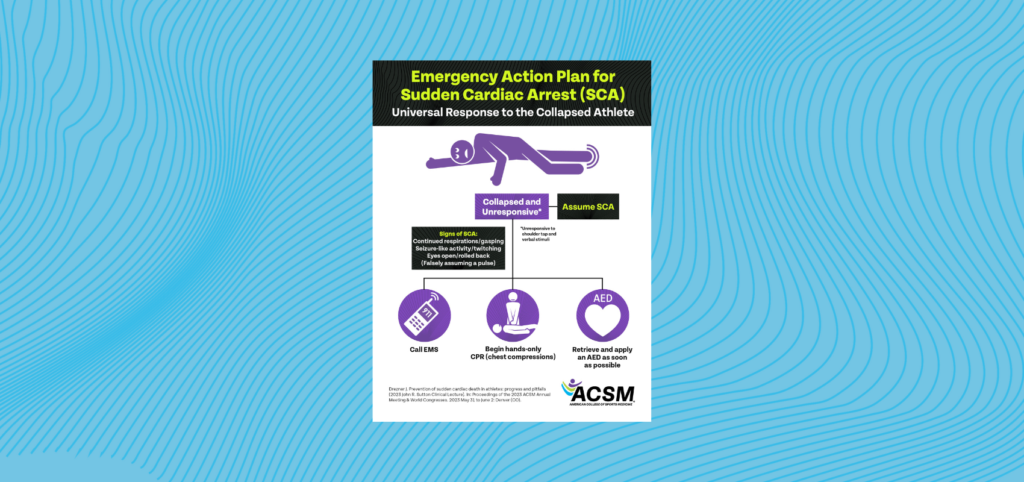
Every facility, organization and medical professional needs to have an emergency action plan to treat sudden cardiac arrest (SCA). This protocol for the universal response to the collapsed athlete is explained by Jonathan Drezner, M.D.
Community Gardens: Enhancing Nutrition, Physical Activity and Connection in Neighborhoods Across America

Gardening goes in and out of fashion over time, but the COVID-19 pandemic ushered in a new, younger wave of gardeners, many of whom grow in one of the more than 29,000 community garden plots located in city parks in the 100 largest U.S. cities. Community gardens have many benefits, including promoting healthy eating and physical […]
Supporting Your Clients’ Emotional Needs
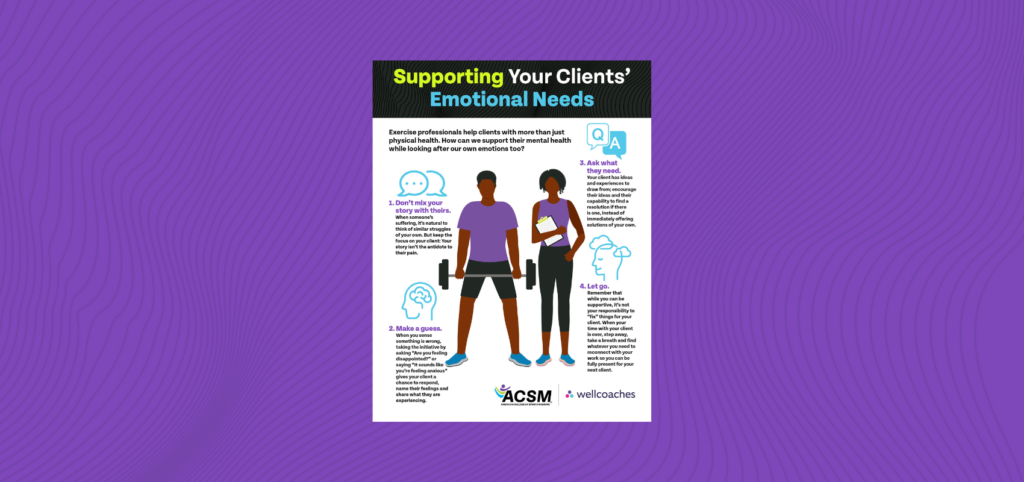
Exercise professionals help clients with more than just physical health. How can we support their mental health while looking after our own emotions too? Check out these tips.
Economic Benefits of Workplace Wellness Programs and Changes since COVID-19

Since the start of the COVID-19 pandemic, more employees have shifted to hybrid and remote work in office work, telehealth, information technology, education and other fields; however, there are many jobs that cannot be performed remotely, such as transportation, hospitality, manufacturing, food service, supermarket and other retail work and the majority of healthcare positions. Therefore, […]
Social Determinants of Health
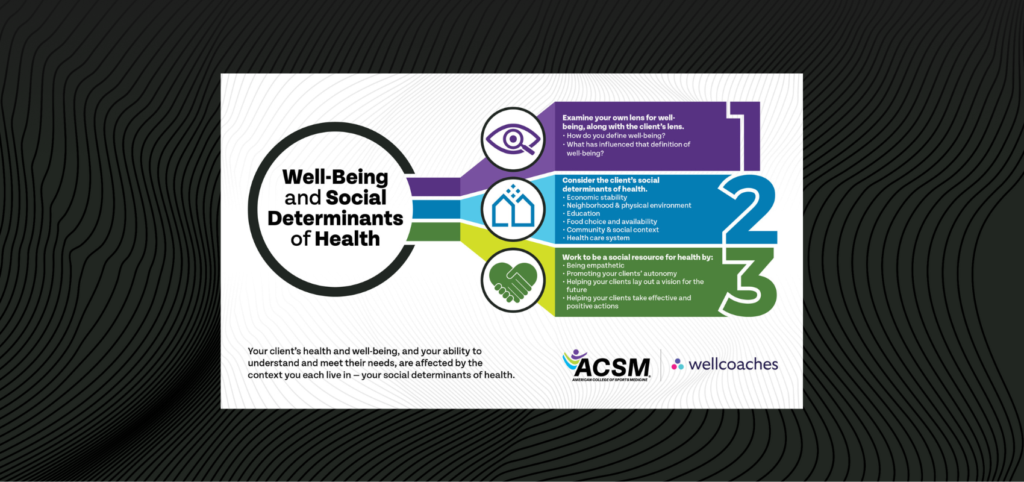
Your client’s health and well-being, and your ability to understand and meet their needs, are affected by the context you each live in — your social determinants of health.
Top 3 Evidence-Based Practices for Exercise Programming in Autism
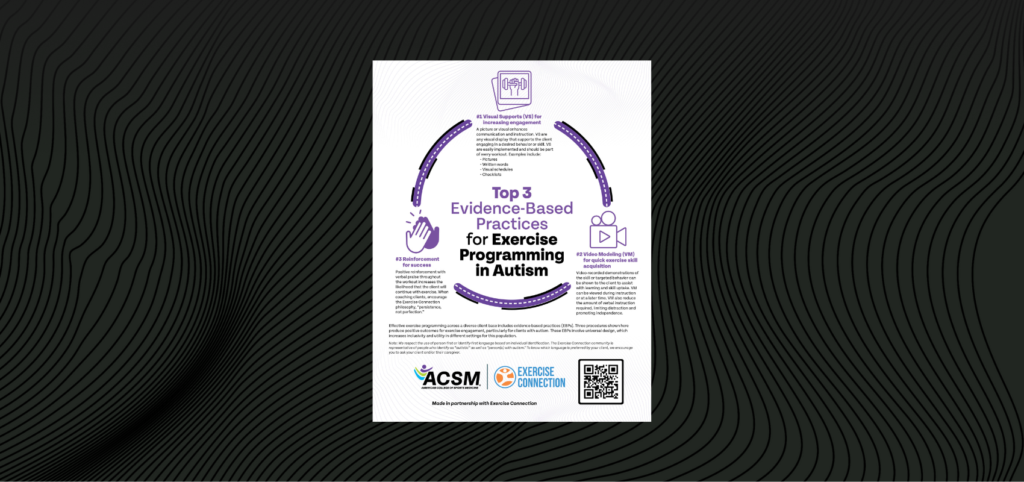
Effective exercise programming across a diverse client base includes evidence-based practices (EBPs). Three procedures shown here produce positive outcomes for exercise engagement, particularly for clients with autism. These EBPs involve universal design, which increases inclusivity and utility in different settings for this population.
Physical Activity Reduces Risk of Osteoarthritis for Those with Obesity
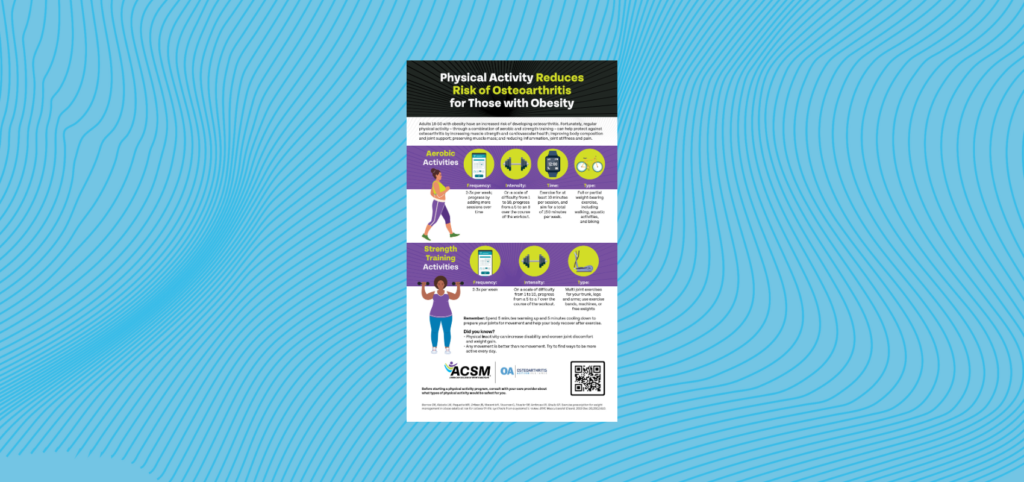
Regular physical activity can help protect against osteoarthritis by increasing muscle strength and cardiovascular health; improving body composition and joint support; preserving muscle mass; and reducing inflammation, joint stiffness and pain.
How to Create Fitness Resolutions that will Actually Stick

A staggering number of highly-inspired people will choose to set lofty goals come January 1, despite the universal knowledge that resolutions aren’t easy to stick to. We need all the help we can get. One trick? Framing and stating goals a particular way. Here are six examples of resolutions that can lead to real athletic […]
Assisting the Apprehensive Exerciser
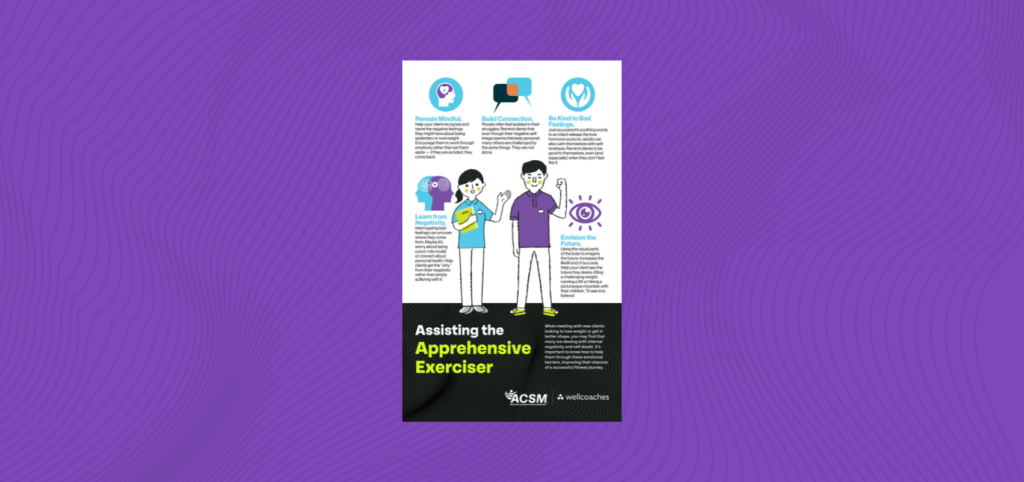
When meeting with new clients looking to lose weight or get in better shape, you may find that many are dealing with internal negativity and self-doubt. It’s important to know how to help them through these emotional barriers, improving their chances of a successful fitness journey.
Five Practices for Staying Calm, Focused and Productive during the Holidays
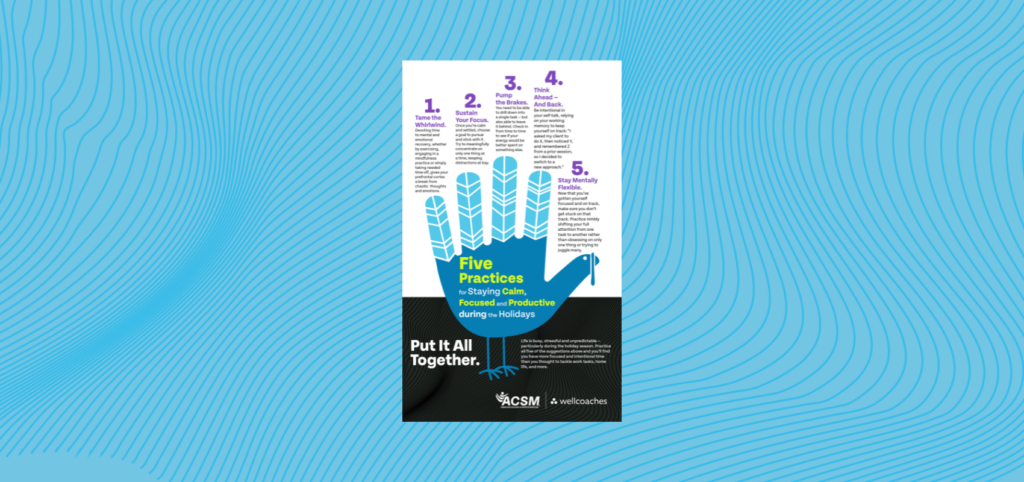
Life is busy, stressful and unpredictable — particularly during the holiday season. Practice all five of these suggestions and you’ll find you have more focused and intentional time than you thought to tackle work tasks, home life and more.