When people hear that I received my Master’s in Clinical Exercise Physiology, they have no idea what I really do. This gives me the unique opportunity to share the details of my career path in exercise oncology research.
When I began my college career as a student-athlete, I had no idea what I wanted to do, but I knew I wanted to help people. In graduate school, one of my exercise physiology professors taught us about the pathophysiology of cancer and how effective exercise can be to help decrease symptoms and side effects from treatment or surgery. That’s when I realized I wanted to use my knowledge in exercise physiology and get involved as much as possible in exercise oncology.
I started working with Dr. Melanie Potiaumpai as a graduate student to gain hands-on experience and understand if working in research was an avenue I wanted to pursue. I learned how to administer validated functional assessments to research participants, taught cancer patients and survivors how to safely exercise, led community events surrounding cancer survivorship and resistance training, and completed end of program evaluations with participants. This work taught me that research in exercise oncology is more than just data, research papers, or timepoints- but also making time to use our skills and expertise and give back to our community.
After graduation, I was hired as a Research Health and Fitness Coordinator in Dr. Potiaumpai’s lab at the University of Pittsburgh School of Medicine. Dr. Potiaumpai’s research focuses on developing and implementing exercise interventions for people living with and beyond cancer in the prehabilitation space to improve important clinical and physical outcomes. In my position, I work in a small but mighty lab of three people. Every day in research is different and dynamic. Some days are more research focused where I screen patients through medical record for our active research studies, consent patients in clinic, collect functional assessment data, and work on regulatory oversight materials. Other days are spent focused on leading or planning community projects, including creating exercise education materials, leading exercise classes, and mentoring other graduate students also interested in exercise oncology.
As part of our service and community engagement initiatives, Dr. Potiaumpai provided me the opportunity to lead a 7-week virtual resistance training program called Happy Feet through a collaboration with a local Pittsburgh non-profit organization. Every week, I created targeted exercise workouts with corresponding educational materials for cancer patients and survivors. Each workout session I created and led provided a safe space for cancer patients and survivors to perform resistance exercise under guided supervision and provided them a platform to ask questions and receive guidance.
As a Research Health and Fitness Coordinator, I have already had so many opportunities to grow on the research and community side. I have been able to develop skills I never had the opportunity to learn in school such as learning how to create a database from scratch, downloading and interpreting physical activity data, and working with our Clinical Research Coordinator to further my communication and professional development skills as a researcher. Within our community projects, I have been responsible for teaching graduate students and interns how to properly train cancer patients and survivors with the proper cues, breathing, and technique in resistance training and how to correctly program exercise based on their personal goals. Instead of growing in one direction, research gives me the opportunity to grow in every direction possible, as I use different skills for each patient and community member I meet. Being a researcher gives me a unique opportunity to improve my analytical, professional, and personal skill sets, where not many other careers allow simultaneous growth in all areas.
The biggest area of growth I want to see is my communication and presentation skills, which I can further develop through presentations at smaller or local conferences, as well as continuing to project educational knowledge in community projects and participants. Working as a researcher in exercise oncology has given me the resources to further my education by completing the ACSM Cancer Exercise Trainer certification, improve my personal skills through meeting physicians and patients, as well as continue to do what I want to do most- help and empower people.
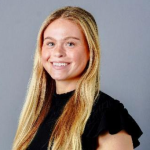
Adeline Farrington is a Research Health and Fitness Coordinator and Certified Cancer Exercise Trainer at UPMC Hillman Cancer Center. She is originally from Atlanta, but was born in New York City.
She was a competitive swimmer at the University of Louisville, where she completed my Bachelor’s in Exercise Science. She decided to apply to graduate school and was offered a Graduate Student Assistantship at the University of Pittsburgh, where she taught exercise classes to undergraduate students and simultaneously completed her Master’s in Clinical Exercise Physiology.