

The results of the annual ACSM’s Health & Fitness Journal® worldwide survey guide fitness industry decision-makers with data collected from thousands of researchers and practitioners.
Now in its 21st year, the survey provides a long-term perspective of how the field has evolved, from early concerns about childhood obesity to the rise of wearable technology and medically integrated programs. This milestone marks a meaningful opportunity to reflect on the industry’s progress and thoughtfully consider its future direction.
Put the top fitness trends into practice! This detailed, 30+ page guide will show you how to implement each of the top 10 trends with your clients, with actionable advice and direct links to continued learning opportunities.
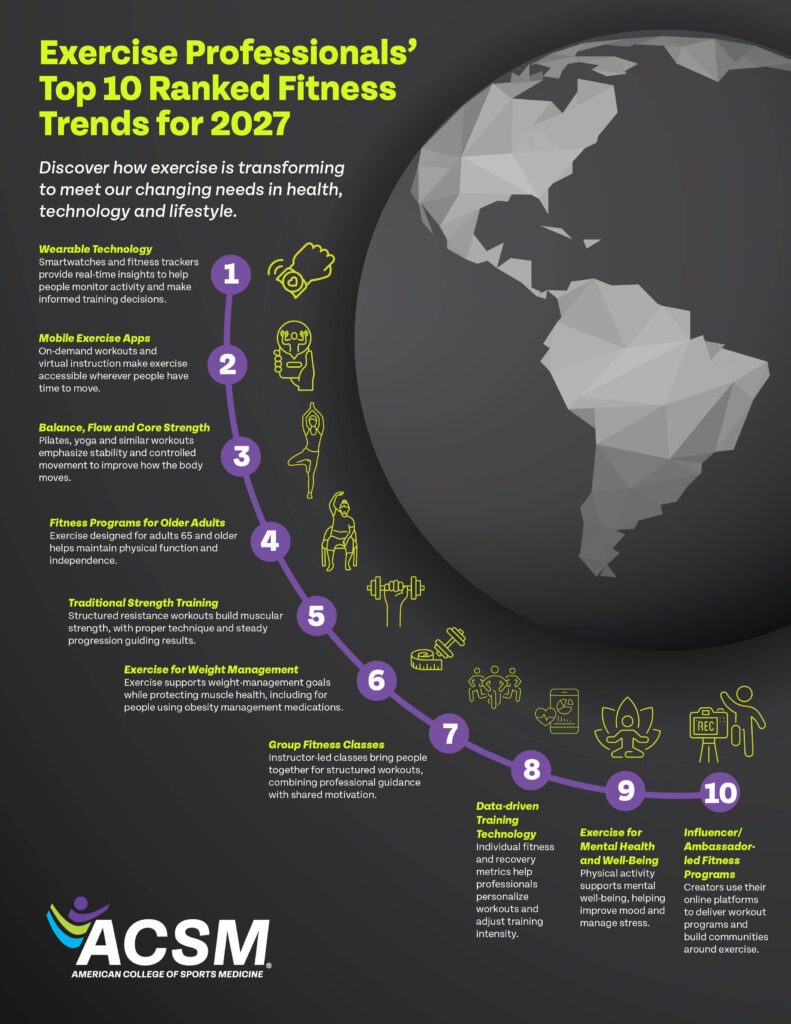
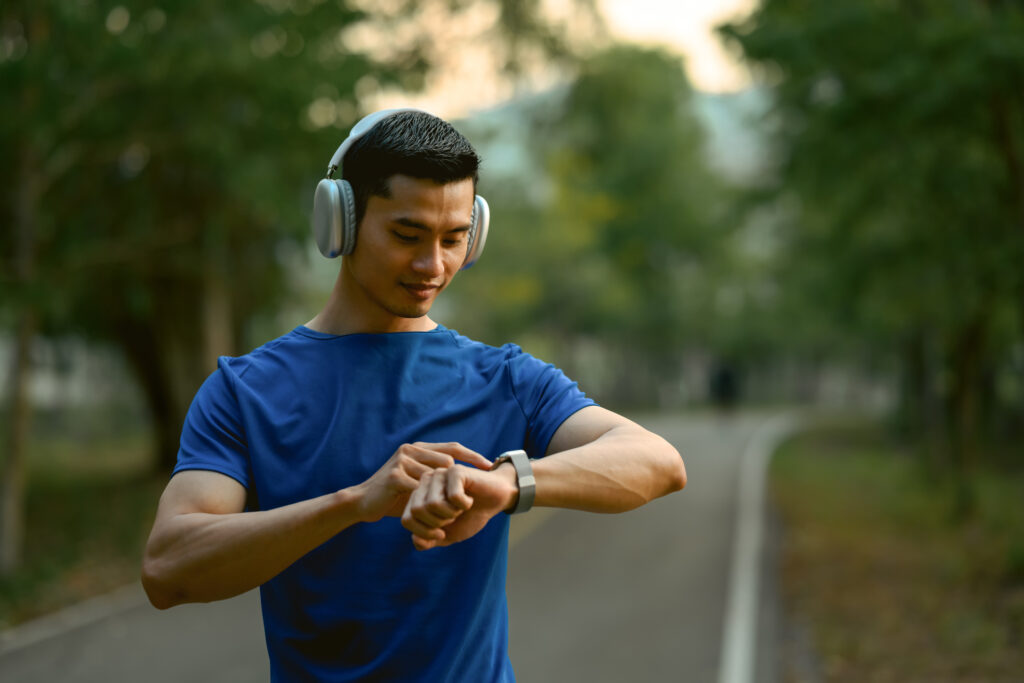
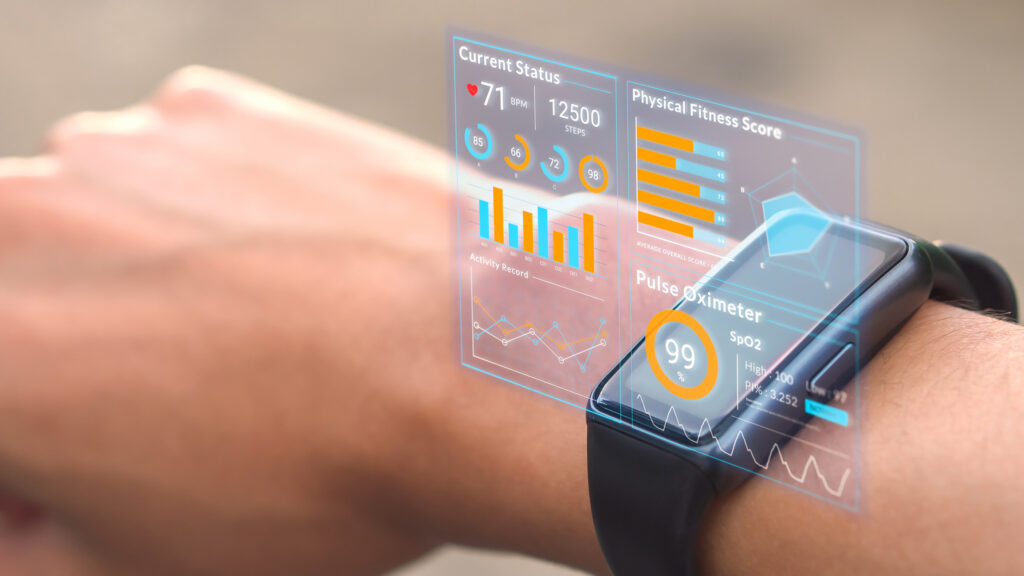
This trend includes devices such as fitness trackers, smartwatches, heart rate monitors, GPS trackers, and other wearable sensors that monitor health, fitness, and performance data in real time. Common metrics include heart rate, steps, speed, sedentary time, distance, sleep, recovery, and physical activity. Advanced biosensors also may capture indicators such as heart rhythm, skin temperature, blood pressure, or fall and vehicular crash detection. As wearables continuously evolve in form, sensor capabilities, and data-processing algorithms, researchers continue to expand available metrics and refine their validity and reliability across devices and populations.
Since its introduction to the survey in 2016, this trend has ranked in the top three every year and has held the No. 1 position 10 times. In 2027, Wearable Technology was the only trend to appear in the top three across every professional role, work setting, and years-of-experience category shown in this report, demonstrating its broad recognition across the health and fitness field.
This trend includes digital platforms that allow consumers to access on-demand, live-streamed, or prerecorded fitness classes and workouts at their convenience. In 2025, an estimated 540 million people across the globe used mobile fitness apps, generating about $3.4 billion in revenue. This growth is likely fueled by integration with wearable technology like smartwatches, which allow users to join digital communities and track real-time health and physical activity data.
In 2027, Mobile Exercise Apps moved up from No. 4 in 2026 and returned to the No. 2 position held in 2025. This trend has appeared in the top 20 every year since 2022, when it was introduced.
This trend encompasses modalities such as yoga, Pilates, barre, and mobility-focused training that enhance stability, mobility, flexibility, muscular endurance, coordination, and control. These formats also support movement quality, functional performance, and overall fitness.
Balance, Flow, and Core Strength moved up two spots from 2026 and ranked among the top three trends for group exercise instructors, medical professionals, recreation professionals, students, and university staff categories. Respondents with less experience in the field, particularly those with 1–3 years and 4–6 years of experience, tended to score it higher than those with 7 or more years in the field.
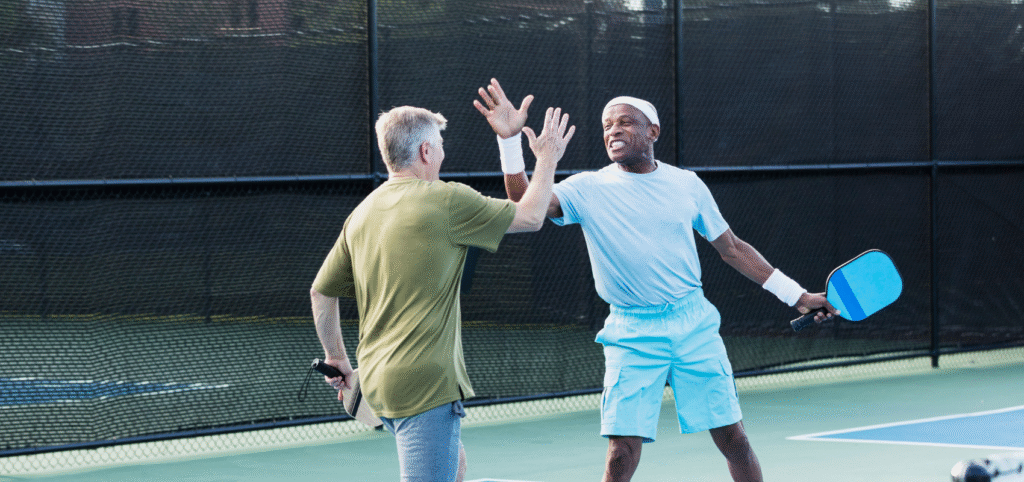
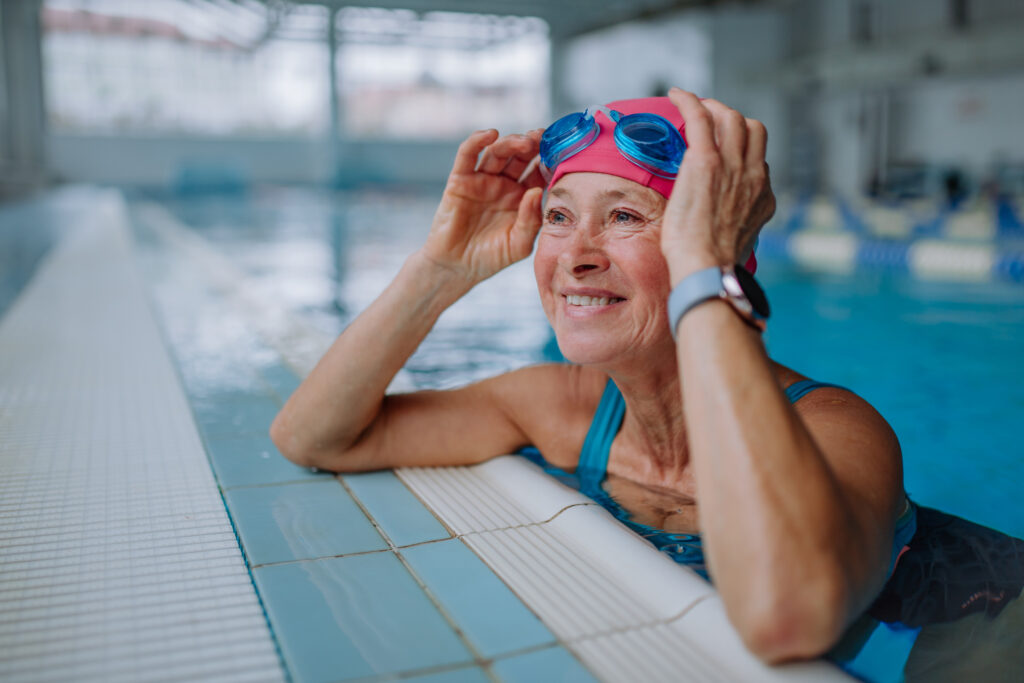
These programs cater to adults 65 years and older and are designed to improve health-related quality of life, functional capacity, and independent living.
The 2027 results mark the fifth consecutive year in which Fitness Programs for Older Adults ranked among the top five trends overall, reflecting sustained prominence. It also was the only trend besides Wearable Technology to rank No. 1 within a work setting, with respondents in community-based facilities or programs (e.g., YMCA, JCC, and Parks and Recreation) ranking it No. 1 overall.
This trend includes resistance training that emphasizes proper movement mechanics, lifting technique, and structured progression to develop muscular fitness. It incorporates equipment such as barbells, dumbbells, kettlebells, and resistance bands to improve strength, endurance, and movement efficiency.
In 2027, this trend moved up two spots from No. 7 in 2026. It also ranked among the top three trends for several professional roles and work settings. Internationally, it ranked among the top three in just under half (43.8%) of participating regions, demonstrating broad global relevance.
This trend includes programming designed to support intentional weight loss, weight gain, or weight maintenance. These exercise programs may integrate nutritional guidance, behavior-change strategies, or medical interventions, such as obesity management medications, to optimize muscle health, strength, and physical functioning.
This trend moved down three spots from No. 3 in 2026. Still, it ranked among the top three trends for registered dietitians and respondents in military/government/public safety programs. Internationally, it ranked among the top three trends in China, Mexico, and Turkey.
This trend includes instructor-led exercise classes offered in gyms, recreation centers, or studios, typically with large participant groups. Formats may include indoor cycling, yoga, barre, dance fitness, boxing, kickboxing, and strength- or cardio-based classes. These sessions provide structured group workouts designed to support motivation, consistency, and fitness across a range of experience levels.
Group Fitness Classes rose from No. 13 in 2026 to No. 7, after returning to the top 20 last year following a 2-year absence. It ranked No. 1 within the Structured Exercise trend category in the U.S. and ranked among the top three trends in 25% of international partners’ surveys.
This type of technology uses individual health and physiological metrics to personalize exercise programming and inform recovery strategies. Rather than relying solely on generalized training recommendations, data such as heart rate variability, sleep quality, training load, and estimated VO2max can be used to tailor exercise programs to individual readiness and recovery status.
Data-driven Training Technology ranked No. 8 for the second consecutive year. Notably, athletic trainers ranked this trend No. 2, substantially higher than its overall rank. This may reflect the increasing importance of objective performance indicators and recovery metrics to guide return-to-play decisions, readiness to train, and optimize athletic performance.
This category recognizes exercise as a powerful tool for mental well-being, reducing anxiety, stress, and depression. Research supports aerobic and resistance training, as well as mind–body practices (e.g., yoga, tai chi) for enhancing mood, cognition, and resilience.
Since its initial inclusion in the 2024 survey, Exercise for Mental Health and Well-Being has ranked in the top 10 every year. In 2027, it ranked No. 9 overall, No. 3 by health and wellness coaches, and No. 3 internationally in Australia.
This trend encompasses fitness programs that feature social media trainers, fitness entrepreneurs, or brand ambassadors who create online fitness programming, education, motivation, resources, or product-related content. These programs leverage the creator’s digital presence and personal brand to engage followers, build community, and influence exercise behaviors.
Influencer/Ambassador-led Fitness Programs debuted at No. 12 in 2025, fell out of the top 20 in 2026, and returned at No. 10 in 2027. It ranked among the top three trends for athletic trainers and new professionals (less than 1 year of experience).
Stay ahead of the curve with the ultimate fitness industry forecast package.
Fitness professionals who lead the market don’t just follow trends, they anticipate them. The ACSM Worldwide Fitness Trends aren’t mere predictions; they’re the industry roadmap that top professionals and successful facilities use to make strategic decisions that drive growth and client results.


As you look around your home, you may spot devices like smartphones, tablets, smart TVs
Recent public health guidelines emphasize the importance of high-intensity interval training (HIIT) as an effective

This session explores the physiology of hydration through an integrated lens—examining how carbohydrate, sodium, flavor, and fluid interact to influence intake, absorption, retention, and performance. We’ll review current research on fluid balance, osmotic drivers, and palatability, highlighting mechanisms that underpin voluntary intake and thermoregulation. Attendees will gain insight into individualized strategies, including sweat profiling and timing approaches, to optimize euhydration and mitigate performance decrements associated with >2% body-mass loss. Practical applications will be linked to laboratory- and field-based research, ensuring translation from bench to field. This pre-conference equips you with evidence-based tools to support athlete hydration across diverse environments and sporting contexts.
