
Moving with Arthritis
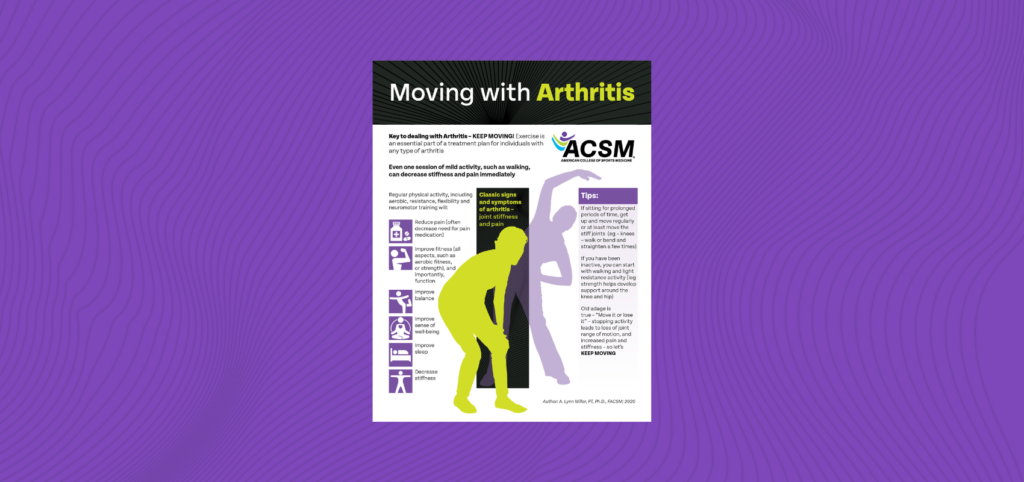
The key to dealing with arthritis is to KEEP MOVING! Exercise is an essential part of a treatment plan for individuals with any type of arthritis. Arthritis expert A. Lynn Millar, PT, PhD, FACSM, shares important tips in this infographic.
Monitoring Aerobic Exercise Intensity
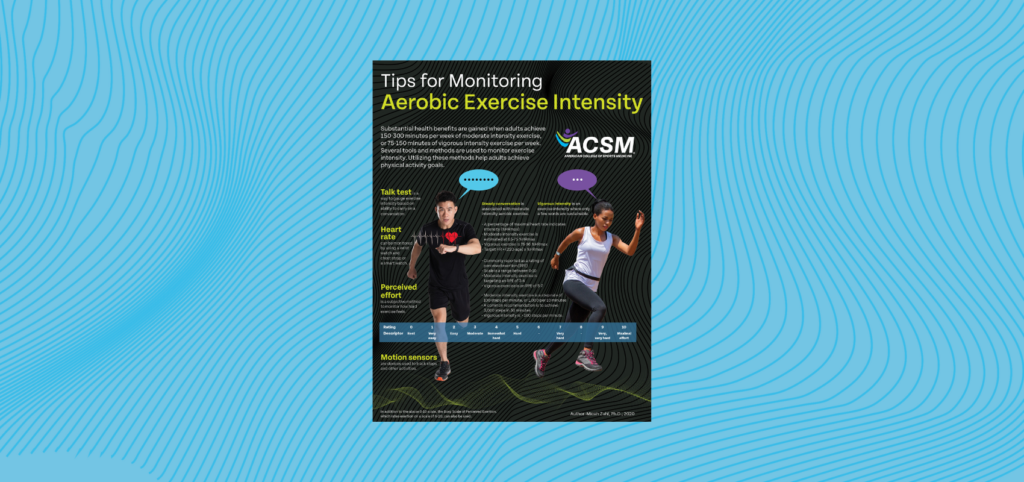
Substantial health benefits are gained when adults achieve 150-300 minutes per week of moderate intensity exercise, or 75-150 minutes of vigorous intensity exercise per week. Several tools and methods are used to monitor exercise intensity.
10 Tips for Building Fit Kids
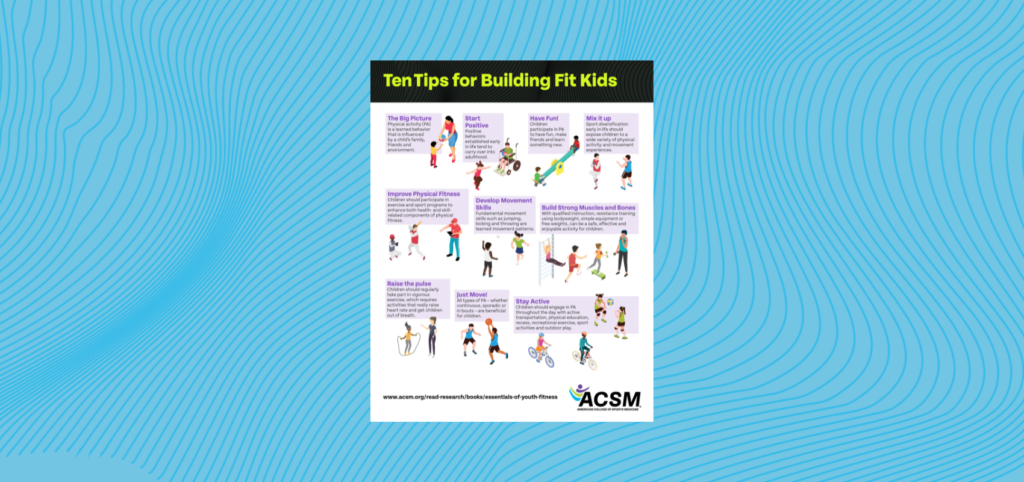
Presented in association with ACSM’s Essentials of Youth Fitness book, and the 10 Myths about Youth Physical Activity blog.
Back into Action: A Coach’s Guide to Putting a Player back in the Game
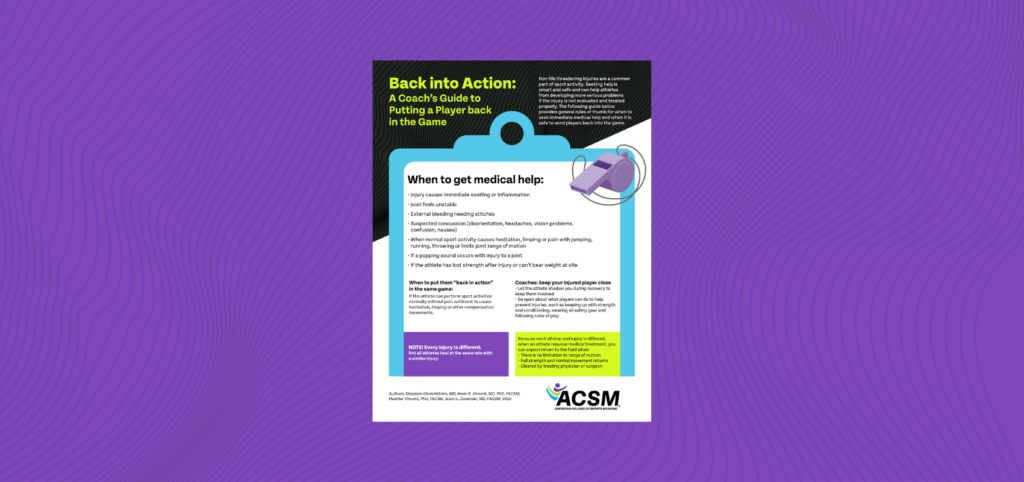
This guide provides general rules of thumb for when to seek immediate medical help and when it is safe to send players back into the game.
Physical Activity Guidelines for Cancer
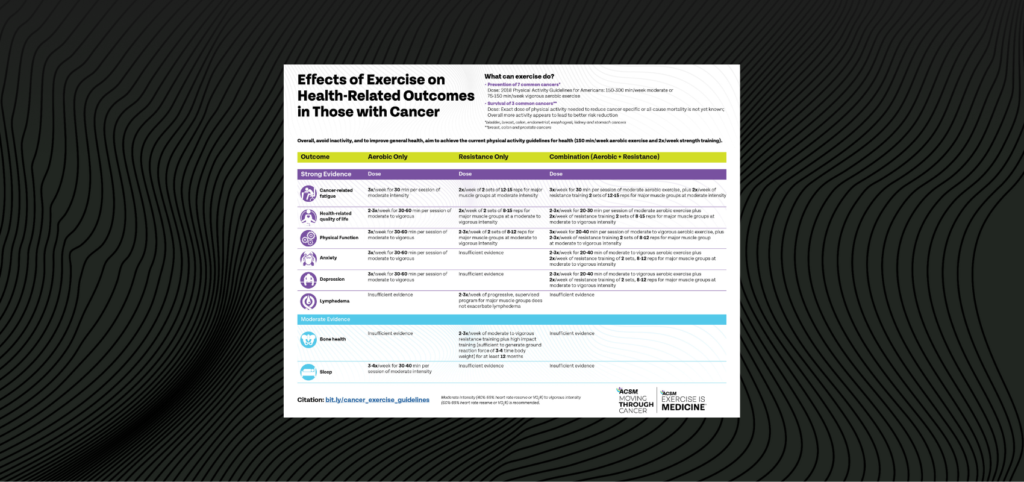
This chart outlines the effects of exercise on health-related outcomes in those with cancer. The guide features evidence-based physical activity recommendations and the associated benefits for specific symptoms and side effects of cancer and its treatments.
Exercise for Cancer Prevention and Treatment
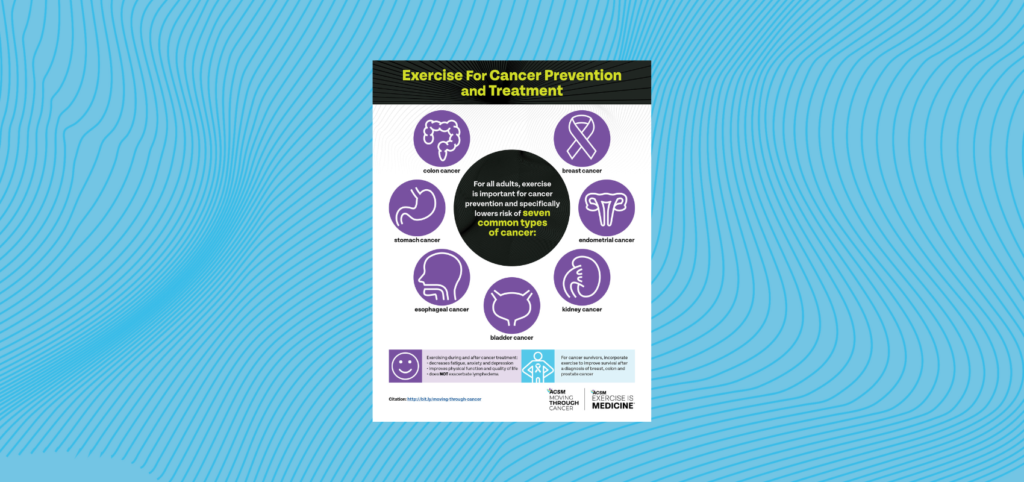
For all adults, exercise is important for cancer prevention and specifically lowers risk of seven common types of cancer: colon, breast, endometrial, kidney, bladder, esophagus and stomach.