
How to Help Keep Golfers Healthy

Golf is a sport played by millions of people worldwide. It is unique in the fact that it can be enjoyed by people of all ages and skill levels. And notably, with our recent pandemic, golf provided us a great way to stay active outdoors while still practicing safe social distancing, which has only increased […]
Can Diet Help Athletes Manage ADHD?

As a sports nutritionist, I commonly counsel athletes who have Attention Deficit Hyperactivity Disorder—generally referred to as ADHD (or ADD). ADHD is characterized by hyperactivity, impulsivity, and/or inattention. It affects 4-10% of all American children and an estimated 4.4% of adults (ages 18-44 years). ADHD usually peaks when kids are 7 or 8 years old. […]
Adolescents with Sport-Related Concussion Recover Faster When They Adhere to an Aerobic Exercise Prescription
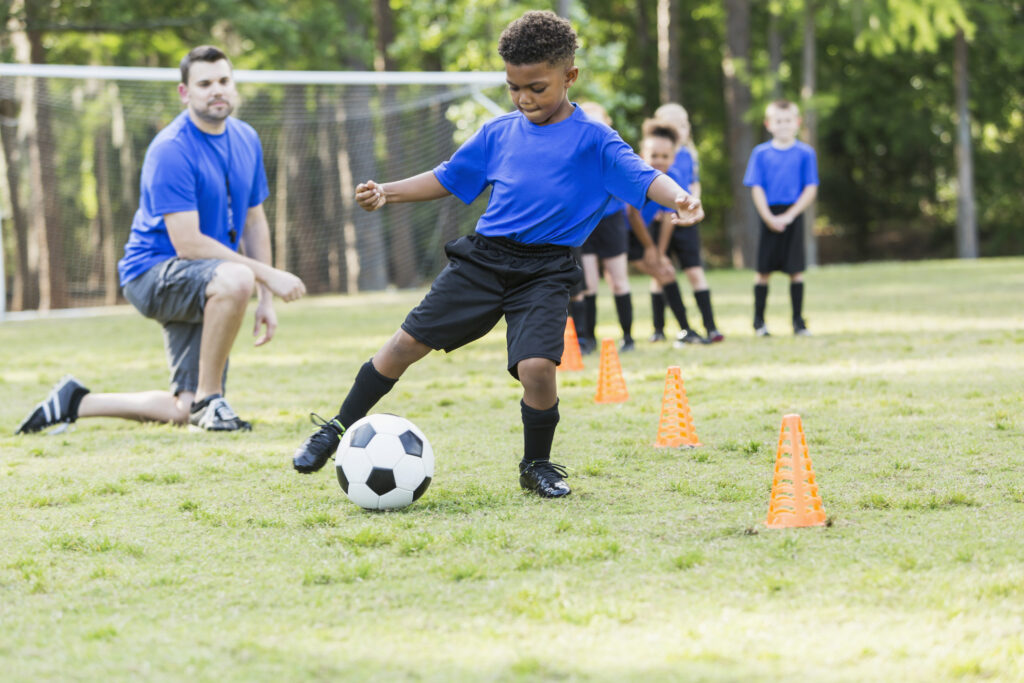
Patients with sport-related concussion have traditionally been advised to employ strict physical and cognitive rest until all of their symptoms resolve, i.e., until they become asymptomatic. This “cocoon therapy” was based largely upon animal research showing that early uncontrolled physical activity delayed recovery from simulated concussion. Emerging evidence over the past decade, however, demonstrates that there is […]
When Should I Get an X-ray for My Foot or Ankle Injury?
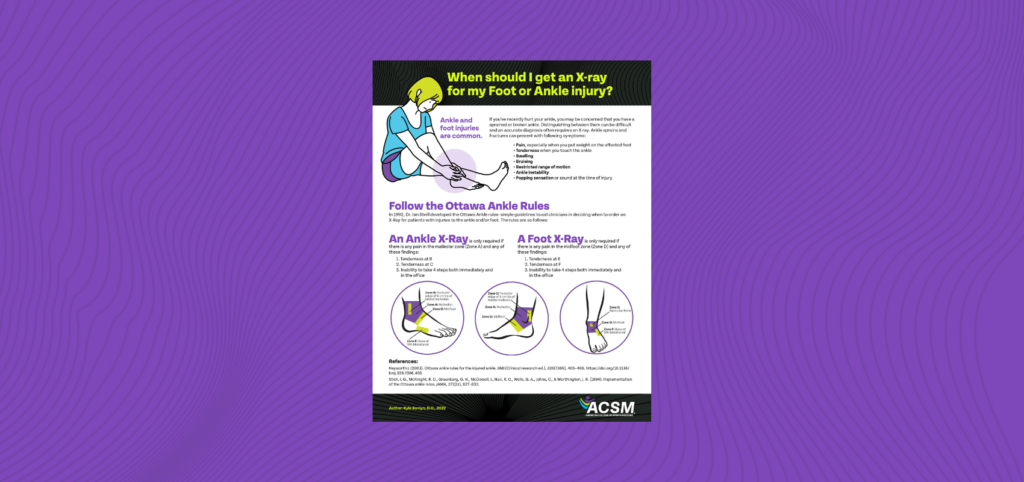
Follow these guidelines when evaluating an ankle injury, shared by Kyle Samyn, D.O.
Physical Activity in School-Aged Children

School-aged children should get at least 60 minutes of moderate- or vigorous-intensity physical activity every day of the week. Only 26% of adolescents met these physical activity guidelines in 2018, and that percentage has remained stable since 2011. The COVID-19 pandemic made it even more difficult for children to meet these guidelines. Despite knowing the risk of sedentary behavior […]
Physical Activity Guidelines for School-Age Children
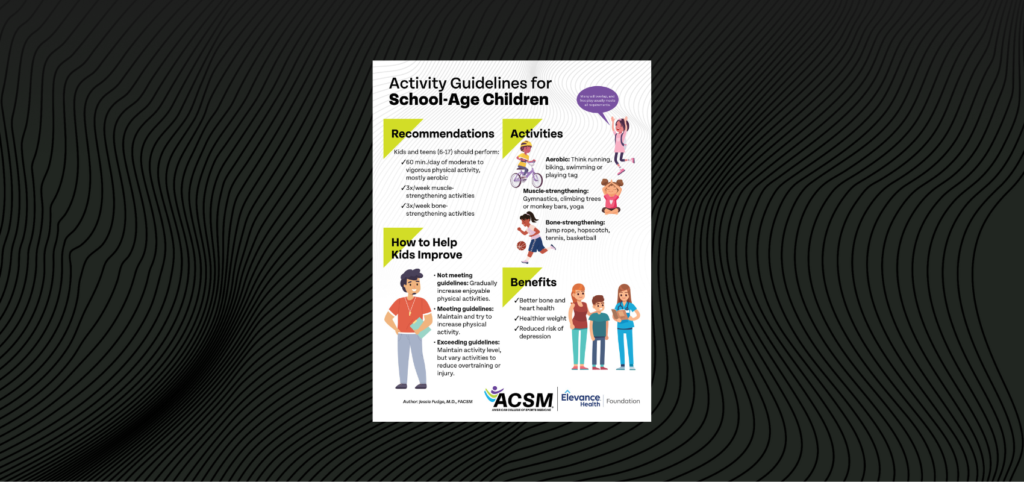
School-aged children should get at least 60 minutes of moderate- or vigorous-intensity physical activity every day of the week
Does Working Out Result in T Cell Mitochondrial Gains?

The positive effects of aerobic exercise training on skeletal muscle metabolism are well recognized. Exercise also leads to beneficial metabolic adaptations in other organs, including the brain, liver, kidneys and adipose tissue. However, the effects of exercise on immune cell metabolism are largely unknown. Immune cells that circulate throughout the body are exposed to exercise-associated […]
Are You Prepared for a Cardiac Emergency?
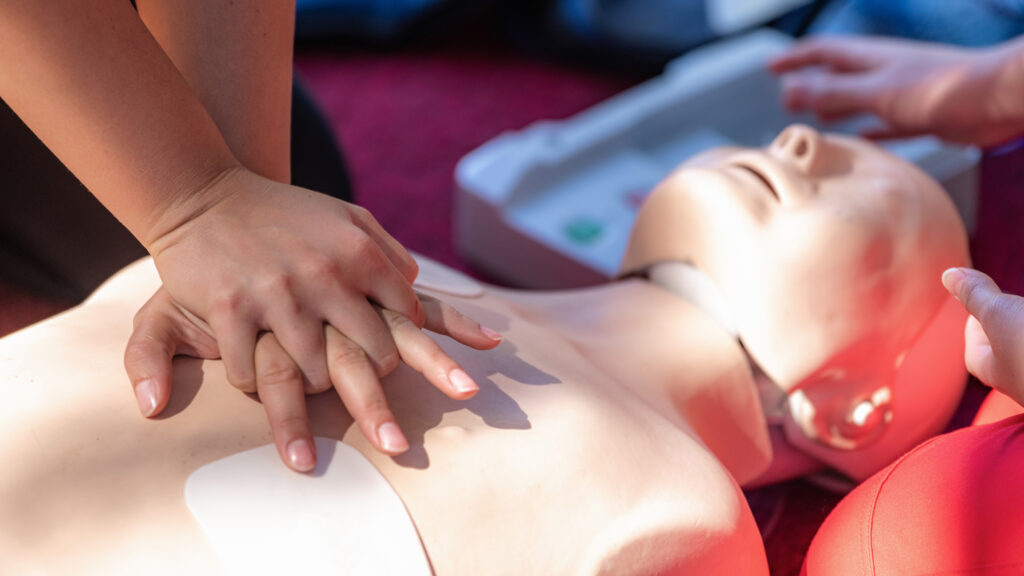
The benefits of physical activity, even at low levels, far outweigh the cardiovascular risks for most people. But Murphy’s Law is always peering around the corner — what if the worst happens? We need to have a plan in place. Fortunately, ACSM’s consensus statement on the topic provides fitness professionals with important background information and a number […]
Vertical Loading Rate Should Not Be Used as a Predictor of Running Injury

Running is a popular form of exercise due to its health benefits and low economic cost; however, the prevalence of running-related injuries is on the rise. With most running injuries classified as overuse injuries due to excessive, repetitive loading, clinicians and researchers are looking to develop measures of this loading to assess a runner’s injury […]
Meeting the 50th Percentile for 24-hour Movement Helps Cognitive Function

Alzheimer’s disease and related dementias are debilitating conditions leading to impaired cognitive processes and worsening physical functioning. They place significant burden on caregivers and health care systems. Roughly 15 million cases of cognitive impairment and Alzheimer’s disease in the U.S. are projected by 2060. While there are no medical treatments to delay Alzheimer’s disease progression, […]