Summertime is in full swing, and, for many of us, it’s the time of year we consider engaging with the great outdoors. However, as much as we might like, we can’t make every day a journey into nature … or can we? Local parks are a significant way to bring a piece of nature into our neighborhoods. And perhaps surprisingly, they may be doing a lot more good than just being a place to take the kids for a push on the swing.
It’s not a stretch of the imagination that parks help communities be more physically active. The relationship between parks and activity levels is so strong that the American Fitness Index – a ranking that evaluates the health and fitness of cities – includes several measures of parks in a community. For example, the rankings look at the total number of parks, the percent of residents living within a ten-minute walk to a park, and even local government spending on parks, a policy-level consideration. These are just a few featured indicators that are used to evaluate the cities that are ranked yearly.
Science shows that in addition to getting people to move more, parks also improve mental well-being and are essential for community connectedness—a critical aspect of social health.
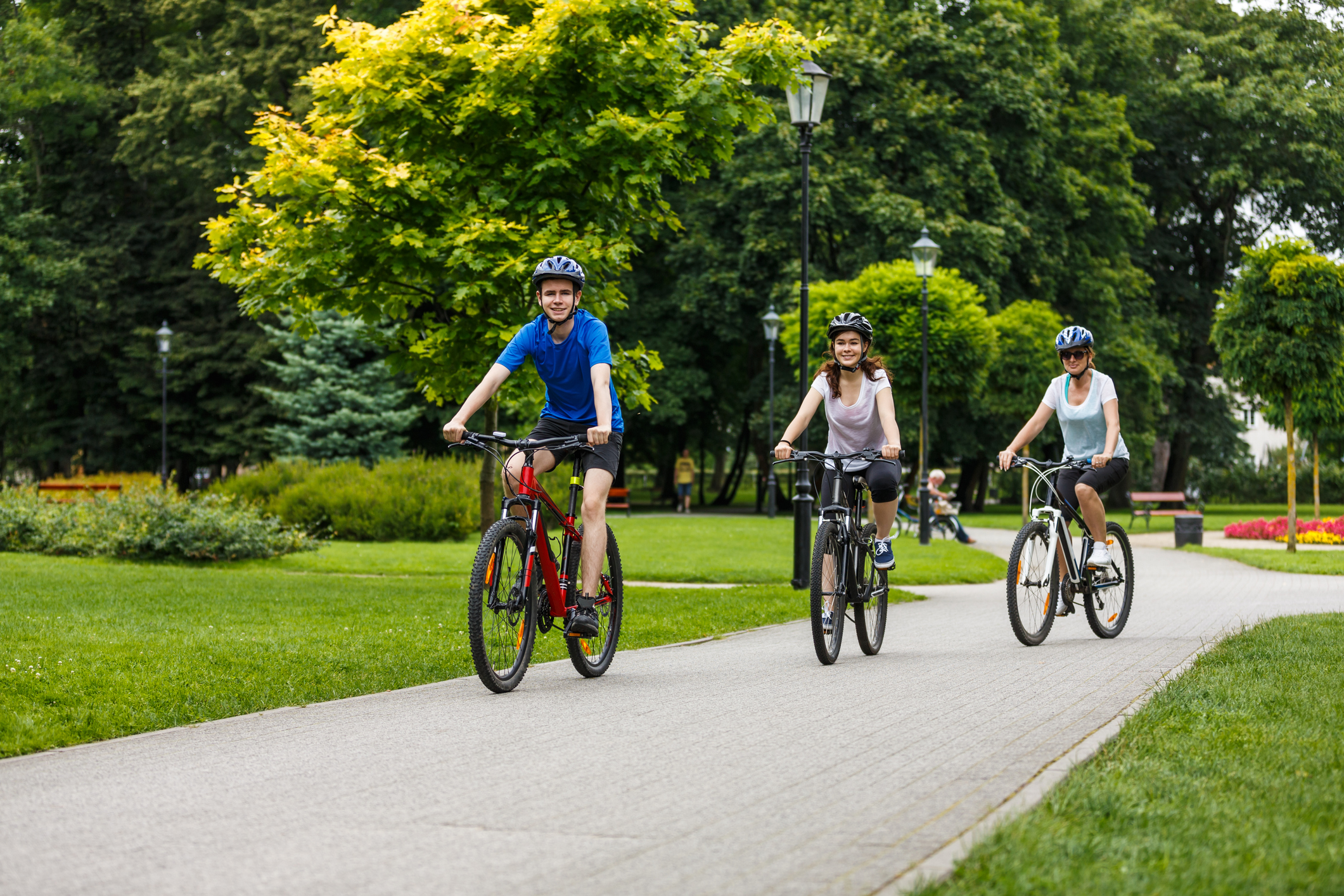
One might wonder how a simple park can achieve so much! The open space or grassy areas in parks are great places to play catch with a friend or do exercises on your own. In addition, parks provide beautiful tree canopies for walking and moments of tranquility. And of course, many parks have sports fields or courts for team activities, outdoor gyms, and playground equipment for kids that can easily be repurposed for working out.
And what about mental health? The mental health community knows that “greenspace” positively impacts psychological well-being. Greenspace is an umbrella term that includes both open wilderness and urban parks and has been linked to greater mental health and well-being. Not only do parks and greenspace support physical activity, which is well known to improve mental health, but they also benefit psychological health through peaceful and relaxing sounds as well as feelings of closeness to nature. Related to this are the benefits parks and greenspace may have to social health, one driver of which is community connectedness. The physical parkland area may attract family, friends, and the larger community to come together for various social reasons.
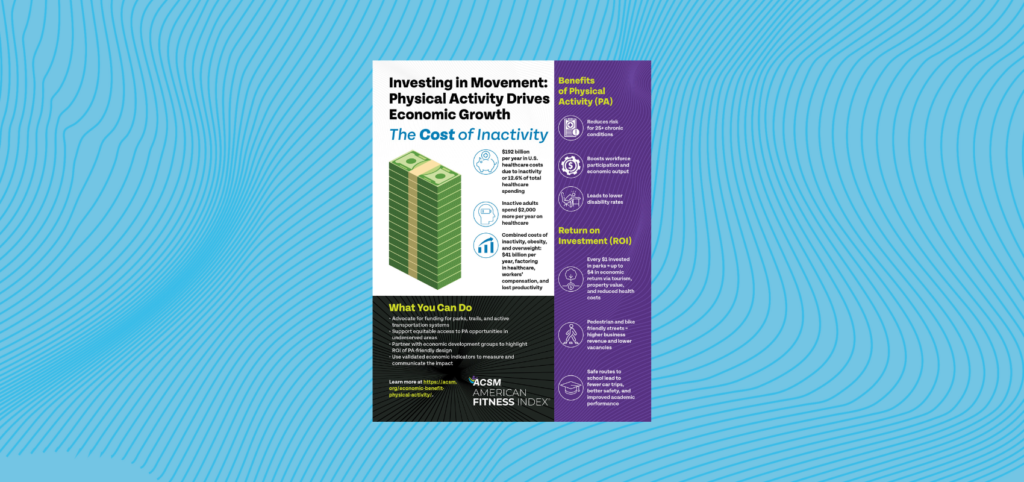
And finally, parks may actually be saving money in health care costs. A recent UK report found that park users are healthier – saving an astonishing £111 million (US$146 million) in medical expenses for that country.
The parks in our neighborhoods are spaces that can contribute significantly to our health and well-being. While seasonal activities are a great way to get outdoors, for many, local parks are accessible nearly every day of the year. See how your city ranks on parks plus many other health and fitness indicators in the 2018 American Fitness Index.
Author: Jane C. Hurley