Updated November 2025
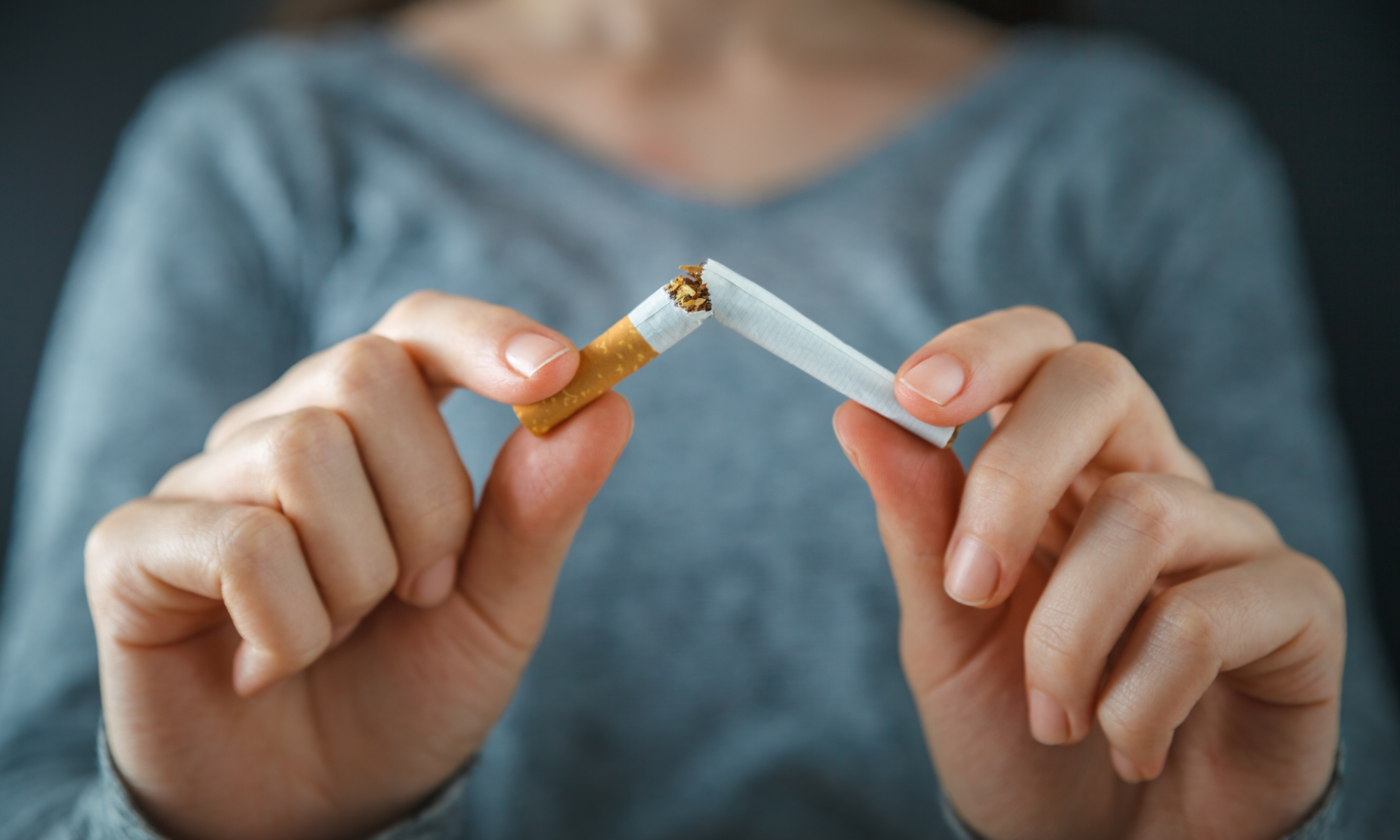
Only 20 minutes after your last cigarette, your heart rate and blood pressure begin to drop. Within a few days, the carbon monoxide level in your blood drops to a normal rate. After a few weeks your circulation and lung function improve, and after a year your risk of heart attack drops significantly. These are only some of the drastic changes your body undergoes when you quit smoking, as identified by the American Cancer Society.
Despite the benefits of a smoke-free lifestyle, an average of 12.6% of residents in America’s 100 largest cities are smokers. San Jose, California has the lowest rate with only 3.4% of residents who smoke, but Laredo, Texas has the highest rate with 24.8% of residents smoking. View the rate for your city. Across the 100 largest U.S. cities, more than 8.1 million people are at a heightened risk of certain cancers and coronary heart disease because of this habit.
The Great American Smokeout, presented by the American Cancer Society, is Thursday, November 20, 2025. On this date, Americans are encouraged to make a plan to quit smoking. We have gathered a number of resources here to help you or others in your life make a plan to quit smoking.
Help Someone Else Quit Smoking
Help Employees Stop Smoking | American Lung Association
Smoking-Cessation: Role of the Fitness Professional in Clearing the Air | ACSM’s Health & Fitness Journal®
Helping a Smoker Quit: Do’s and Don’ts | American Cancer Society
Support To Quit Smoking
Sign up for support via text message by texting QUIT to 47848 | NIH – National Cancer Institute
Download the quitSTART app | CDC
Call the State Quitline | 800-QUIT-NOW (800-784-8669, English) 855-DÉJELO-YA (855-335-3569, Español)
Call the National Quitline | 877-44U-QUIT (877-448-7848) (support in both English and Spanish)
Smoking Cessation Resources for Veterans | NIH – National Cancer Institute
Freedom From Smoking, Smoking cessation support for public housing | American Lung Association and Anthem Foundation
Smokefree.gov | Resources from the NIH – National Cancer Institute specifically supporting women, teens and seniors.
SmokefreeEspañol | Recursos en español de NIH – Transformación de Descubrimientos de la Salud®
Deciding to Quit Smoking and Making a Plan | American Cancer Society
Other Ways to Quit Smoking | American Cancer Society
Getting Help with the Mental Part of Tobacco Addiction | American Cancer Society