Pregnancy, 24-Hour Physical Activity Behavior and Infant Growth

Physical activity during pregnancy is recommended for its many benefits for both mother and fetus, including reducing the risk of pregnancy complications, perinatal depression and risk factors for childhood obesity, such as high birthweight. Many people of reproductive age are not active, and pregnancy can be a motivating time to start physical activity. Fortunately, current guidelines […]
“Sex Differences in Athletic Performance: Perspectives on Transgender Athletes”: ESSR 2023 Paper of the Year in the University Classroom

The American College of Sports Medicine (ACSM)’s journal, Exercise and Sport Sciences Reviews (ESSR), awarded the “2023 Paper of the Year” designation to Sex Differences in Athletic Performance: Perspectives on Transgender Athletes (Volume 51, July 2023), collaborated on by authors Natalie J. Nokoff, Jonathan Senefeld, Csilla Krausz, Sandra Hunter, and Michael Joyner. The manuscript provides an overview of sex-based […]
Diving into Health: Aquatic HIIT for Older Women
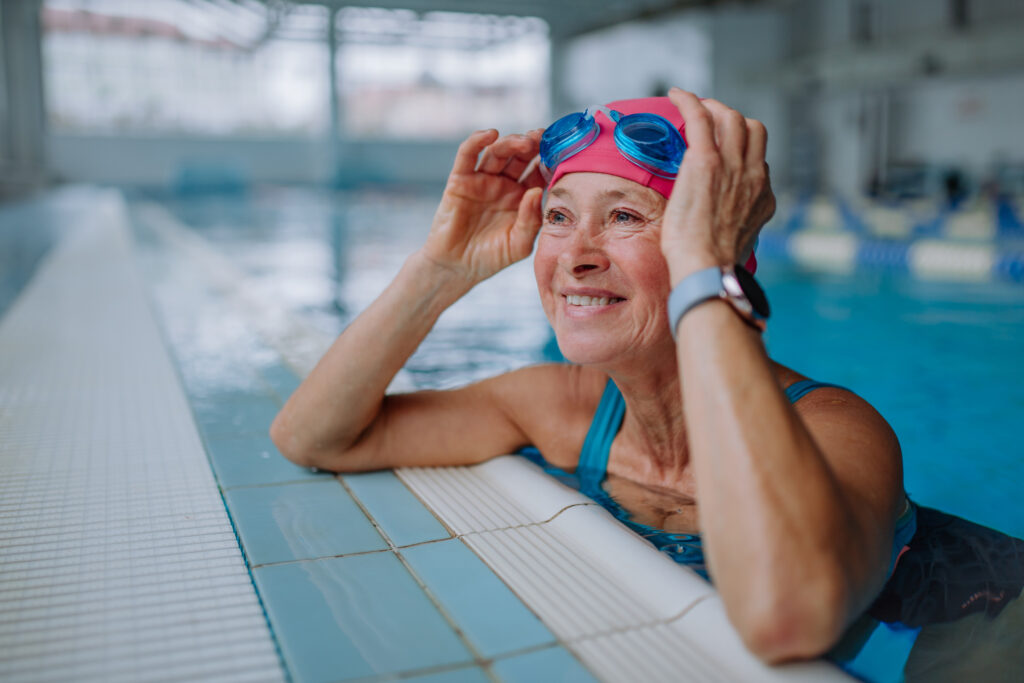
Recent public health guidelines emphasize the importance of high-intensity interval training (HIIT) as an effective strategy for improving cardiometabolic health, particularly among older adults. While land-based HIIT (L-HIIT) has gained popularity, it may not be the best fit for everyone, especially elderly individuals struggling with deconditioning and joint issues. This is where aquatic high-intensity interval […]
Physical Activity and Gestational Diabetes Mellitus
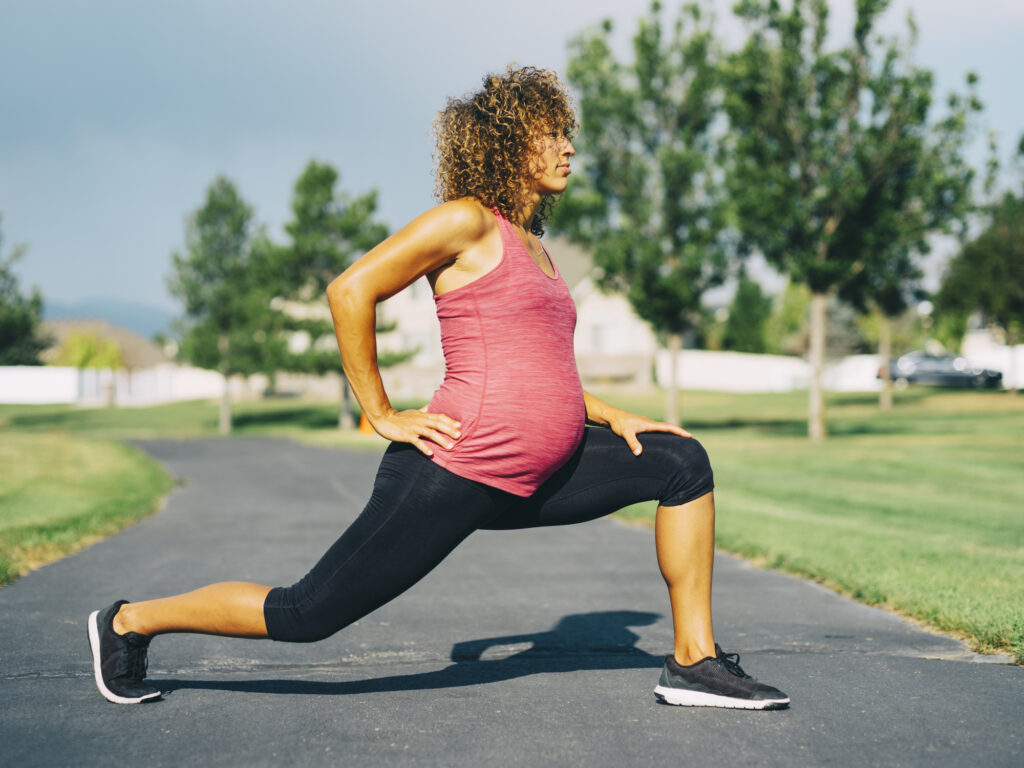
Over the nine short months of pregnancy, a woman will grow a new life (or two, or three!) along with a complex organ called the placenta. During this period of rapid change, a pregnant woman’s body also adapts to become progressively insulin resistant, ensuring there is sufficient glucose in the bloodstream to direct to the […]
Fit for All: The Autism Exercise Connection

Hear valuable insights and strategies for helping children with autism thrive through physical activity and exercise.
Anaerobic Programming for Clients with Disabilities
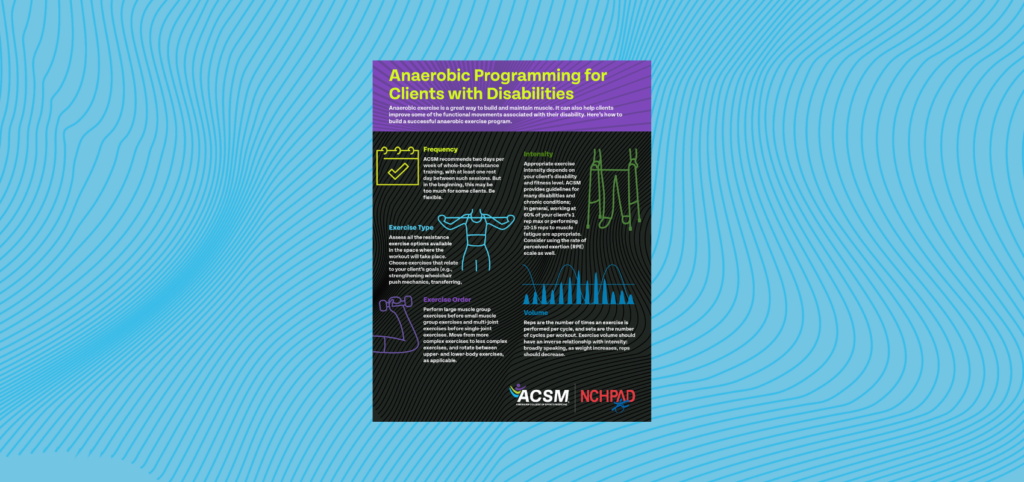
Anaerobic exercise is a great way to build and maintain muscle. It can also help clients improve some of the functional movements associated with their disability. Here’s how to build a successful anaerobic exercise program.
Training Clients with Nonprogressive Brain Injuries
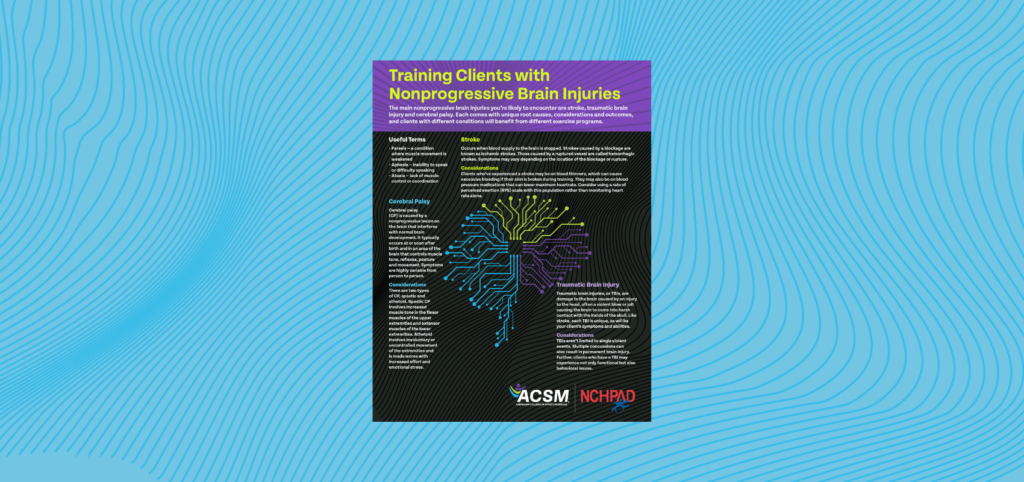
The main nonprogressive brain injuries you’re likely to encounter are stroke, traumatic brain injury and cerebral palsy. Each comes with unique root causes, considerations and outcomes, and clients with different conditions will benefit from different exercise programs.
Setting Client-Centered Goals
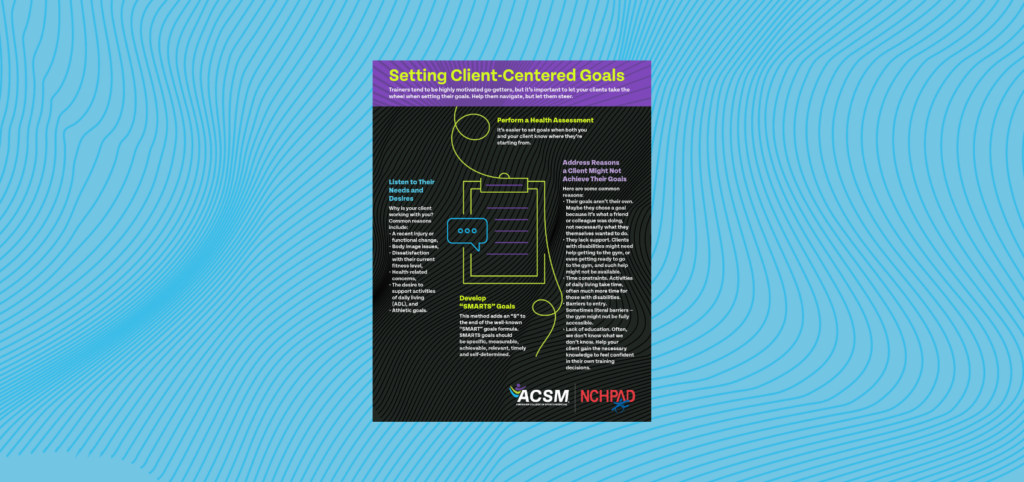
Trainers tend to be highly motivated go-getters, but it’s important to let your clients take the wheel when setting their goals. Help them navigate, but let them steer.
Your Inclusive Fitness Specialist Certificate & Where It Can Take You
The fitness industry is a growing field — earning an ACSM/NCHPAD Inclusive Fitness Specialist Certificate will separate you from the competition and give you the tools to assist critically underserved populations. Learn about the prerequisites for earning this certificate, how to earn it, and what career opportunities open up once its earned. Infographic and specialist course created […]
Training Disabled Clients: Anatomy & Biomechanics
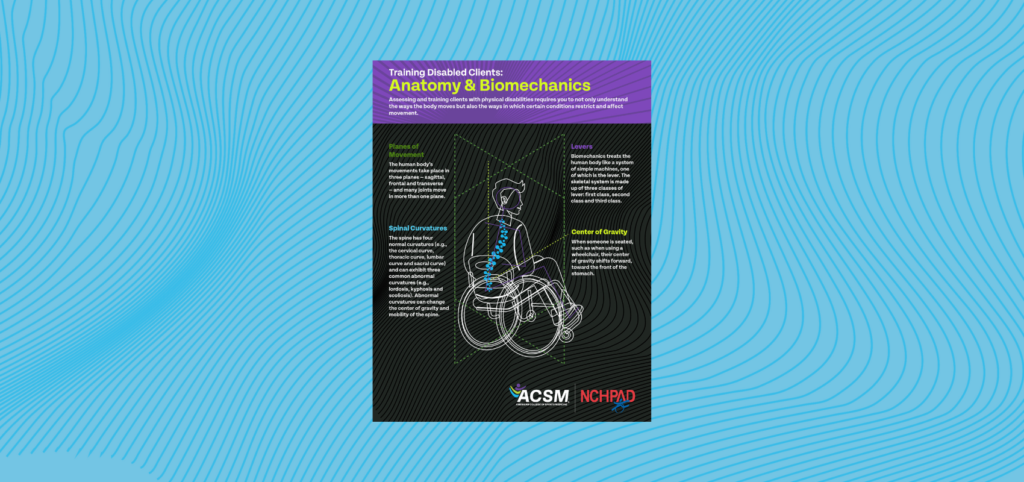
Assessing and training clients with physical disabilities requires you to not only understand the ways the body moves but also the ways in which certain conditions restrict and affect movement.