Training Clients with Communication Disorders
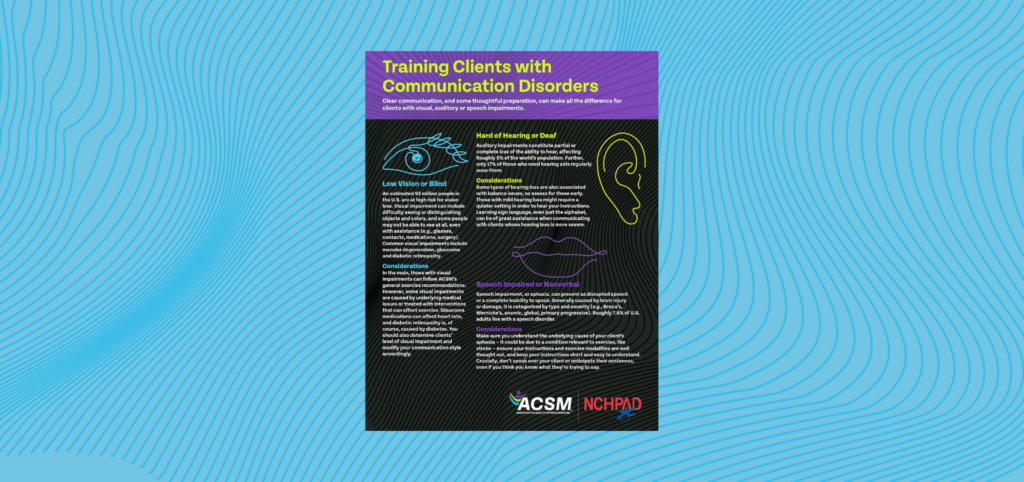
Clear communication, and some thoughtful preparation, can make all the difference for clients with visual, auditory or speech impairments.
ACSM, Exercise Connection Announce New Autism Exercise Specialist Course
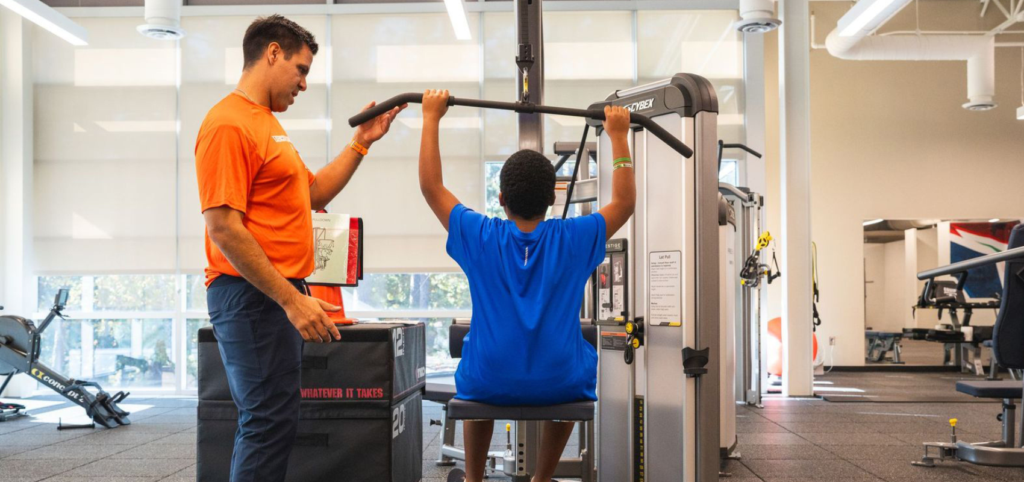
The American College of Sports Medicine, along with partner Exercise Connection, today announced a new continuing education course for exercise and medical professionals serving clients with autism spectrum disorder (ASD). Exercise Connection promotes the use of exercise to successfully empower the autism and special needs community to build an active lifestyle. The new Autism Exercise Specialist […]
Does Cardiorespiratory Fitness Prevent Breast Cancer in Women?

Scientific evidence collected for seven decades strongly supports the position that higher cardiorespiratory fitness (CRF) levels are associated with more favorable health outcomes, including mortality due to various cancers. Findings from several small population studies suggest that a physically active lifestyle offers protection against pre- and postmenopausal breast cancer. However, physical activity in these studies […]
Understanding the Energy Requirements of Paralympic Athletes
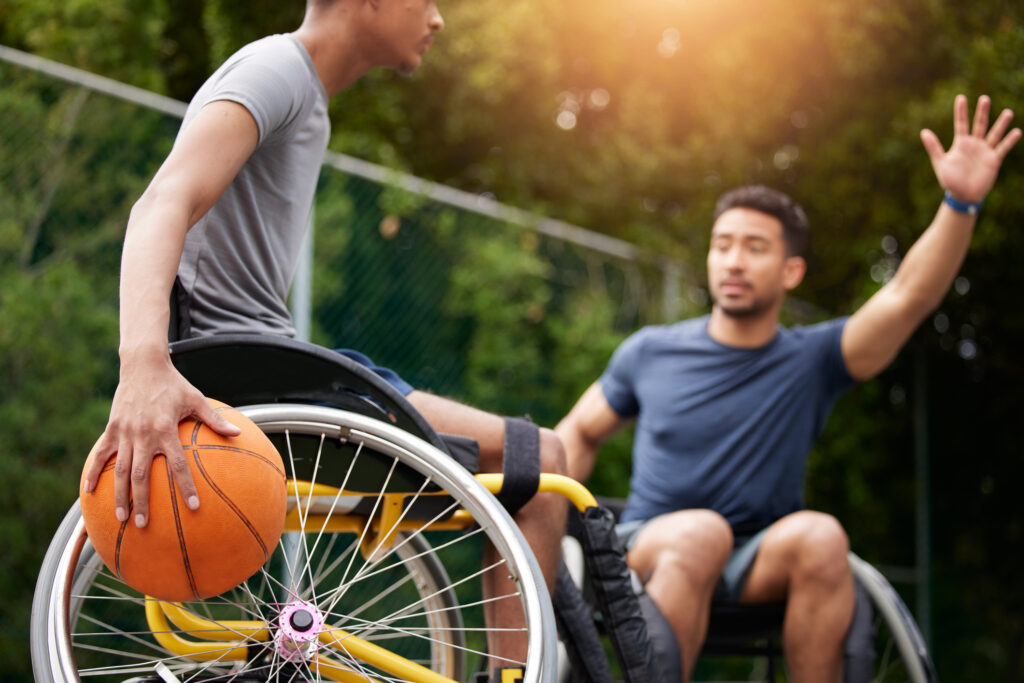
With the growing participation of athletes with disabilities in competitive sports, there is an increased need for specialized nutritional support tailored to their unique physiological differences. These athletes often exhibit distinct body compositions, metabolic rates, training loads and activity patterns compared to their peers without disabilities. Sports nutritionists, especially those working with Paralympic athletes, have […]
Exercise for Autism: An Important Piece of the Puzzle

“Our kids won’t want to do that; they don’t like to exercise.” When I first proposed an exercise program for autistic children at the Institute for Autism Research at Canisius University, that was a response I often heard. The reasons why autistic individuals won’t exercise are as varied as the individuals themselves: uninterested, difficulty moving, picked last […]
Reducing Heart Disease Risk for Young and Middle-Aged African Americans

In the U.S., the death rate for African Americans with heart disease is declining. However, more than 100,000 African Americans continue to die each year from cardiovascular disease and retain a significantly higher death rate than any other racial group. A January 2022 report from the Office of Minority Health noted that approximately 57% of African Americans have […]
Prostate Cancer: A Survivor’s Perspective
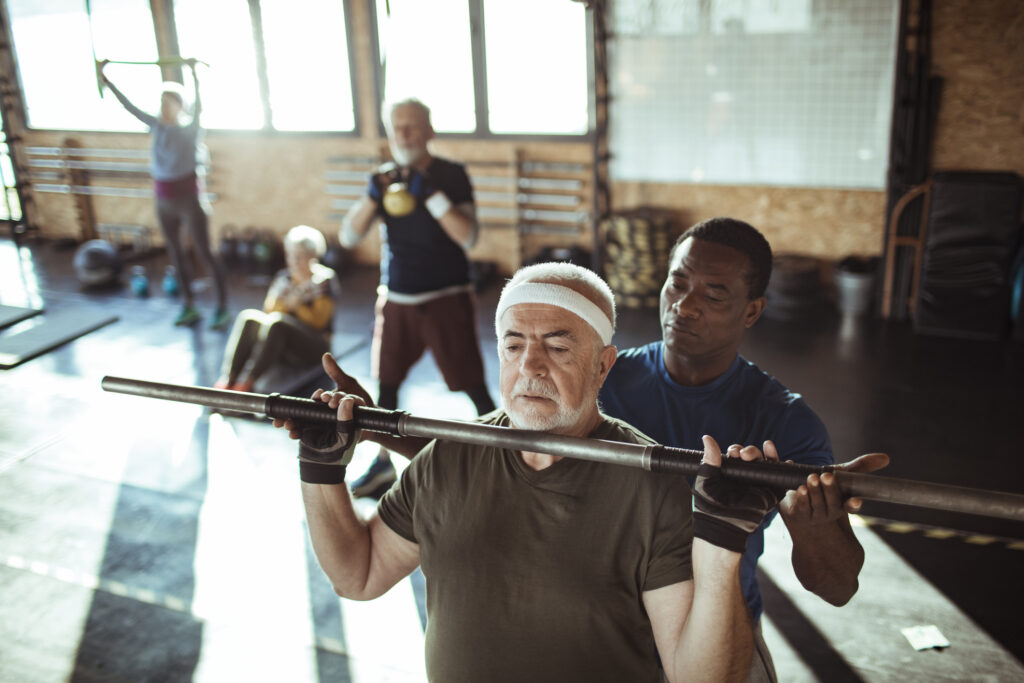
September is Prostate Cancer Awareness Month, and for men living in the U.S., one in eight will be diagnosed with the disease at some point, including more than 200,000 this year. If you are an African American man, the likelihood is one in five, and if you have a family history of prostate cancer, the […]
Maximizing Pregnancy Health: The Role of EIM and Multidisciplinary Care
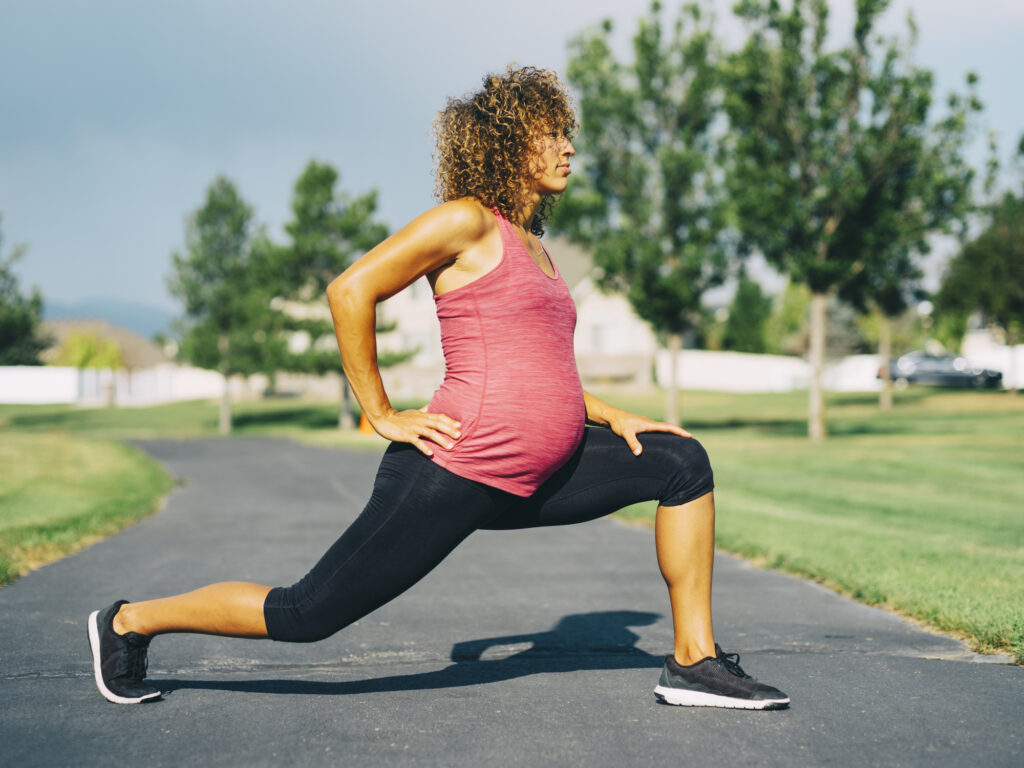
Pregnancy is one of the most complex periods in human life, and every year more research is published detailing how events experienced during gestation affect the future growth and development of the child. Epigenetic factors are particularly impactful during this time, and maternal lifestyle during pregnancy is of enormous importance. Thus, the current worldwide rates […]
Alzheimer’s and Exercise: What Do We Know, and What Can We Do?
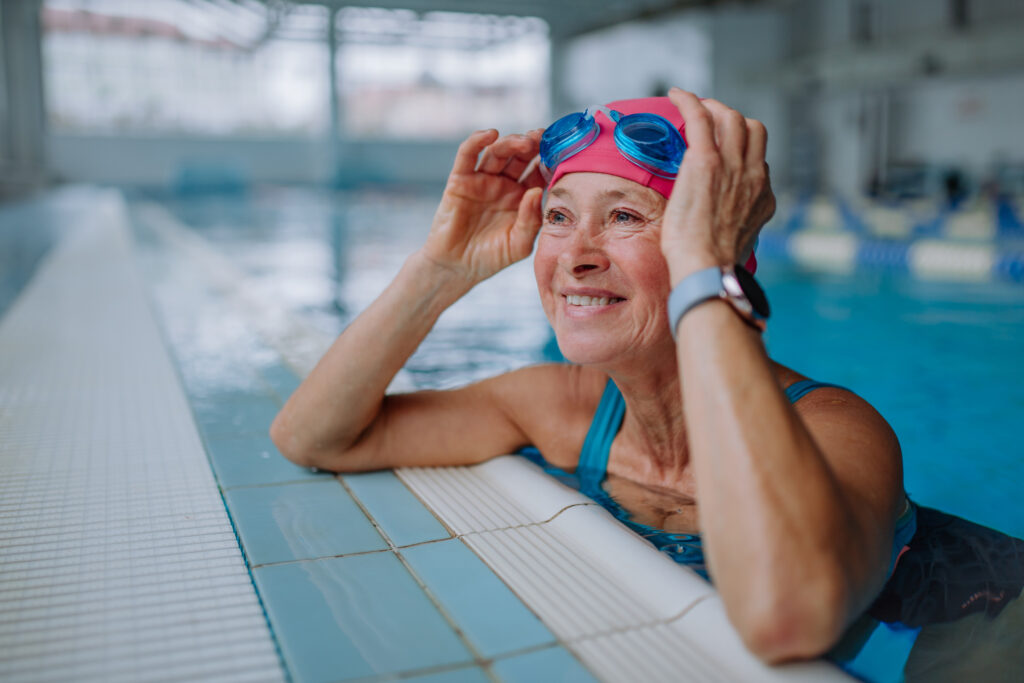
Author’s note: This blog post is based in large part upon “Alzheimer’s Disease and Physical Activity” published in ACSM’s Health & Fitness Journal and authored by Barbara Bushman, ACSM, ACSM-CEP, ACSM-EP, ACSM-CPT, and Madison Pullen, ACSM-EP — a more in-depth piece for readers interested in the nexus of Alzheimer’s and exercise. Alzheimer’s disease is “an irreversible, progressive […]
Caffeine May Increase the Health Benefits of Exercise; Latte da!
Exercise is good for you. There are many ways by which exercise favorably modifies health. One way is through a chemical known as interleukin-6, usually abbreviated as IL-6. During and following exercise, skeletal muscles release IL-6 into the blood. It is then transported throughout the body where it can have positive effects. For example, the […]