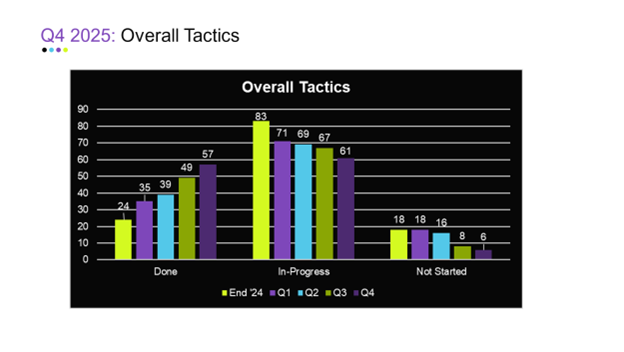
As volunteer leaders, you often see ACSM’s strategic plan through the lens of committee work, meetings, and milestones. At first glance, some Q4 2025 progress metrics—especially “percent complete”—may feel underwhelming. But the full story tells something far more meaningful: ACSM is making real, foundational progress in areas that matter most for long-term impact.
Progress Isn’t Always Linear—and That’s Okay
One of the biggest takeaways from this year’s work is that low completion does not equal low performance. Many of ACSM’s priorities—such as engagement, governance modernization, reputation-building, and partnerships—are transformational, not transactional. These efforts require sustained collaboration, trust-building, and culture change. They rarely move cleanly from “not started” to “done,” yet they lay the groundwork for everything that follows
Volunteer leaders are often at the center of this work, which means progress can look slower when responsibilities span multiple committees or initiatives run in parallel. Where progress accelerates, it’s usually because tactics are broken into smaller phases with clear ownership—a lesson we’re actively applying across goals.
Where ACSM Made Strong Strides
Despite the complexity, there were notable accomplishments in 2025:
- Member and learner experience improved through better meeting design, needs assessments, learning plans, mentorship programs, and clearer pathways for students and early-career professionals.
- Technology and infrastructure saw major wins, including the successful launch of a new Association Management System, improved website search, single sign-on integrations, and internal AI tools—making it easier for volunteers, members, and staff to engage.
- Fiscal systems became more robust with better forecasting, improved reporting, and clearer financial processes.
- Science and advocacy advanced through policy briefs, educational optimization, and strengthened external relationships.
These efforts reflect deep collaboration between volunteers and staff—and in many cases, they required new ways of working together.
Why Governance Work Takes Time
Governance realignment remains one of the slowest-moving areas, and that’s by design. Clarifying roles, modernizing bylaws, and redesigning committee structures demand careful coordination, shared understanding, and change management. These are not quick fixes—but they are essential to ensuring volunteers can focus their time where it adds the greatest value.
What This Means for Volunteer Leaders
Your role is not just to “complete tactics,” but to help steward long-term progress. That includes:
- Embracing phased progress rather than all-at-once change
- Supporting clarity of roles and decision-making
- Helping sequence initiatives so capacity isn’t stretched too thin
- Staying engaged even when outcomes aren’t immediately visible
Looking Ahead
As ACSM enters the next phase of the strategic plan, the focus will shift toward refining governance, deepening partnerships, advancing science leadership, and translating foundational work into visible outcomes. Volunteer leadership remains critical—not just in execution, but in shaping how progress is defined and communicated.
Thank you for the time, expertise, and commitment you bring to ACSM’s mission. The work you’re doing now is building the organization our members—and the field—will rely on for years to come.