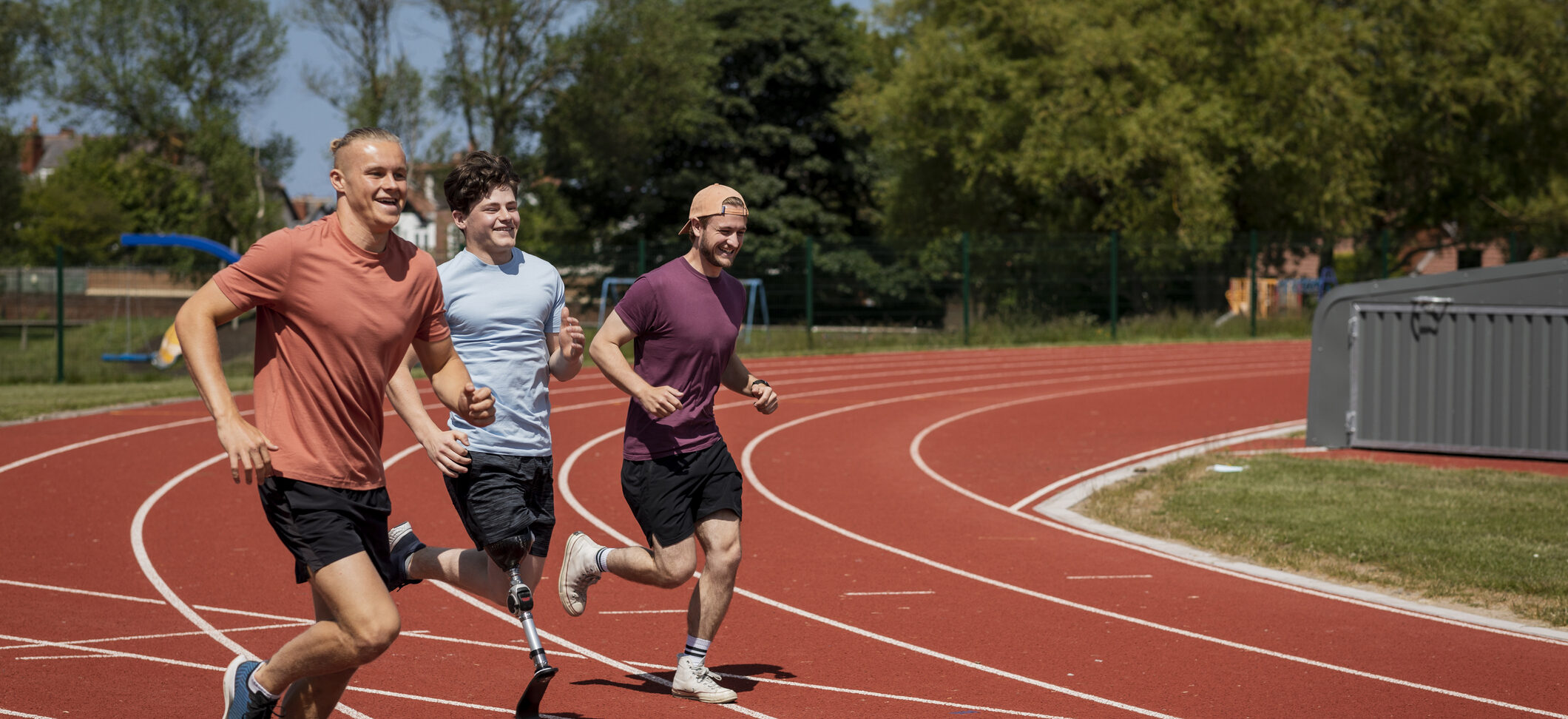
In the last decade, various forms of interval training have gained popularity. In fact, high-intensity interval training has been in the top five in ACSM’s Annual Worldwide Survey of Fitness Trends since 2014. Sprint interval training has also gained popularity in recent years. These two forms of interval training are used in many different populations, including patients in rehabilitation programs, athletes looking to optimize their performance and the general public seeking to improve or maintain their cardiorespiratory fitness.
Sprint interval training has been shown to be an effective form of training when it comes to increasing maximal oxygen consumption (VO2max). Despite the small amount of time required (~10 minutes), the training-induced effects after sprint interval training interventions are equivalent to those after exercise programs that include traditional endurance exercises with a time commitment three to four times longer per session.
Previous research has shown that sprint interval training has a pronounced effect on peripheral adaptations. Such adaptations include muscle capillarization and mitochondrial content and function, and a variety of genes involved in the ability of skeletal muscle to obtain and use oxygen during exercise respond positively to sprint interval training. However, less is known about the central hemodynamic effects after sprint interval training. Central adaptations include factors responsible for oxygen delivery to the working muscle. Cardiac size and structure, total blood volume and hemoglobin mass are all part of central hemodynamics.
In our study, published in the June issue of Medicine & Science in Sports & Exercise®, we investigated how these central hemodynamic factors respond to a six-week training intervention consisting of sprint interval training. Each training session consisted of 10 minutes of low-intensity cycling interspersed with three 30-second all-out sprints. Our main interest was which factors responsible for oxygen delivery (total hemoglobin mass, blood volume, maximal cardiac output) would contribute to the expected improvements in cardiorespiratory fitness. The study involved younger, healthy participants who were active, but did not follow any structured training programs before the intervention. As expected, the participants obtained a substantial increase in VO2max (10.3%) after the training intervention. Specific hemodynamic factors that improved were total hemoglobin mass, maximal cardiac output and total blood volume, where total hemoglobin mass in particular correlated with improvement in VO2max. These findings suggest that sprint interval training-induced improvements in VO2max are mediated by both peripheral and central factors. Both the changes in VO2max and many of the underlying adaptive mechanism are thus comparable to those of conventional endurance training.
In our view, this means that the similarity between sprint interval training and conventional endurance exercise when it comes to training effects and the adaptations mediating the effects is higher than previously thought. Practically, that would allow for a wider and more interchangeable use of intervals in training programs without the fear of “missing out” on central hemodynamical training effects.
The next question we need to answer is, “How is it that two training modalities as different from one another as sprint interval training and traditional endurance training lead to the same physiological changes?

Mirko Mandić, M.Sc., is a Ph.D. student at the Division of Clinical Physiology at Karolinska Institutet in Sweden. His research focuses on central hemodynamical adaptations to exercise, with a special focus on the adaptations of blood volume, circulation and the heart.

Eric Rullman, M.D., PhD, is a cardiologist and physiologist working at the Karolinska University Hospital in addition to his position as a researcher at the Division of Clinical Physiology at Karolinska Institutet. Dr. Rullman’s research is focused on the regulatory mechanisms limiting physical capacity in healthy individuals and their prognostic potential in heart disease, from transcriptional networks to cardiac output.
Viewpoints presented in SMB commentaries reflect opinions of the authors and do not necessarily represent ACSM positions or policies. Active Voice authors who have received financial or other considerations from a commercial entity associated with their topic must disclose such relationships at the time they accept an invitation to write for SMB.