

The American College of Sports Medicine (ACSM), with the support of the National Academy of Kinesiology (NAK), the North American Society for Pediatric Exercise Medicine (NASPEM), and the National Strength and Conditioning Association (NSCA), strongly support efforts that encourage children and adolescents to be physically active and to develop lifelong habits that promote health and well-being. National attention to youth fitness can help elevate awareness and mobilize resources to support physical activity in schools and communities.
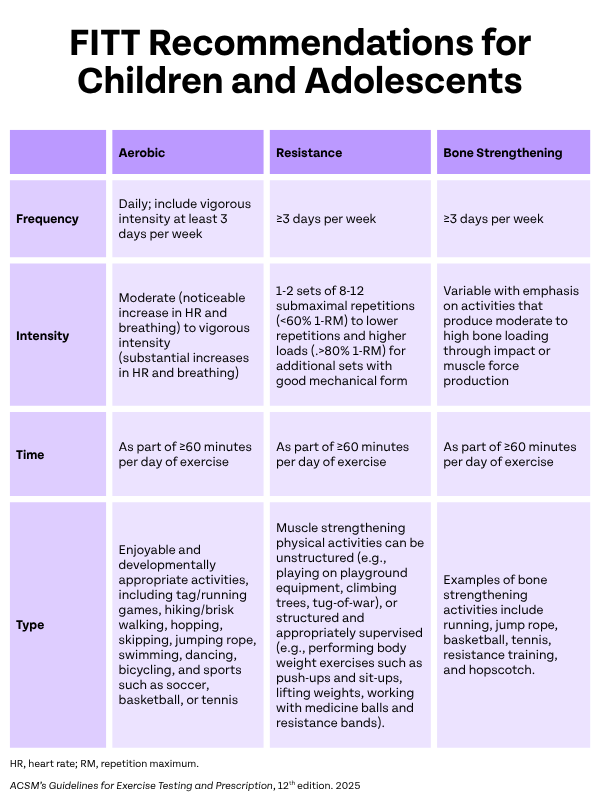
Simultaneously, ACSM and its partner organizations underscore the significance of how youth fitness is evaluated. Over several decades, research and practice have evolved from performance and norm-based fitness testing, towards health-related physical fitness approaches grounded in scientific principles and aligned with positive health outcomes. These approaches focus on key components such as cardiorespiratory endurance, muscular strength and endurance, flexibility, and body composition, using criterion-referenced standards linked to health rather than peer comparison.
The priority should be appropriately designed and implemented health-related fitness assessments that serve as educational tools within school physical education programs, particularly when paired with comprehensive fitness education, supportive instructional resources, and meaningful communication with families.
As policymakers revisit national youth fitness initiatives and considering the release of the 2026 Presidential Fitness Test, ACSM and the supporting organizations encourage continued emphasis on evidence-based, health-focused models that support positive relationships with physical activity. Several assessment options in the new program, including the PACER, push-ups, and plank, align with components commonly used in FitnessGram® and other health-related fitness assessments. However, important implementation details for some tests, including the timed sit-up, have not yet been released, making it difficult to evaluate alignment with current best practices.
Additionally, the award standards appear to reflect high percentile, performance-oriented benchmarks that substantially exceed widely accepted health-related fitness standards. While performance-based goals may recognize athletic excellence and motivate some youth, current evidence does not support highly competitive norm-referenced standards as an effective primary strategy for motivating most children and adolescents toward lifelong physical activity.
The American College of Sports Medicine (ACSM), the National Academy of Kinesiology (NAK), the North American Society for Pediatric Exercise Medicine (NASPEM), and the National Strength and Conditioning Association (NSCA) support framing fitness as a component of lifelong health and welcome opportunities to work collaboratively with the Administration, policymakers and partner organizations to promote balanced youth fitness initiatives that prioritize long-term health outcomes while supporting physical education programs with adequate resources.
###
The American College of Sports Medicine (ACSM) is the largest sports medicine and exercise science organization in the world, with nearly 50,000 members and certified professionals in more than 100 countries. Together, ACSM is committed to the mission of educating and empowering professionals to advance the science and practice of health and human performance. ACSM advocates for legislation to help the government and health community make physical activity a priority. Learn more at www.acsm.org.
The North American Society for Pediatric Exercise Medicine (NASPEM)’s mission is to promote exercise science, physical activity and fitness in the health and medical care of all children and adolescents. Members include researchers, students, practitioners, clinicians, and health care providers dedicated to advancing pediatric health through exercise science and physical activity.
The National Academy of Kinesiology (NAK) is a members-based, non-governmental organization. The Academy’s dual purpose is to encourage and promote the study and educational applications of the art and science of human movement and physical activity and to honor by election to its membership persons who have directly or indirectly contributed significantly to the study of and/or application of the art and science of human movement and physical activity.
Founded in 1978, the National Strength and Conditioning Association® (NSCA) is a 501(c)(3) educational nonprofit dedicated to advancing science and education in the field. NSCA Mission: As the worldwide authority on strength and conditioning, the National Strength and Conditioning Association (NSCA) supports and disseminates research-based knowledge, and its practical application to improve athletic performance and fitness. NSCA Vision: We believe everyone, including athletes, clients, coaches, and trainers, benefits from cutting-edge research and education.
The NSCA exists to empower the public and professionals across the strength and conditioning spectrum with evidence-based information to safely and effectively enhance health and performance. We pursue our vision by providing free resources and information on fitness-related science. Furthermore, the NSCA seeks to solidify strength and conditioning standards by offering comprehensive certifications, continuing education, five peer-reviewed research publications, and philanthropic initiatives through the NSCA Foundation.
Resources
- Issue Brief: Youth Physical Fitness Testing
- Physical Activity and Health in Children Younger than 6 Years: A Systematic Review
- Getting Things Moving: How to Inspire Healthy Living in Kids
- Trends in Youth Fitness
- Sample chapter, ACSM’s Essentials of Youth Fitness
- National Academy of Kinesiology Position Statement on President’s Council on Sports, Fitness, & Nutrition, President Fitness Test and Youth Physical Activity Promotion