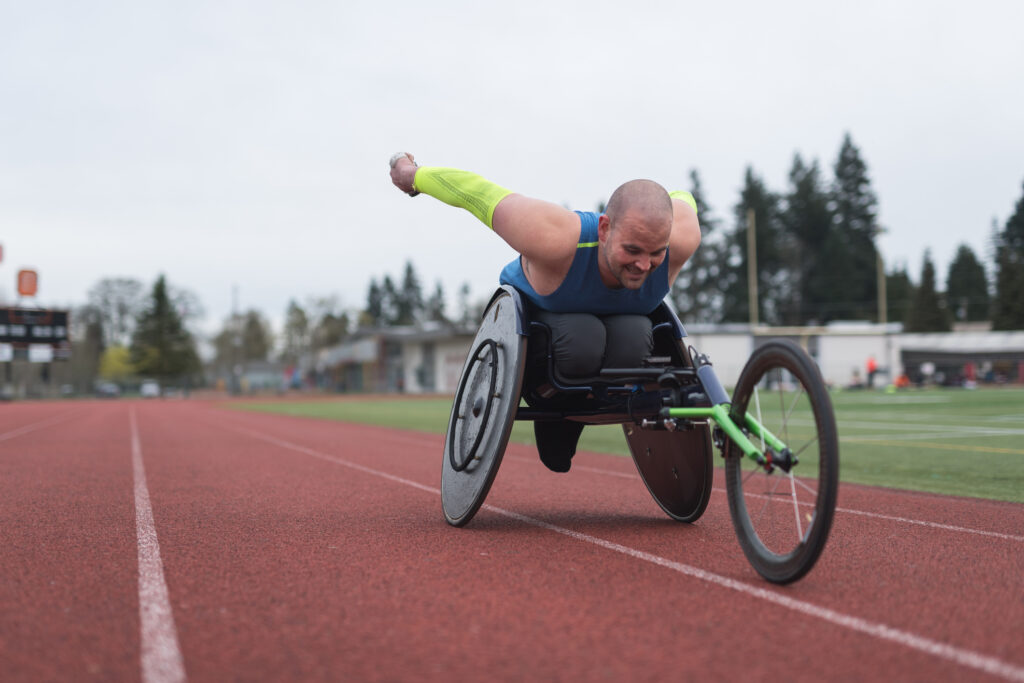
To achieve peak sport performance on the world stage, elite athletes are supported by a comprehensive care team that uses combined approaches to prevent injury and improve health and wellbeing. This approach is championed by ACSM and these principles can be applied to athletes at any developmental level and functional ability.
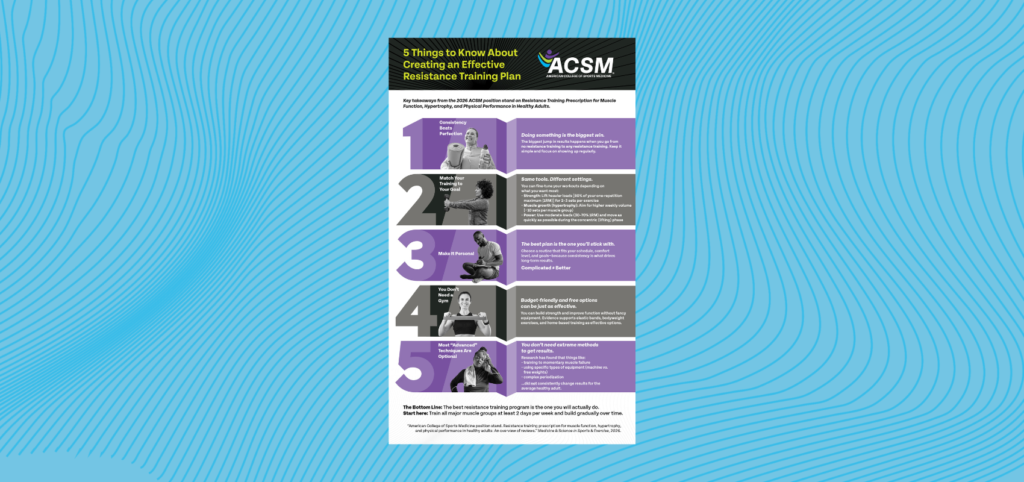
Click image to download PDF and read more below.
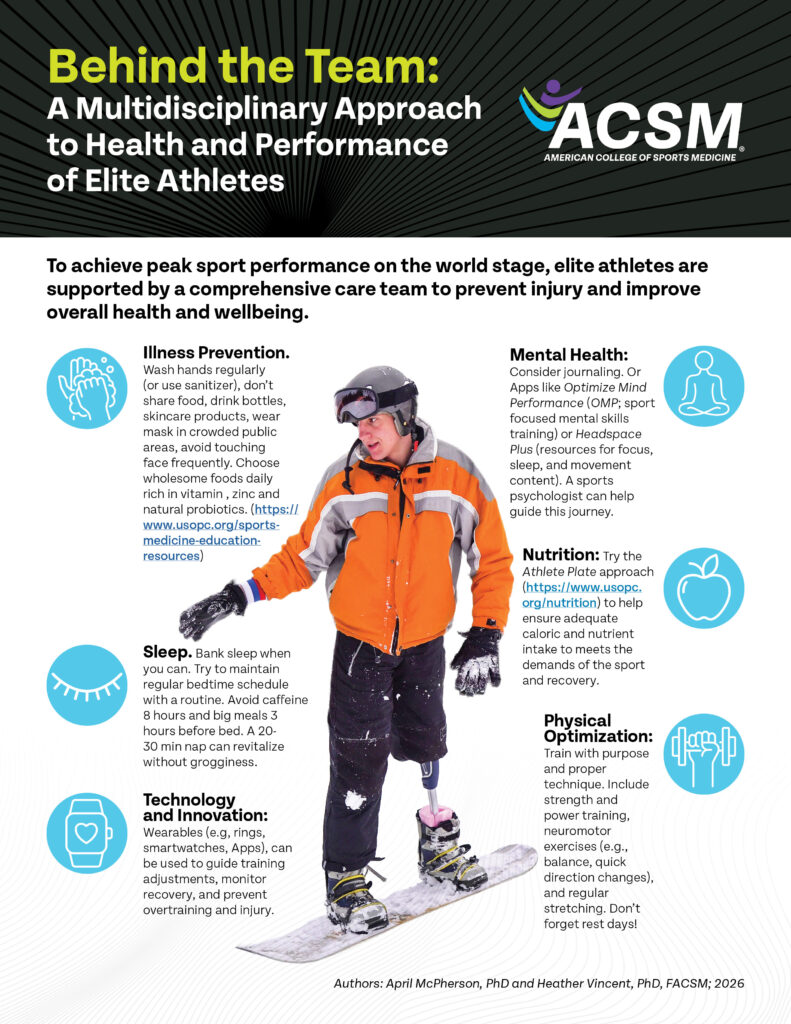
What you can do to help you train, compete and recover:
Physical Optimization: Ensuring sport form is optimal and supported by strengthening & conditioning programs and adequate rest
Train with purpose. Focus on moving with proper technique—think controlled, balanced movement. Include strength and power training, neuromotor exercises (like balance drills, quick direction changes, and coordination tasks) to sharpen brain to body communication, and regular flexibility training. Rest days are necessary and can improve performance. Functional test screens can identify areas of weakness in the musculoskeletal system so that training can target that area.
Mental Health: Managing stressors enables better health and sport focus
Focusing on the present moment through mindfulness (like paying attention to your breath or surroundings). Consider journaling thoughts to offload stress. A sports psychologist can help guide this journey. If sport creates anxiety, Apps like Optimize Mind Performance (OMP) provides sport focused mental skills training. Other Apps like Headspace Plus offers resources for focus, sleep, movement and content to help recovery.
Nutrition: Adequate energy intake and a balanced, wholesome diet support health and recovery
Low energy supply and poor food choices contribute to delayed recovery, less adaptation to training, fatigue and deteriorating performance. The Athlete Plate approach (https://www.usopc.org/nutrition) helps ensure adequatecaloric and nutrient intake to meets the demands of the sport and recovery.
Sleep: Sleep is foundational to resisting illness, lowering injury risk and elevating performance
Inadequate sleep lowers endurance, speed, reaction time, decision making, peak muscle force, perceived exertion and coping with stress. Bank sleep when you can. Try to maintain regular bedtime schedule with a routine. Avoid caffeine 8 hours and big meals 3 hours before bed. A 20-30 min nap can revitalize without grogginess. Traveling athletes should practice nap schedules before competition.
Illness Prevention: Illness impedes training and hurts competition performance
Illness is related to lower competition rankings and lowered sport performance. Wash hands regularly (or use sanitizer), don’t share food, drink bottles, makeup or skincare products, wear mask in crowded public areas, avoid touching face frequently, avoid eating new foods on competition day to prevent gastrointestinal problems. Choose wholesome foods daily rich in vitamin C: Fruits & vegetables, especially citrus, bell peppers, kiwi, and broccoli rich in zinc: Meats, seafood, oats, nuts, seeds, & beans and natural probiotics: Yogurt, kefir, kimchi and miso.
Technology and Innovation: Information about your body, training and personal performance are important
Technology can be applied in different ways to help track sleep, recovery, sport motion patterns and training intensity. While elite athletes may have access to unique technology (such as wind tunnels, motion and physiological sensors, metabolic systems), readily available options include wearables such as rings and watches, or cell phone Apps. Technology can be used to guide training adjustments and prevent overtraining and injury.