
First-ever exercise guidance for pediatric cancer patients finds exercise is safe, feasible, and improves strength and physical function during and after treatment
INDIANAPOLIS — Children and adolescents undergoing cancer treatment should no longer be encouraged to rest whenever possible. Instead, appropriately prescribed exercise should be included as part of supportive cancer care, according to a new American College of Sports Medicine (ACSM) Expert Consensus Statement published in Medicine & Science in Sports & Exercise® (MSSE).
The paper, “Initial Exercise Guidance for Children and Adolescents during and beyond Cancer Treatment: ACSM Expert Consensus Statement,” provides the first evidence-based exercise recommendations specifically developed for children and adolescents with cancer. The international panel of experts screened more than 12,000 studies and synthesized findings from randomized controlled trials to establish practical exercise guidance for pediatric oncology care.
“Exercise should no longer be viewed as optional in pediatric oncology care,” said corresponding author Alejandro Lucia, MD, PhD, of Universidad Europea de Madrid. “This consensus statement shows that, when properly prescribed, exercise is safe and can improve physical function and strength in children and adolescents with cancer.”
Cancer remains one of the leading causes of death among children and adolescents worldwide, with more than 380,000 young people diagnosed each year. While survival rates now exceed 80% in many high-income countries, treatment often leaves patients with significant short- and long-term physical challenges, including declines in muscle strength, physical function and cardiorespiratory fitness.
Key Findings
The expert panel found:
- Exercise can be performed safely during and after cancer treatment when appropriately supervised and individualized.
- Moderate-quality evidence shows that combined aerobic and resistance exercise improves muscle strength and physical function—two outcomes that directly affect a child’s ability to move, play, and participate in daily activities and recover from treatment.
- Moderate-quality evidence shows that aerobic exercise improves cardiorespiratory fitness after treatment, particularly among survivors of acute lymphoblastic leukemia.
- Children and adolescents with cancer should be encouraged to avoid prolonged inactivity and bed rest whenever medically feasible.
- Significant research gaps remain for outcomes such as cardiac health, bone health, immune function, fatigue, sleep, and cognitive function, underscoring the need for well-designed multicenter trials.
Practical Guidance for Clinicians
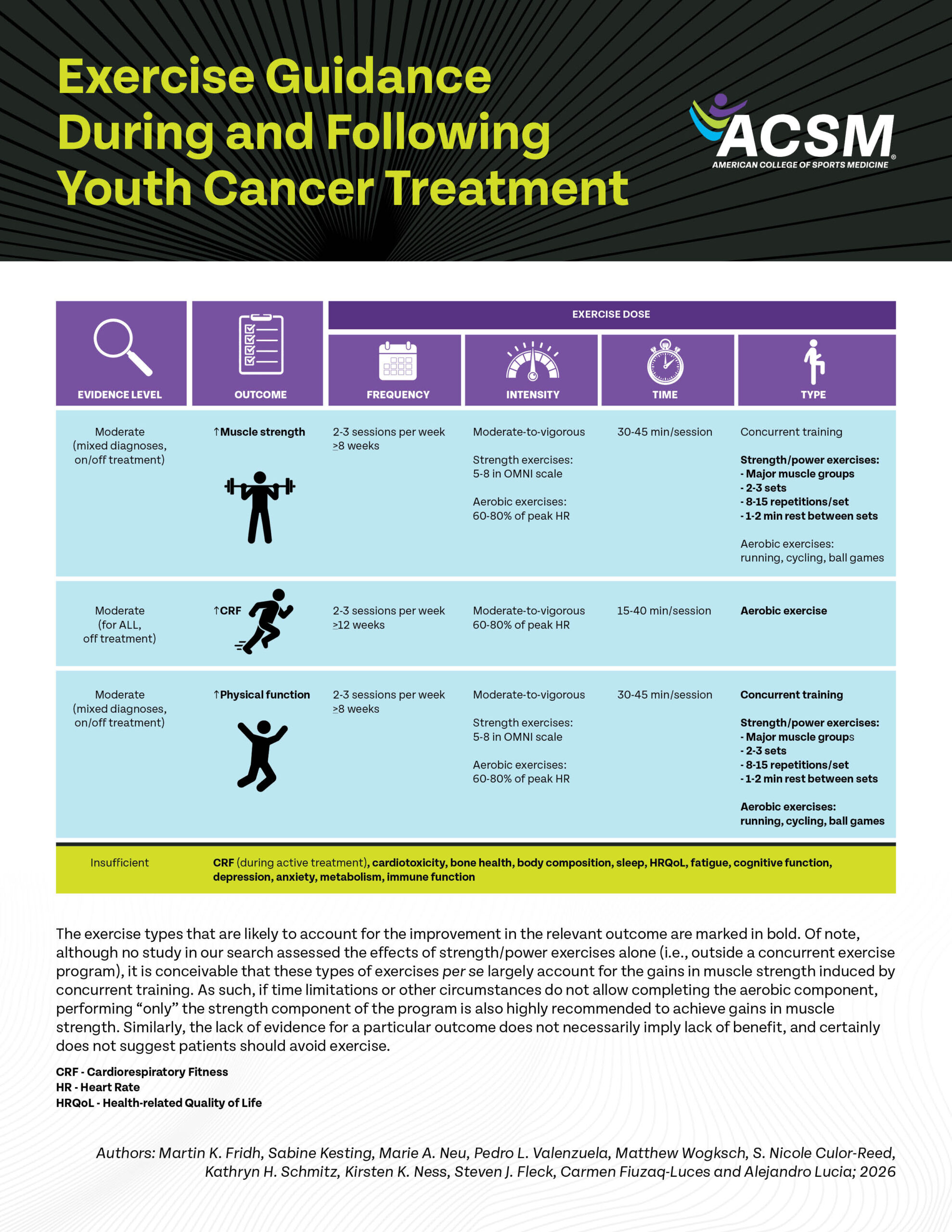
The statement offers FITT-based (Frequency, Intensity, Time and Type) recommendations to help clinicians and exercise professionals implement exercise programs in real-world pediatric oncology settings.
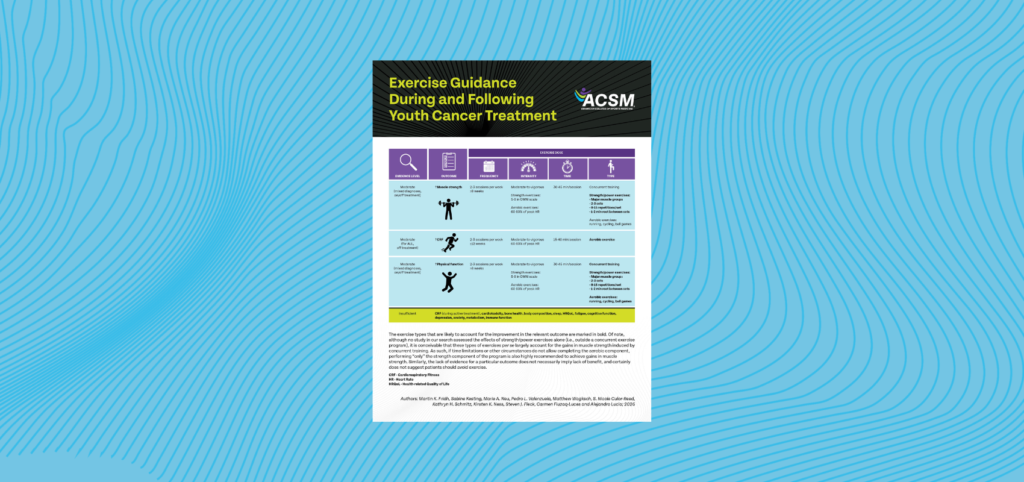
For improving muscle strength and physical function, the authors recommend supervised concurrent aerobic and resistance training two to three times per week for at least eight weeks, with sessions lasting approximately 30–45 minutes. Recommended activities include running, cycling, ball games, and age-appropriate strength exercises targeting major muscle groups.
The guidance also includes safety considerations, contraindications, and recommendations for adapting exercise to individual medical conditions and treatment status.
A Shift in Pediatric Cancer Care
The authors emphasize that exercise should be viewed as a supportive therapy throughout the cancer journey, not simply as a lifestyle recommendation after treatment ends.
“Children with cancer face significant physical challenges during and after treatment, but the evidence now shows that movement matters,” said Lucia. “Exercise can help preserve and restore physical function during some of the most difficult periods of a young person’s life.”
Because pediatric cancer differs substantially from adult cancers in diagnosis, treatment, and recovery, the authors note that dedicated pediatric exercise guidance has been urgently needed. This consensus statement represents an important step toward integrating exercise into routine pediatric oncology care worldwide.
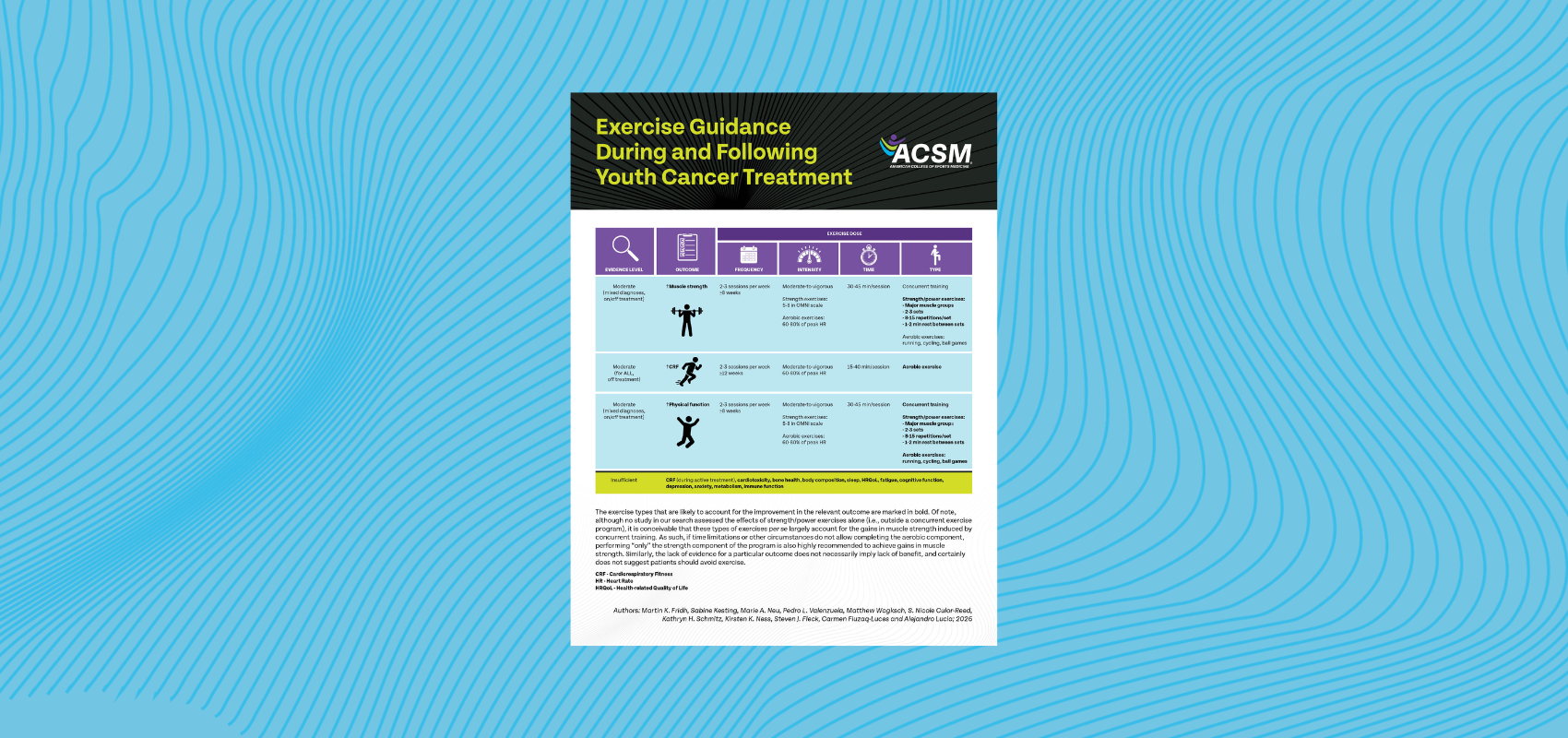
Access exercise recommendations infographic: PDF download, image download
Download a classroom-ready presentation: Slide Deck
Publication Information
The paper, “Initial Exercise Guidance for Children and Adolescents during and beyond Cancer Treatment: ACSM Expert Consensus Statement,” is published as an official pronouncement of the American College of Sports Medicine in Medicine & Science in Sports & Exercise®.
Media Contact
Caitlin Kinser, CAE: ckinser@acsm.org