
Building Client Connections with Beautiful Questions

Don’t just focus on what you can teach your client. Learning to ask the right questions — even unexpected ones — can help you collaborate on more nuanced and useful answers.
Resistance Exercise for Health
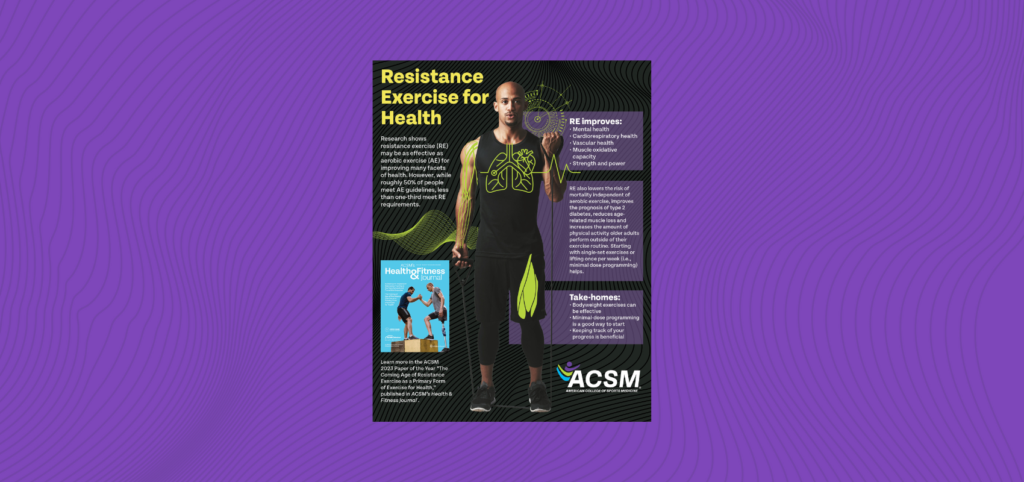
Research shows that resistance exercise may be as effective as aerobic exercise for improving many facets of health. However, wile roughly 50% of people meet aerobic exercise guidelines, less than one-third meet resistance exercise requirements.
Exercise as Medicine for People with a Substance Use Disorder
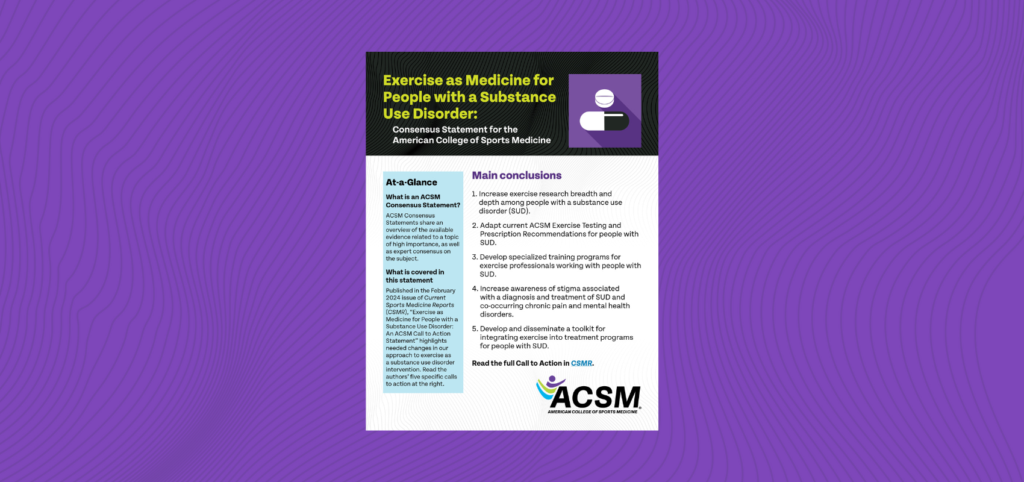
Exercise may be an effective adjunctive treatment for substance use disorders, but large clinical trials and specialized training are needed to inform practice. This infographic outlines ACSM’s call to action statement purpose and highlights the key action items.
Coaching Skills for Deep Empathy
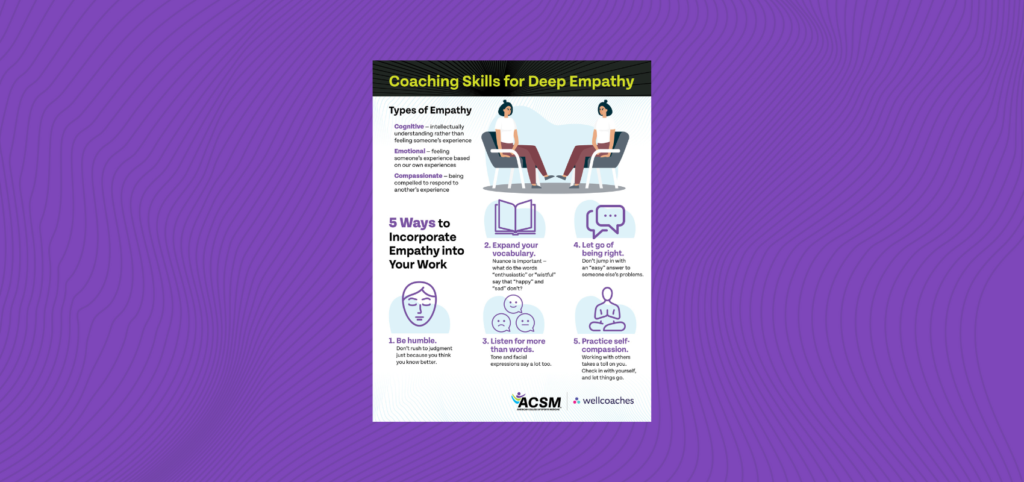
This infographic describes the three types of empathy and five ways to incorporate empathy into your work as a fitness professional, health coach, or medical practitioner.
Working Across Generations
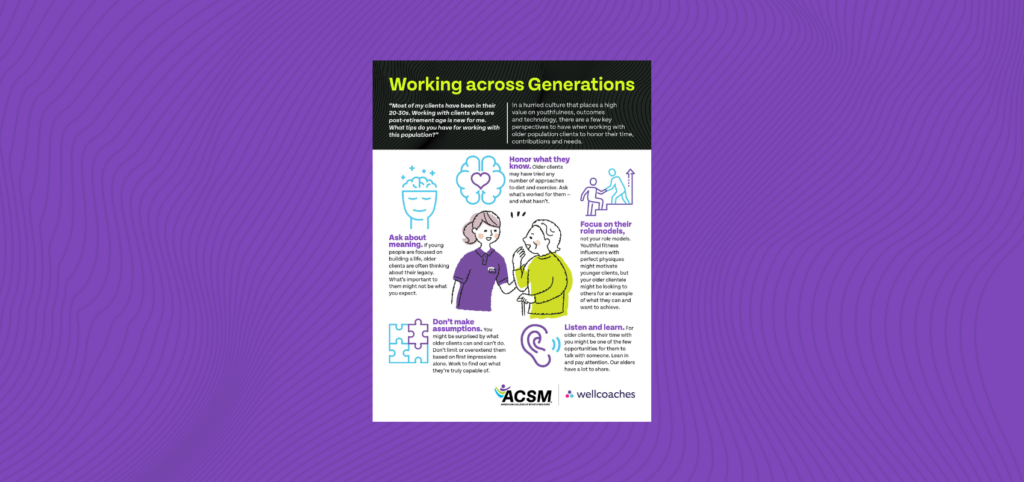
In a hurried culture that places a high value on youthfulness, outcomes and technology, there are a few key perspectives fitness professionals should have when working with older population clients to honor their time, contributions and needs.
First, You: Self-Care Strategies for Caregivers
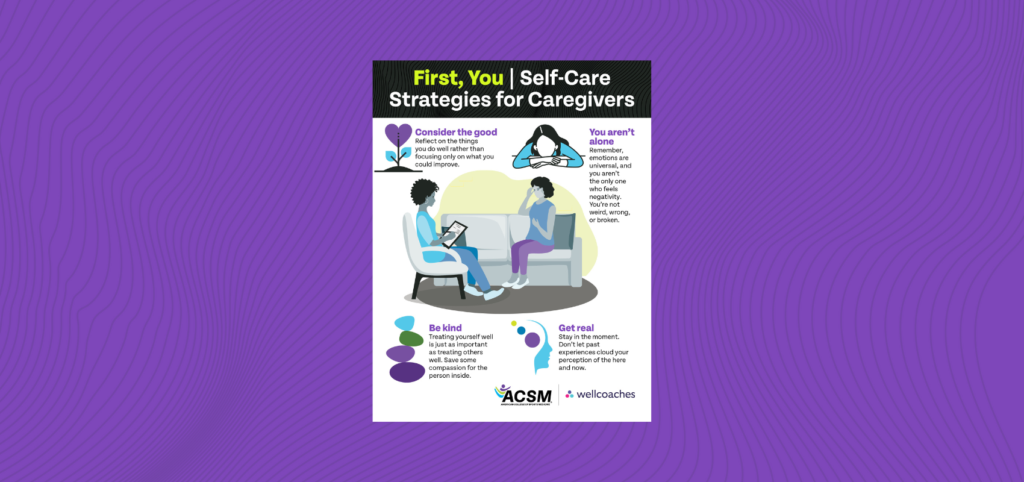
Fitness professionals and medical professionals provide care to clients and patients everyday, as do the thousands of others caring for family members, friends and their communities. When you’re so focused on providing care for others, you may lose sight of caring for yourself.
Universal Response to the Collapsed Athlete | Sudden Cardiac Arrest
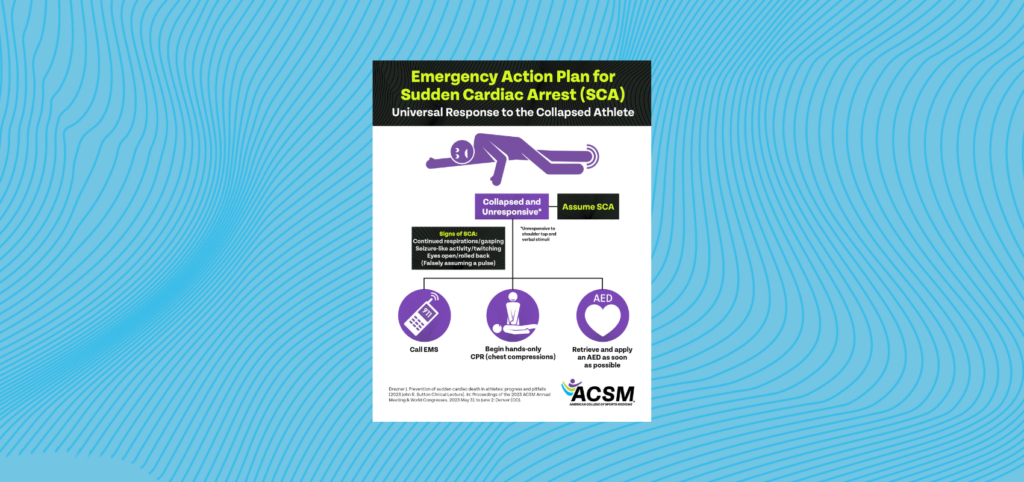
Every facility, organization and medical professional needs to have an emergency action plan to treat sudden cardiac arrest (SCA). This protocol for the universal response to the collapsed athlete is explained by Jonathan Drezner, M.D.
Supporting Your Clients’ Emotional Needs
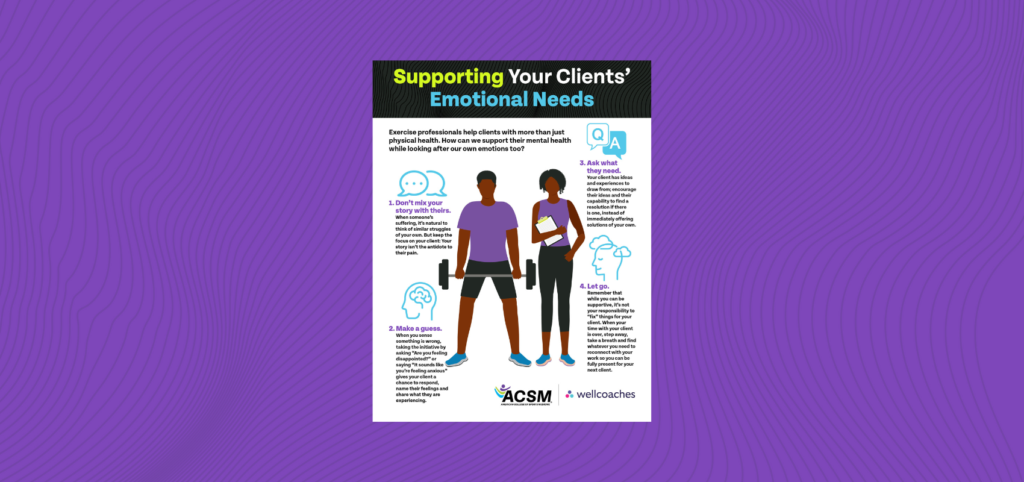
Exercise professionals help clients with more than just physical health. How can we support their mental health while looking after our own emotions too? Check out these tips.
Social Determinants of Health
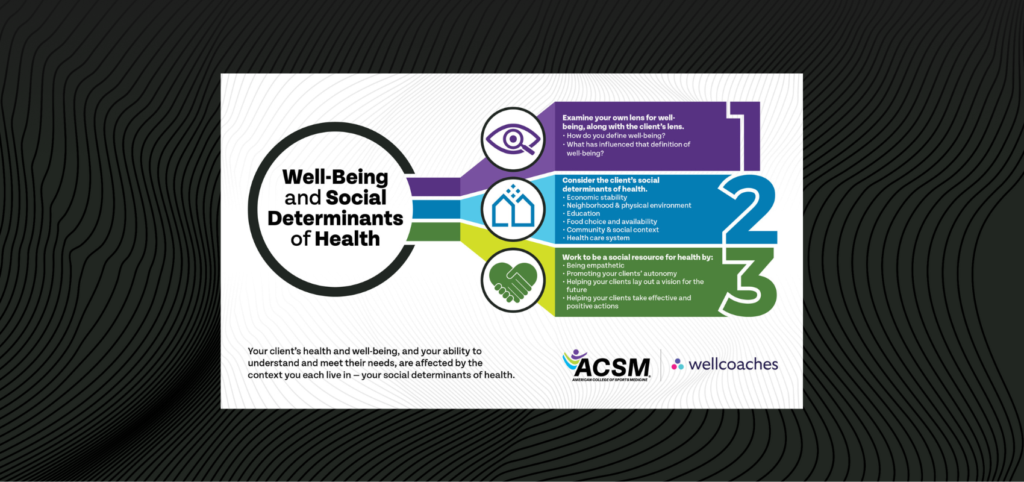
Your client’s health and well-being, and your ability to understand and meet their needs, are affected by the context you each live in — your social determinants of health.
Top 3 Evidence-Based Practices for Exercise Programming in Autism
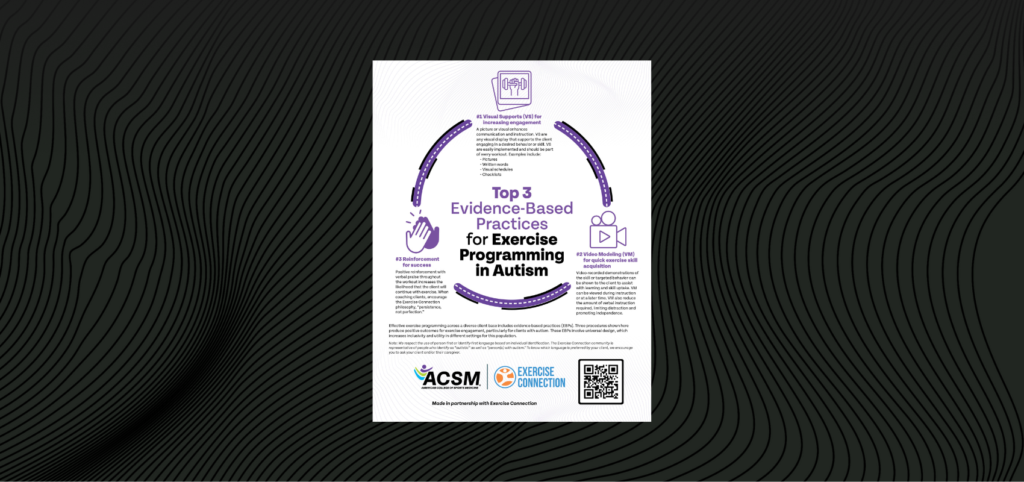
Effective exercise programming across a diverse client base includes evidence-based practices (EBPs). Three procedures shown here produce positive outcomes for exercise engagement, particularly for clients with autism. These EBPs involve universal design, which increases inclusivity and utility in different settings for this population.