
Understanding Exercise Physiology for the Diabetic Youth Athlete

Dr. Colberg shares her expertise on how the body responds physiologically to different types of sports and activities in diabetic youth.
Exercise as Medicine for People with a Substance Use Disorder
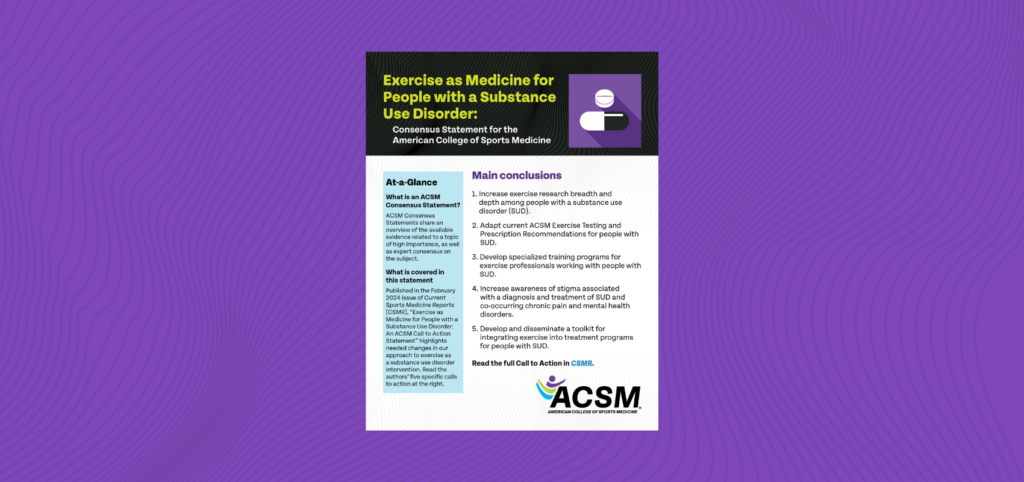
Exercise may be an effective adjunctive treatment for substance use disorders, but large clinical trials and specialized training are needed to inform practice. This infographic outlines ACSM’s call to action statement purpose and highlights the key action items.
How to Prescribe Exercise for Brain Health

Alzheimer’s disease and related dementias are among the world’s foremost health and economic challenges, impacting over 55 million people worldwide and costing more than 1.3 trillion U.S. dollars in 2019 alone. With no imminent cure, there is an urgent need for interventions that reduce dementia risk in healthy older adults. Physical exercise is one of the greatest […]
Exercising a New Path: Insights from the ACSM Roundtable on NAFLD and Physical Activity

The growing prevalence of nonalcoholic fatty liver disease, or NAFLD, is quite astounding. With one in three people affected worldwide, NAFLD is a substantial public health issue that demands attention. Characterized by excessive fat deposition in the liver, NAFLD is typically found in the setting of metabolic dysfunction. If uncorrected, NAFLD can progress to advanced […]
Exercise Improves Liver Health

The liver plays a crucial role in numerous metabolic processes necessary to leading a healthy life, including those essential to metabolism, such as storing energy and regulating blood sugar. Exercise has been shown to improve liver health by reducing fat in the liver, improving insulin sensitivity, reducing inflammation, boosting the immune system and improving mental […]
Harnessing the Expertise of Exercise Professionals to Move the Needle on Blood Pressure Controlancer Treatment

High blood pressure (BP) or hypertension is the most common costly but modifiable major risk factor for the development of cardiovascular disease and premature mortality, affecting nearly half (47%) of the U.S. adult population. A recent scientific statement from the American Heart Association (AHA) reinforces physical activity as a critical component of first-line treatment for individuals with mild- to […]
Physical Activity Reduces Risk of Osteoarthritis for Those with Obesity

Regular physical activity can help protect against osteoarthritis by increasing muscle strength and cardiovascular health; improving body composition and joint support; preserving muscle mass; and reducing inflammation, joint stiffness and pain.
Technogym HIIT Applications in Chronic Disease Q&A

If you’d like to view the full webinar with an opportunity to earn one CEC, click here Q: Do you have any thoughts on HIIT’s effect on cancer survivorship versus MICT, or can you reference any researchers working in this area? A: I believe there are large trials in prostate cancer and breast cancer ongoing with […]
Overall Physical Activity or Intensity of Activity: Which Is More Important for Cardiometabolic Health?
Cardiometabolic risk describes a collection of factors known to increase the likelihood of cardiovascular disease. It includes lipid and glucose metabolism as well as adiposity and hypertension. We know that being more physically active is associated with lower cardiometabolic risk. However, it is not clear whether more specific or tailored physical activity guidance can be […]
Resistance Exercise Increases Gastrointestinal Symptoms, Markers of Gut Permeability, and Damage in Resistance-Trained Adults

Gastrointestinal (GI) discomfort can occur as an unfortunate byproduct of physical exercise. While this phenomenon has been thoroughly outlined in endurance athletes, only one study to date has measured and reported increased markers of GI injury following resistance exercise that coincided with decreased nutrient absorption. Grand View Market research estimates the global digestive health market will reach […]