
Supporting Your Clients’ Emotional Needs
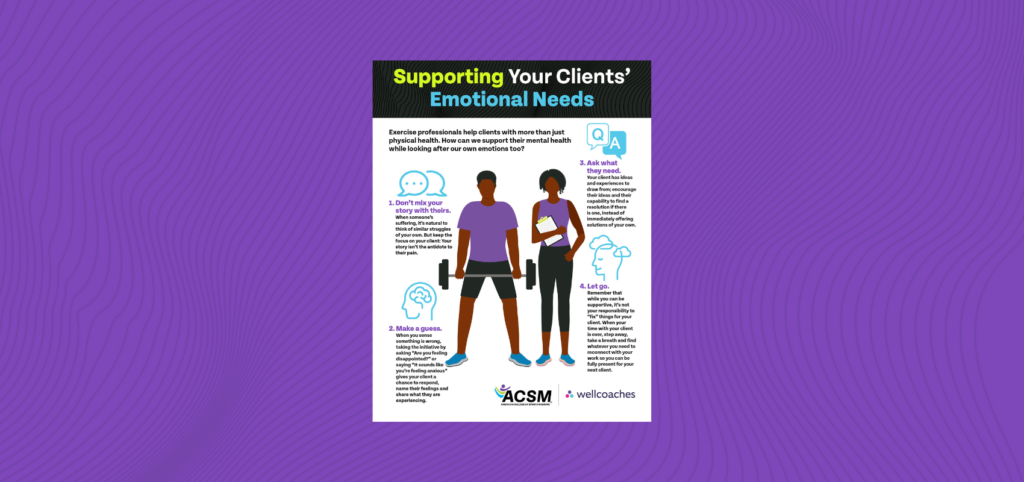
Exercise professionals help clients with more than just physical health. How can we support their mental health while looking after our own emotions too? Check out these tips.
How to Create Fitness Resolutions that will Actually Stick

A staggering number of highly-inspired people will choose to set lofty goals come January 1, despite the universal knowledge that resolutions aren’t easy to stick to. We need all the help we can get. One trick? Framing and stating goals a particular way. Here are six examples of resolutions that can lead to real athletic […]
Assisting the Apprehensive Exerciser
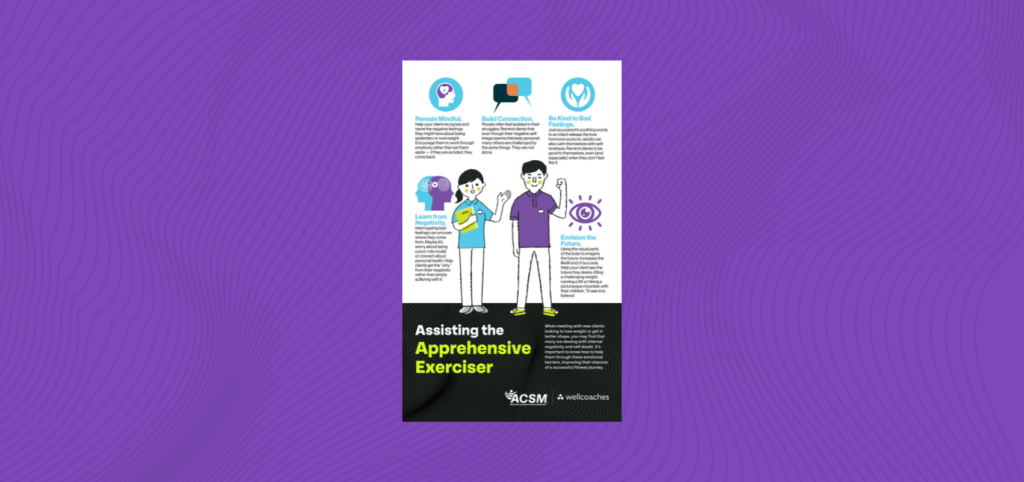
When meeting with new clients looking to lose weight or get in better shape, you may find that many are dealing with internal negativity and self-doubt. It’s important to know how to help them through these emotional barriers, improving their chances of a successful fitness journey.
Five Practices for Staying Calm, Focused and Productive during the Holidays
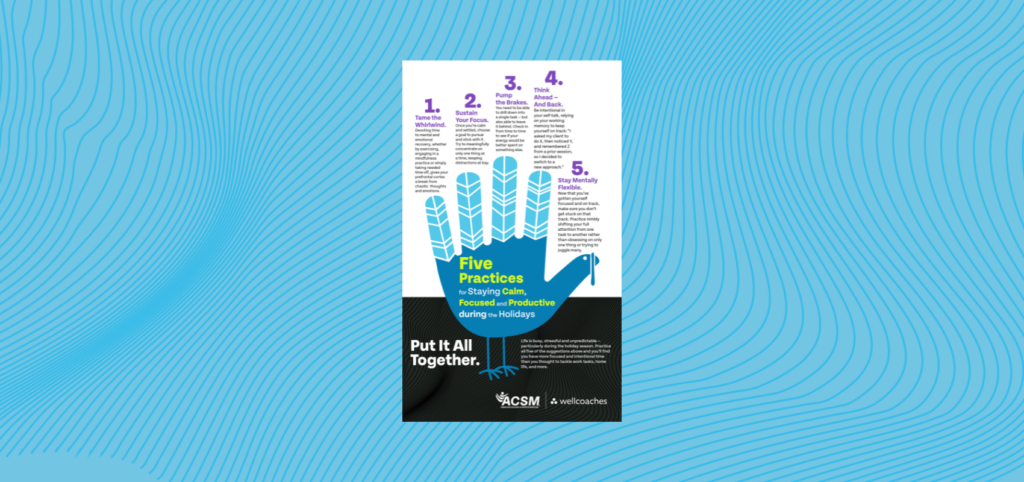
Life is busy, stressful and unpredictable — particularly during the holiday season. Practice all five of these suggestions and you’ll find you have more focused and intentional time than you thought to tackle work tasks, home life and more.
Three Cheers for Ambivalence!
One element of the many skills developed as part of a coaching approach is the use of motivational interviewing (MI)(1). MI first emerged as a means of supporting people to manage significant and enduring addictions; however, its efficacy generally in supporting behavioral change is well documented. MI is a collaborative and conversational engagement with the […]
Associations between Physical Health and Brain Health: Uncovering the Brain-Fitness-Adiposity Relationship in Children
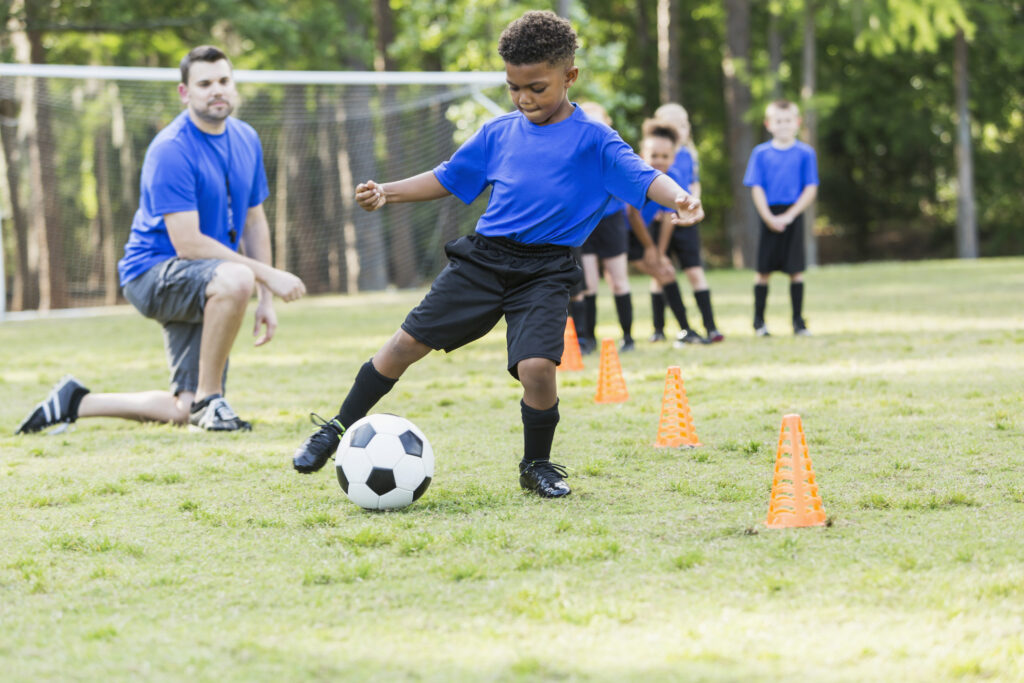
Childhood obesity is an epidemic affecting over 340 million youth worldwide, with rates continuing to increase each year. Importantly, childhood obesity does not occur in isolation, as rates of physical inactivity are also increasing, with children and teens being less physically active now than in the past. These areas of public health are incredibly interrelated, […]
Adolescents with Sport-Related Concussion Recover Faster When They Adhere to an Aerobic Exercise Prescription
Patients with sport-related concussion have traditionally been advised to employ strict physical and cognitive rest until all of their symptoms resolve, i.e., until they become asymptomatic. This “cocoon therapy” was based largely upon animal research showing that early uncontrolled physical activity delayed recovery from simulated concussion. Emerging evidence over the past decade, however, demonstrates that there is […]
Computational Neuroscience Approaches to Exercise Behaviors in Older Adults

Engagement in physical exercise has shown widespread benefits on cardiovascular, physical, emotional and cognitive health in older adults. However, initiating and sustaining an exercise routine over the long term (e.g., six months or more) is incredibly challenging. Our historical understanding of the factors that determine engagement in physical exercise comes from psychological and psychosocial theories, […]
Air Pollution Diminishes the Benefits of Physical Activity for Brain Health

Physical activity is recognized as one of the key healthy lifestyle behaviors that reduces the risk of developing dementia late in life. Physical activity requires increased rates of respiration. Thus, in areas with high levels of air pollution, physical activity may increase exposure to particulate matter and gases that are linked with higher risk of […]
Breathing Your Way toward Mental Clarity
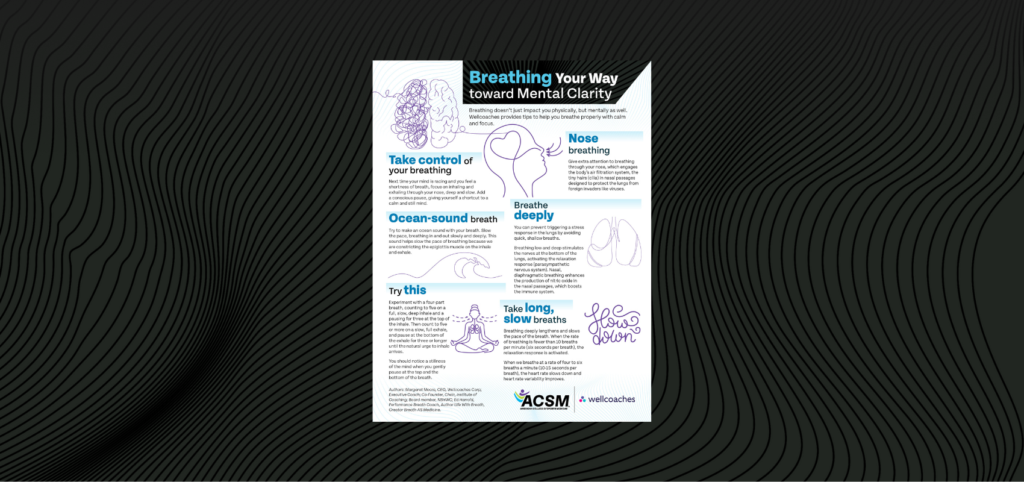
Breathing doesn’t just impact you physically, but mentally as well. This infographic shares breathing exercises to help you or your clients control breathing as a way to improve mental health.