Why Nutrition Needs Change With Age
- After age 50, muscle mass typically declines at a rate of 0.5% to 1.0% per year.
- Less muscle and lower training volume mean the body uses less energy, both at rest and during activity.
- Compared with younger athletes, older adults typically need less daily energy (calories) but the same or sometimes higher amounts of other essential nutrients.
- Energy needs depend mostly on total training volume, not age.
Macronutrients are the nutrients that provide the body with energy: protein, carbohydrate and fat. Getting the right amounts supports training, recovery and muscle health. The table below shows the daily recommended amounts of each for active older adults.
Macronutrients
| Nutrient | Daily Recommended Amount | Notes |
| Protein | 1.0 to 1.2 g/kg body weight; up to 1.5 g/kg with heavy training | Spread over 3 to 4 meals per day, in amounts of 35 to 40 g or 0.4 g/kg per meal. *Values are for normal kidney function. |
| Leucine | 2.5 to 3.0 g each meal | |
| Carbohydrate | 45% to 65% of total energy intake, or 3 to 12 g/kg body weight | Mostly from whole grains, fruits, vegetables, and low-fat dairy rather than processed foods and added sugars |
| Fat | 20% to 35% of total energy | Mostly from healthy fats; limit saturated and trans fats |
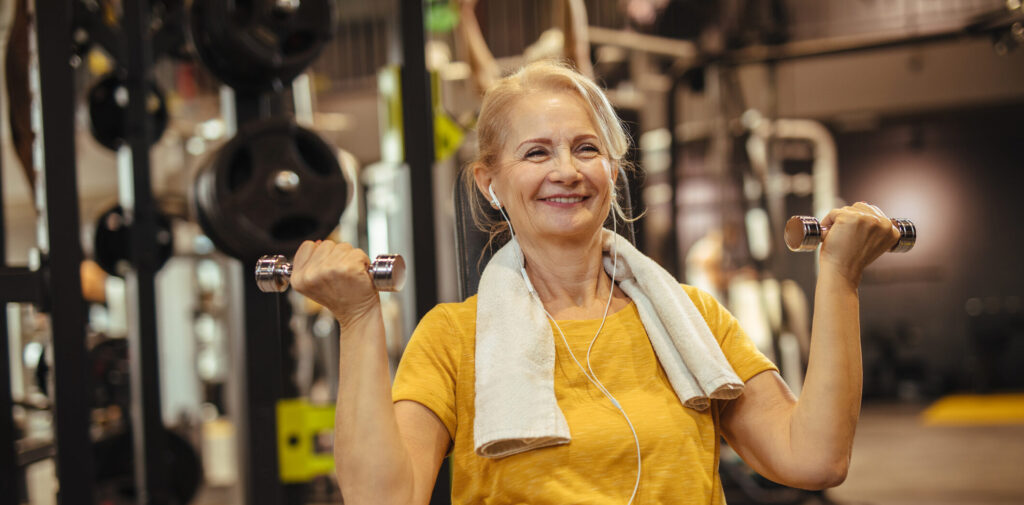
Strength training and good nutrition together are needed to build and maintain muscle.
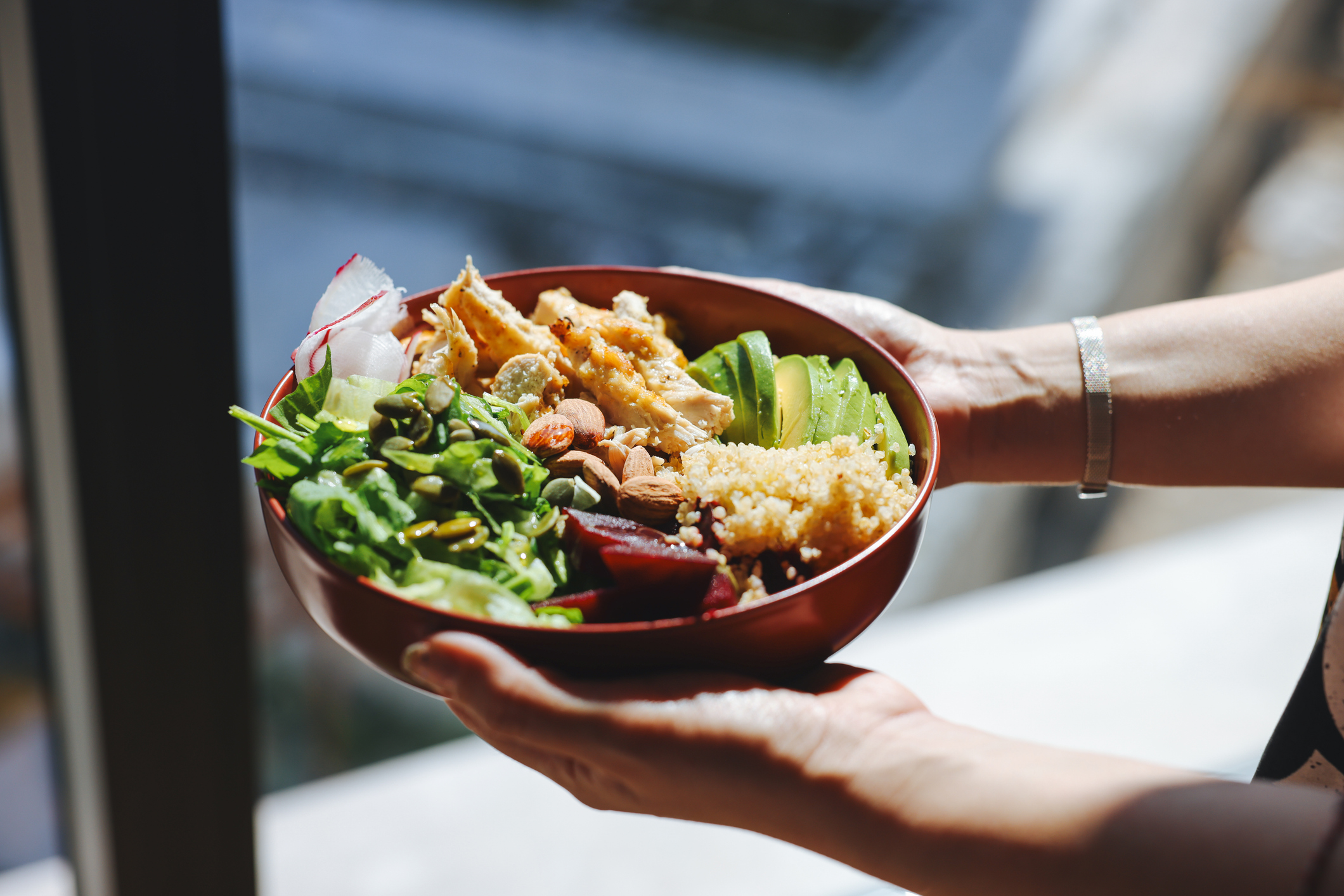
Protein sources (each has about 7 g of protein): 1 oz of animal meat; 1 egg; 1 oz of hard cheese; 1 cup milk or yogurt; 1/2 cup beans; 1/2 cup tofu.
Good sources of leucine and protein: beef, pork, chicken, tuna, salmon, cheese, cottage cheese, Greek yogurt, eggs, nuts.
Key Vitamins and Minerals
Older adults need more vitamins B6, B12 and D, and more calcium, but less iron. Older athletes may especially struggle to get enough folic acid, calcium, zinc, magnesium, and vitamins B12, D and E.
| Nutrient | Daily Recommended Amount | Food Sources |
| Vitamin B6 | Women 51+: 1.5 mg; Men 51+: 1.7 mg | — |
| Vitamin B12 | Women and men 19+: 2.4 μg | Fish, meat, poultry, eggs, dairy products |
| Vitamin D | Ages 50 to 70: 600 IU; Ages 71+: 800 IU | Fortified milk, yogurt, egg yolks, canned fish, salmon, fatty fish, mushrooms, fortified foods |
| Calcium | Women 51+ and men 71+: 1200 mg; Men 51 to 70: 1000 mg | Milk, yogurt, cheese, tofu, salmon, fortified foods |
| Magnesium | Women 51+: 320 mg; Men 51+: 420 mg | Soy products, legumes, seeds, nuts and nut butters, whole grain products, fruits, vegetables, beans |
| Zinc | Women 19+: 8 mg; Men 19+: 11 mg | Meat, fish and seafood, cheese, lentils, fortified cereals |
- Too little vitamin D can impair muscle function and bone health.
- The body can absorb only 500 to 600 mg of calcium at a time, so calcium intake should be spread throughout the day.
Anti-Inflammatory Eating
Acute inflammation is a natural response to something like an injury that ultimately leads to healing. Aging is associated with slower and less efficient responses in the immune system. General guidelines for anti-inflammatory eating:
Include: omega-3 fatty acids, vitamin D, and quality, minimally processed carbohydrates.
Limit: refined carbohydrates (white flour, sugar), fried foods, soda and sweetened beverages, red and processed meat, and margarine, shortening, and lard.
Supplements
- Use a food-first approach. Supplements are meant to enhance the diet, not replace food.
- Whole foods also provide fiber and phytonutrients (biologically active compounds that may help prevent disease).
- Some nutrients are hard to get from food alone, including vitamin D, the omega-3 fatty acids EPA and DHA, and calcium. In these cases, supplements in the recommended daily amounts may be warranted.
- Taking more than the recommended amount does not improve health or performance.
Hydration
Hydration helps regulate body temperature, supports muscle function, and affects mental sharpness and performance. Fluid lost through sweat can start to hurt performance about 60 to 90 minutes into physical activity.
Older adults may have a harder time staying hydrated because of:
- Less total body water
- A weaker sense of thirst
- Slower, lower sweat responses
- Larger fluid losses through urine
- Longer time needed to rehydrate after hard activity
Fluid guidelines:
- ~16 oz of fluid 30 to 40 minutes before exercise
- ~8 oz every 15 minutes during exercise
- 24 oz per pound lost after exercise, enough to restore lost body weight within 2 hours, with pale-colored urine
Fluid choices:
- Water hydrates without adding calories.
- All fluids count, including unsweetened beverages with or without electrolytes.
- Sports drinks with carbohydrate may benefit those with higher training volumes.
- Drink fluids regularly, especially with meals.
When to See a Professional
These are general guidelines. For a full nutrition assessment, consult a Registered Dietitian Nutritionist (RDN), preferably one who is also a Board-Certified Specialist in Sports Dietetics (CSSD). This is especially important for anyone with a disease, nutrition-related condition or nutrient deficiency.